Categories
COVID-19 Medical Equipments Medical Updates

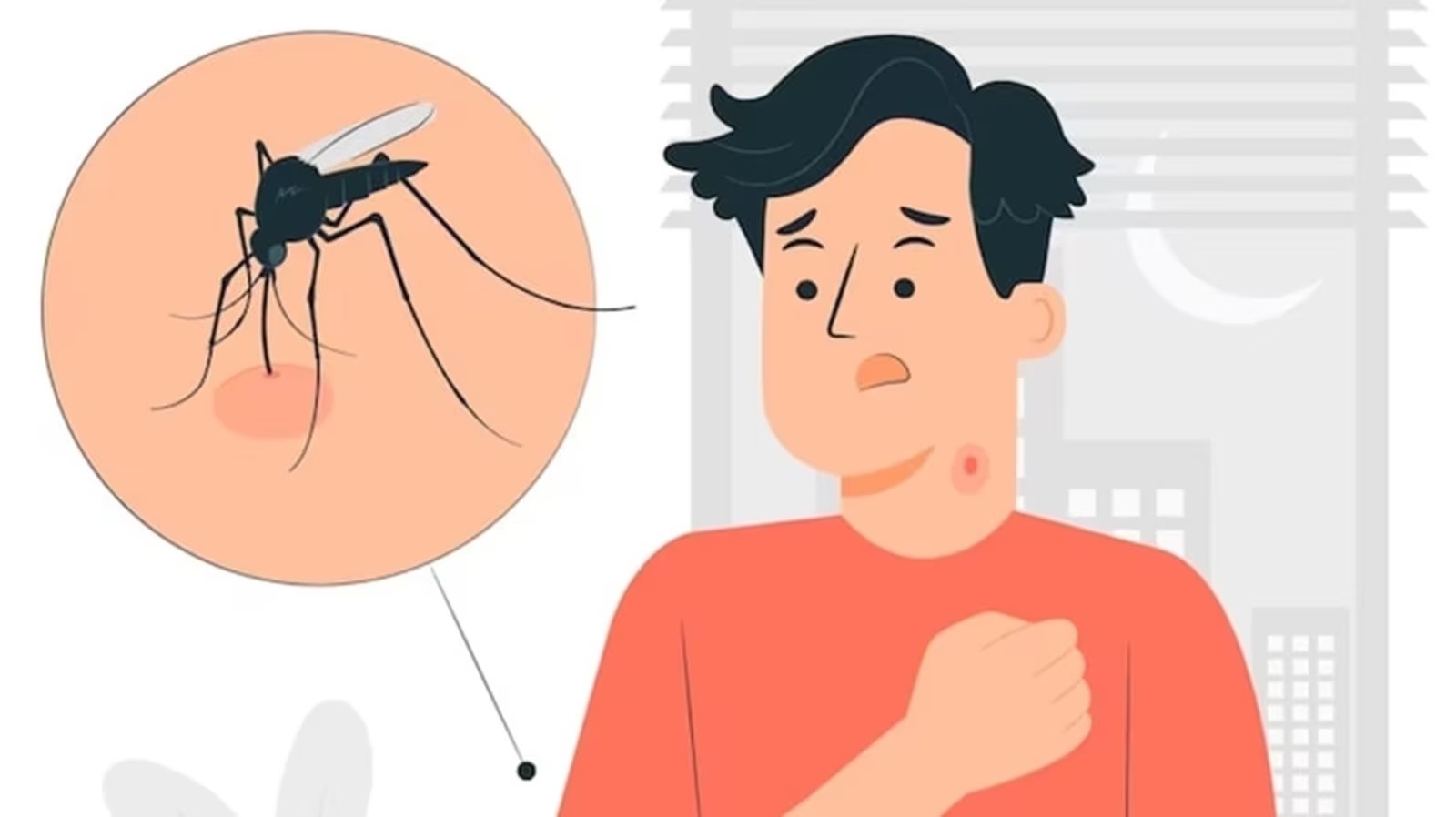
Covid-19 antibodies making dengue more severe, says study; what experts say

As per a new study, Covid-19 antibodies can cross-react with DENV-2 and can worsen dengue infection. Here’re possible reasons why this may be happening.

While the rise in number of dengue cases in India is being attributed to heavy rains and waterlogging in many areas, Covid-19 antibodies may have been adding to the vector-borne disease’s severity, according to a new study. The analysis titled ‘SARS-CoV-2 antibodies cross-react and enhance dengue infection’ has been done at the Translational Health Science and Technology Institute (THSTI) under the central government’s department of biotechnology; the yet-to-be peer-reviewed study has been published in bioRxiv, the preprint server for medical sciences.

“This study is the first to demonstrate that anti-SARS-CoV-2 antibodies can cross-react with DENV-2 (dengue virus 2) and can enhance its infection through antibody- dependent enhancement (the ability of antibodies from a previous infection to help a virus infect greater numbers of cells than it would have on its own),” it said.

Dr Harish Chafle, Extensive experience in Pulmonology and Critical Care, Global Hospitals Parel Mumbai offers insights into the potential link between Covid-19 antibodies and worsening dengue cases.
Covid-19 antibodies making dengue more severe, says study; what experts say

“As we delve into the complex interactions of viral infections, we must consider the possibility of cross-reactivity between Covid-19 antibodies and dengue. The human immune system is a highly intricate network, and sometimes, antibodies produced in response to one virus can influence the body’s response to another. In the case of Covid-19 antibodies and dengue, it’s crucial to investigate if the presence of Covid-19 antibodies may inadvertently enhance the severity of dengue infection. This phenomenon is not entirely unexpected, as such interactions have been observed in other viral co-infections. The key lies in understanding the specific mechanisms at play, and whether these interactions can be harnessed for therapeutic strategies or if precautions should be taken for individuals at risk for both infections. More research is needed to shed light on this intricate relationship and its implications for public health,” says Dr Chafle.

Dr. Aditya S Chowti, Senior consultant, Internal Medicine, Fortis Cunningham, Bengaluru says there are several plausible explanations for how Covid-19 antibodies might exacerbate dengue infection:

1. Antibody-dependent enhancement (ADE) is a possibility where Covid-19 antibodies attach to dengue viruses without neutralizing them, potentially aiding the viruses in entering cells more effectively.

2. Another scenario involves Covid-19 antibodies triggering an exaggerated immune response, causing inflammation and tissue damage, which can intensify dengue symptoms.

3. Covid-19 infection might weaken the immune system, rendering individuals more susceptible to dengue and increasing the likelihood of severe disease.

“Further research is essential to comprehensively comprehend these mechanisms. It is crucial to acknowledge this potential risk, particularly for those who have had Covid-19 in dengue-endemic regions. In the interim, individuals should take steps to safeguard themselves against both Covid-19 and dengue, such as receiving the Covid-19 vaccine and practicing mosquito bite prevention, like using insect repellent and wearing protective clothing when outdoors,” adds Dr Chowti.

Read more at-https://shorturl.at/dfxC0

Categories
Government Guidelines Medical Updates Medicine & Health

Long Covid patients are much more likely to have multiple organ abnormalities

MRI scans revealed that people with long COVID were 14 times more likely to have lung abnormalities than people who never had the disease.

It wasn’t that long ago that some people speculated that long COVID was all in the mind – a psychosomatic illness. Thankfully, that period of speculation is now behind us. We have compelling evidence that long COVID is very real and very harmful. I’m the lead investigator on an ongoing study called C-More which looks at the long-term harms caused by COVID.

People with long COVID who had abnormalities involving more than two organs were four times more likely to report “severe” or “very severe” mental and physical impairment.

In the beginning

When COVID first emerged, doctors perceived it to be a respiratory illness, with patients reporting pronounced coughing, shortness of breath and symptoms akin to pneumonia.

But as our global understanding of the disease evolved, so did our appreciation of this complex disease.

Reports began to emerge that the virus was capable of not just affecting the lungs but also other organs, such as the heart, kidneys, brain and blood vessels, causing a broader assault.

Studies identifying the viral proteins in various organs also began to emerge, demonstrating the virus’s fondness for certain tissues that were not part of the lungs.

Originally, the main theory put forward was that SARS-CoV-2 (the virus that causes COVID) was directly infecting cells across multiple organs.

But, as data accumulated, a more nuanced understanding emerged. It was observed that in some patients, the immune system, in its defence against the virus, overshot its response, leading to what’s termed a “cytokine storm”.

This hyperactive immune reaction wasn’t always discriminative, causing unintended damage to organs not directly under viral attack.

Further reports highlighting the predisposition of the virus to induce excess clotting, mitochondrial disruption (mitochondria being the powerhouses of our cells) and reactivation of other viruses emerged.

Long Covid patients are much more likely to have multiple organ abnormalities

More importantly, there was a growing number of patients continuing to report persistent disabling symptoms arising from multiple organs, even after surviving the initial infection, also known as long COVID, a condition now thought to affect one in ten people.

So the narrative shifted. COVID wasn’t merely a short respiratory affliction, but a multisystem disease with the potential for long-term complications, challenging our assumptions about how to treat the disease.

The birth of C-More

To shed light on these questions, the C-More study was launched in the UK, focusing on the after-effects of the virus in patients who had been hospitalized.

Few studies on long COVID have looked at multiple organ harm in the same patient. And those that have, have tended to focus on patients who weren’t hospitalized with COVID.

This makes our study unique. However, as with any pioneering study, there are some limitations.

The latest results, mentioned above, are based on preliminary data (interim analysis from half the study population). A complete analysis is still awaited.

Pre-COVID MRI scans from patients were not available, making definitive conclusions about the link between COVID and the organ changes difficult.

The control participants were not an exact match to the patient population, but we adjusted our analyses to account for any differences, ensuring the findings were as accurate as possible.

The MRI scans didn’t always explain the symptoms experienced in individual organs.

For instance, even if the MRI showed an organ to be normal, a patient could still exhibit related symptoms. The only strong tie identified was between lung abnormalities and chest tightness.

Still, this study was an important effort to better understand the long-term effects of COVID on multiple organ health.

It reminds us to be vigilant of the potential for long-term consequences of the disease and the importance of vaccination – particularly in people at risk of severe infections.

Doctors and healthcare services around the world can now refine follow-up care, with a focus on lung, brain, kidney and blood vessel health among patients recovering from serious COVID infections, based on our study’s results.

Read more at-https://shorturl.at/ewIZ9
Categories
COVID-19 Government Guidelines Medical Equipments

Covid-19 vaccine boosters are the best defence: Older adults shouldn’t rely on previous infection for immunity

Despite researchers’ efforts to understand SARS-CoV-2, the virus continues to hold many secrets.

Despite researchers’ efforts to understand SARS-CoV-2, the virus continues to hold many secrets. As much as we’ve tried to shoehorn it into our thinking about how respiratory viruses work, it will simply not comply. Some thought the virus would settle into a strictly seasonal pattern. It hasn’t. Some thought we could we move to a single annual vaccine every autumn. That was upended by having multiple waves of infection each year, that seem to occur in the late summer.

Some variants we thought would be terrible turned out to be mild, while others have turned out to be very problematic.

Surprising study results

Now we have a new puzzle.

Through the first couple of years of the pandemic before the emergence of the Omicron variant, it was believed the combination of vaccination and prior infection — which is called hybrid immunity — provided the highest level of protection against future infections.

Our research group has been studying vaccinated older adults in long-term care and retirement homes throughout the pandemic, and our recent findings have jolted us.

We found that those who had battled the BA.1-2 variant of Omicron in early 2022 had a 30-fold higher risk of contracting the BA.5 variant later in the year. That was exactly the opposite of what we, or anyone, would have predicted.

This new knowledge is critically important, not just to other older adults, but to all of us.

Covid-19 vaccine boosters are the best defence: Older adults shouldn’t rely on previous infection for immunity

Does this surprising twist apply to the broader population? Possibly, but until we know how infections work to increase susceptibility to reinfection, we can’t know if this susceptibility is specific to older adults. Does it apply to other variants, including the newest ones in circulation? That’s unclear.

What the findings do tell us is that older adults who have had a previous COVID-19 infection shouldn’t rely on that to protect them against reinfection this fall. To protect against severe illness, keeping booster shots up to date is recommended.

We can’t let our guard down

We were able to make this discovery because our study participants in long-term care and retirement homes are part of the most frequently tested, highly vaccinated and closely observed group in the entire population.

The end of frequent PCR testing and documentation of infection for those who are sick (after all, we researchers don’t know if you tested positive on a rapid test) left us without much data about COVID infections and reinfections in the broader population, so these seniors are helping us see things we’d otherwise have missed.

Through them, we’ve realized the virus has evolved in a way that means one infection doesn’t necessarily guarantee immunity from another.

Though we still have so much to learn about many aspects of COVID-19 — including its lingering health effects and the mechanics of its endless mutations — we do know enough to say one thing: we can’t let our guard down.

Among other conclusions, we know that while vaccines mitigate the worst consequences of subsequent COVID infections, the virus is still developing new ways to elude our immune systems.

Protecting ourselves and our communities

So, do we still need masks and boosters? Yes. However tiresome they have become, they’re still crucial. This is especially true for our most vulnerable, including older adults, people with chronic conditions or who are immune compromised and those who work with them.

We know the protective value of multiple COVID vaccines does not accumulate like money in a bank account. It’s the recency of our boosters that will determine our degree of protection.

Though imperfect, timely boosters are still our best shields. It’s time to think of them less like our childhood vaccines, where we expect to be protected for long periods of time, and more like annual flu vaccines where we need to be vaccinated for the strain that is circulating and can only expect that protection to reduce symptomatic infection, last a few months but — importantly — help keep us out of hospital.

We need to remain vigilant and to continue to keep our vaccines up to date, to protect against COVID infections and their threat of debilitating long-term effects and even death.

Protecting ourselves and our communities

Our participants have been great partners in our work. As a group, and are willing to participate in this research because they are interested in helping others. They helped us discover that hybrid immunity does not always protect older adults from future COVID-19 infection, suggesting that some assumptions about COVID-19 infection risk may need to be revisited, and that we need to study how different variants evade the immune system.

These research partners deserve the thanks of the community for contributing to this important lesson. We can all honour them by heeding that lesson and taking precautions against spreading COVID-19 this fall, including wearing masks and getting a booster shot.

Read more at-https://shorturl.at/uEFJ7

Categories
COVID-19 Government Guidelines Medical Equipments Medical Updates Medicine & Health Techniques

Covid infection could damage foetuses of pregnant women: Study

Foetuses and placentas of pregnant women, especially those infected with COVID-19 at earlier points in the pandemic, were found to bear a greater risk of experiencing growth impairment or vascular lesions in organs and brain, according to a new research.

Foetuses and placentas of pregnant women, especially those infected with COVID-19 at earlier points in the pandemic, were found to bear a greater risk of experiencing growth impairment or vascular lesions in organs and brain, according to a new research.

According to the research, results demonstrate that the different strains of the virus that emerged during the pandemic led to varying degrees of damage, which was especially higher by those involving pre-Omicron variants. The detected placental lesions could potentially harm both development and health in some of the affected unborn children, the study said.

Using prenatal magnetic resonance imaging, a group of Medical University of Vienna, Austria, researchers examined the placentas and foetuses of women who tested positive for SARS-CoV-2 during pregnancy, the study said.

The research was published in the journal The Lancet Regional Health – Europe. While such damage occurs more infrequently and is less severe with the currently circulating Omicron sub-lineages, the study authors still advocate early detection measures for pregnant women who test positive for coronavirus.

Contrary to previous studies, in which SARS-CoV-2-related abnormalities were only identified postnatally and/or through histopathological procedures, the research team focused on prenatal imaging findings, the study said.

Using prenatal magnetic resonance imaging (MRI), 76 scans of placentas and foetuses of pregnant women were performed in the study: 38 following a confirmed SARS-CoV-2 infection (pre-Omicron or Omicron variants) and 38 in healthy control cases, the study said.

The study found that the placentas in both the pre-Omicron and the Omicron groups revealed abnormalities.

Covid infection could damage foetuses of pregnant women: Study

“Infections with pre-Omicron variants, such as Delta, led to significantly greater damage in the form of vascular events such as blood clots or bleeding than with the Omicron subvariants currently circulating through the population,” noted lead author Patric Kienast, outlining a key finding of the study.

The researchers attribute the varying extent of damage to the placenta caused by different virus strains to the fact that Omicron sub-lineages are less likely than their predecessors to result in severe cases, and to higher vaccination rates as the pandemic has progressed, the study said.

“In any case, our results showed that the two non-vaccinated study participants developed placental abnormalities following infection with SARS-CoV-2 Omicron, compared with just one out of six of the women who had received three doses of the vaccine,” confirmed senior author Gregor Kasprian.

Oxygen, nutrients and metabolic products are exchanged between mother and child in the placenta. Attached to the uterine wall, this organ forms such a strong barrier against the coronavirus that only 3 per cent or fewer of foetuses whose mothers test positive for SARS-CoV-2 are also infected, the study said.

But as the study shows, the placenta itself is not spared from complications caused by Covid-19. Subsequently, some unborn babies experience stunted growth or bleeding in the brain, the study said.

“This is why the placentas of pregnant women who have been infected with SARS-CoV-2 should be examined as soon as possible after testing positive using prenatal imaging techniques,” advised Daniela Prayer from Medical University of Vienna, citing the importance of scanning, particularly in the case of possible future coronavirus variants with mechanisms similar to Delta, for example.

By doing so, there is a chance to take measures to safeguard the health of the foetus in a worst case scenario, the study said.

Read more at-https://bit.ly/3XAOtZF