Categories
COVID-19 Medicine & Health

Serum Institute’s clinical trial for Covovax covid-19 vaccine begins

Under the trial protocol, 460 participants will be part of a cohort to determine whether the vaccine manufactured by Serum Institute provides the same immune response as the one developed by Novavax.

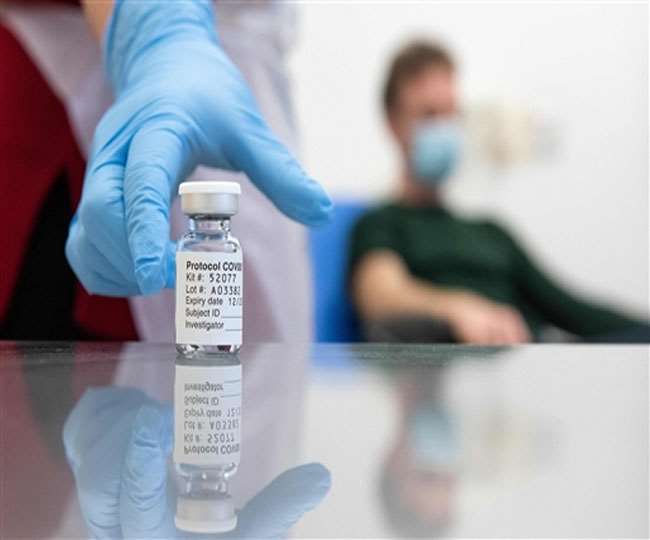
Serum Institute of India’s phase 2 and 3 bridging study of 1,600 participants for the covid-19 vaccine Covovax has started at one of the trial sites in Pune, with at least one more site expected to begin screening as early as Tuesday, two people aware of the development said, on condition of anonymity.

“The trials have started at a hospital in Pune on Thursday. More will start enrolling soon,” one of the sources said.

Another clinical trial site Hamdard Institute of Medical Sciences and Research at New Delhi will begin screening of some participants on Tuesday, another source said.

A spokesperson for Serum Institute decline to comment on the commencement of Covovax trials.

Covovax is Serum Institute’s version of the covid-19 vaccine developed by US-based Novavax, which earlier this month had announced that the jabs have an efficacy of 96% against the original strain determined in a phase 3 trial conducted in the UK. This is the highest efficacy so far achieved for a covid-19 vaccine against the original strain of the coronavirus.

However, the efficacy of the vaccine dropped to 86.3% against the mutant variant that is now the dominant strain in the UK. On average, the efficacy of the vaccine was 89.7%, the company had said.

In another phase 2 trial conducted in South Africa, where another mutant variant is dominant, the overall efficacy dropped to 48.6%.

While the efficacy is lower against the mutant strains, the vaccine still has shown better results as compared to the jab co-developed by AstraZeneca plc and the University of Oxford. In a trial result published with the New England Journal of Medicine earlier this month, the vaccine was found to have only a 10.4% efficacy against the South Africa variant of the coronavirus.

Serum Institute also contract manufactures the AstraZeneca vaccine under the brand Covishield, which is the most-widely available jab in India as well as World Health Organization-led Covax.

The Pune-based company expects to launch Covovax by August, but will start stockpiling the vaccine from April, chief executive officer Adar Poonawalla had said at the Bloomberg Equity Summit earlier this month. The company will be manufacturing 1 billion doses of the vaccine, which will be supplied to both India and Covax.

The trial of 1,600 participants will be conducted at 19 sites across the country, including the Hamdard Institute and All India Institute of Medical Sciences at Delhi, Sahyadri Super specialty Hospital, Noble Hospital and Dr. D. Y. Patil Medical College, Hospital and Research Centre at Pune and School of Tropical Medicine at Kolkata.

Under the trial protocol, 460 participants will be part of a cohort to determine whether the vaccine manufactured by Serum Institute provides the same immune response as the one developed by Novavax. While three-fourths of these will get Covovax, the remaining will be administered Novavax’s vaccine.

The 1,140 participants will be in the cohort for determining safety of the vaccine, with three-fourths getting Covovax, and the rest a placebo.

source: https://www.livemint.com/

Categories
Techniques

Digital tech adoption in healthcare among highest in India

Digital technologies adoption by health and human services (HHS) organizations is among the highest in India, showed a new survey by global consultancy major EY and Imperial College London.

Digital technologies adoption by health and human services (HHS) organizations is among the highest in India, showed a new survey by global consultancy major EY and Imperial College London on Thursday.

The findings showed that 51 percent of respondents in India have increased their use of digital technologies and data solutions since the outbreak of the pandemic.

The results are based on a survey of more than 2,000 global HHS professionals in six countries – India, Australia, Italy, the United Arab Emirates (UAE), the UK, and the US — including 359 respondents from India.

While 74 percent of respondents in India reported that digital technologies and data solutions have increased staff productivity, 75 percent reported that digital solutions have been effective in delivering better outcomes for patients and service users.

“The response to the Covid-19 pandemic has shown that data and technology can make a real difference to the work of health and human services professionals in India, who have worked tirelessly and heroically in the face of this dreadful disease,” Gaurav Taneja, Partner and Leader, Government and Public Sector, EY India, said in a statement.

“With adequate government support and incentives, India has truly set an example to the rest of the world that it can lead and pave the way for technology adoption in healthcare.”

While health organizations have historically often lagged in other sectors in terms of adopting digital technologies and data solutions, the response to the Covid-19 pandemic has driven a change in priorities.

Almost two-thirds of respondents globally report an increase in the use of data and technology solutions, as the industry adapts to new ways of working under pressure.

In terms of specific digital technologies and data solutions, the percentage of respondents using these technologies has more or less doubled across the board since the beginning of the pandemic; and mental health services are more or less equal to physical health and social services in terms of use.

According to the survey, phone and video consultations have seen the greatest uptake across all technology solutions, with phone consultations being offered by 81 percent of HHS organizations (up from 39 percent before the pandemic) and video consultations available from 71 percent of organizations (up from 22 percent before the pandemic).

Compared to this, the uptake has been higher in India at 86 percent for a phone consultation (up from 48 percent before pandemic) and at 83 percent for video consultations (up from 33 percent before pandemic).

The public sector organizations in India preferred digital tools for self-help (92 percent organizations) and online self-assessment tools (89 percent organizations) over the phone consultation and video consultation, said the report.

Also, in India, about three fourth of the respondents reported positive experiences with digital technologies and data solutions, leading to better collaboration and efficiency in the operating model, results showed.

Categories
COVID-19 Government Guidelines Medicine & Health

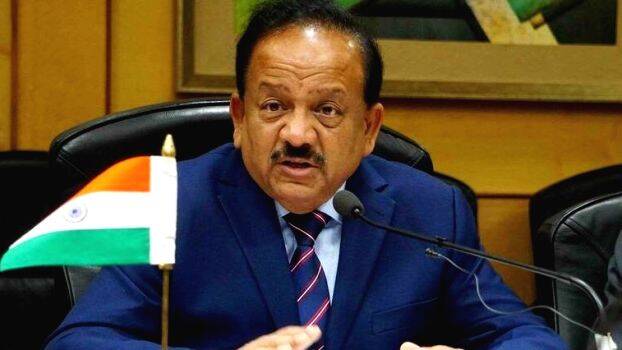
Over six Covid-19 vaccines to come up in India, says Health Minister Harsh Vardhan

Union Health Minister Harsh Vardhan has said that more than six Covid-19 vaccines will come up in India.

He also said that 1.84 crore coronavirus vaccine doses have been administered till Saturday morning, while 23 crore tests have been conducted.

The latest figures from the Health Ministry say that 2.91 crore people had been vaccinated till 7 pm on Saturday.

“India has developed two vaccines, which have been given to 71 countries. Many more nations are seeking the vaccines, and these are not little-known nations…Canada, Brazil and other developed countries are using Indian vaccines with a great zeal,” he said.

“More than half a dozen vaccines are going to come up,” he said.

“Till Saturday morning, 1.84 crore vaccine shots have been given in the country and 20 lakh people were inoculated yesterday,” the minister added.

He was speaking while inaugurating the new green campus of the National Institute of Research in Environmental Health near here.

Prime Minister Narendra Modi wants to create a new India to turn it into a ‘vishwa guru’ (world leader), he added.

“Respect science. There is a need to end politics over it (vaccine) given that it is a scientific fight not a political one. That is why we should work unitedly,” Vardhan said.

The efforts of our scientists are praiseworthy as due to their labour we have achieved all this. Year 2020, apart from being a COVID-19 year, will be remembered as the year of science and scientists, he added.

He said that initially there was only one laboratory in India for COVID-19 testing. “But we have 2,412 testing facilities now,” he added.

“We were the first in the world to isolate the coronavirus. We isolated its mutation. And our scientists helped the ICMR in vaccine. People have praised it (vaccine). Some people tried to create confusion, but truth is unbeatable,” he said.

Talking about the rising infection cases, the minister said this “disturbing trend” was due to the carelessness and misunderstanding.

“People think that as the vaccine has come and all is well now,” he said, while urging them to follow the COVID-19 rules for protection against the virus.

Vaccine update in India

According to a provision report, of the 2,91,92,547 doses administered till now, 73,31,498 were given to healthcare and 72,96,474 frontline workers who have taken the first dose, and 42,58,297 healthcare and 10,53,732 frontline workers who have been given the second dose.

As many as 78,66,241 senior citizens and 13,86,305 aged 45 and above with specific comorbidities have received vaccine doses.

“A total of 9,74,090 vaccine doses were given till 7 pm on Saturday, the 57th day of the nationwide COVID19 vaccination.

“Of these, 8,05,014 beneficiaries were vaccinated for the first dose and 1,69,076 healthcare and frontline workers received the second dose of vaccine according to the provisional report. The final report for the day would be completed by late in the night,” the ministry said in a statement.

The countrywide vaccination drive was rolled out on January 16 with healthcare workers getting inoculated and vaccination of the frontline workers started from February 2.

The next phase of COVID-19 vaccination commenced on March 1 for those who are above 60 years of age and for people aged 45 and above with specified comorbid conditions.

Categories
Medicine & Health Techniques

8 Signs and Symptoms of Kidney Stones

What Are Kidney Stones?

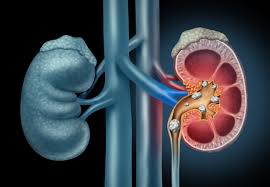
Kidney stones (renal calculi) are clustered deposits of minerals and salts in your kidneys. When the urine gets concentrated, it leads to the crystallization of these salts and minerals, forming these stones. These stones can deposit anywhere in your urinary tract, from your kidneys to even your bladder. Kidney stones formation happens when the urine contains substances that often form crystals— such as uric acid, calcium, and oxalate — then the urine can dilute. Some medical conditions, obesity, excess weight, and not drinking enough water are other causes of kidney stones. These stones don’t cause any permanent damage if diagnosed and treated on time. But, passing these stones through your urethra is very painful. You may need nothing more than to drink lots of water and take painkillers to pass a kidney stone. But if the stone has become stuck in the urinary tract and is causing a urinary infection, you may have to go under surgery.
And if you are at risk of developing the stones again, you’ll have to take other preventive methods recommended by your doctor.

Signs and Symptoms of Kidney Stones:

These stones don’t cause any pain and symptoms if it isn’t moving around into your kidney or passing through your ureters. If the stone is stuck in the ureter, it can block the urine flow, which in turn will cause swelling in your kidneys and ureter spasm. It will cause much pain, and you may experience these symptoms :

  • Severe pain in your back or side of the Abdomen, swelling of the feet.
  • Radiating pain in the lower abdomen and groin.
  • Difficulties while urinating ( burning sensation and pain).
  • Blood in the urine.
  • Vomiting and nausea.
  • Foul-smell in the urine because of the infection.
  • Urinating in small amounts but very often.
  • Chills and fever.
Categories
COVID-19 Government Guidelines

Covid-19 vaccine for 60-plus and above 45 with comorbidity from March 1

People aged more than 60 years and those who are 45 plus and have comorbidities will be able to get a vaccine against Covid-19 at a government centre or a private hospital from March 1.

Announcing this, the central government on Wednesday said people above 45 years of age will have to show a certificate stating they have comorbidities.

Addressing a press briefing on Cabinet decisions, Union minister Prakash Javadekar said the vaccination will be carried out at more than 10,000 government centres and over 20,000 private vaccination centres across the country.

“From March 1, people above 60 years of age and those above 45 years of age with comorbidities will be vaccinated at 10,000 government and over 20,000 private vaccination centres,” Prakash Javadekar said.

Free Covid-19 vaccine at govt centres

The minister said Covid-19 vaccine will be provided free-of-cost at government centres.

However, people will have to pay for the vaccine if they get it from a private centre.

“Those who want to get vaccinated from private hospitals will have to pay. The amount they would need to pay will be decided by the Union Health Ministry within three-four days as they are in discussion with vaccine manufacturers and hospitals,” Prakash Javadekar said.

This is part of the next phase of India’s nationwide Covid-19 vaccination that started on January,16. In the first phase of the vaccination drive, healthcare workers on Covid-19 duty were vaccinated. The second phase covered other frontline workers and people engaged in essential services.

Age limit increased from 50 to 60 years

Government sources privy to the development said earlier all people aged more than 50 years were to be covered in this phase of vaccination, but the government later decided to fix the eligibility age limit at 60 years.

The number of people aged more than 60 years in India is less than those who fall in the age group of 45 to 50 plus.

Sources say, during Covid-19 vaccination, data of only those who are more than 60 years will be recorded in the Co-Win app for free vaccines at government hospitals.

So far, India has approved only two vaccines for it’s Covid-19 vaccination drive. The first one is Covishield which has been developed by the Oxford University and AstraZeneca and is being manufactured by the Serum Institute of India.

The second vaccine is Covaxin, developed and manufactured by Bharat Biotech.

It is unclear at present if people will have a choice to select which vaccine they would like to take.

source: https://www.indiatoday.in/