Categories
COVID-19 Medical Equipments Medicine & Health

What is Disease X; can this potential threat be deadlier than Covid? Doctor explains

While Covid-19 pandemic is almost over, healthcare professionals are now preparing for a potential new pandemic called Disease X.

The next pandemic could take 50 million lives said Dame Kate Bingham, who chaired the UK’s Vaccine Taskforce saying that it might already be on its way and that Covid-19 was not that lethal. The new pandemic has been dubbed Disease X by World Health Organisation (WHO) and Bingham says it could be 20 times deadlier than Coronavirus. Bingham told Daily Mail, “The world will have to prepare for mass vaccination drives and deliver the doses in record time…Imagine Disease X is as infectious as measles with the fatality rate of Ebola (67 per cent). Somewhere in the world, it’s replicating, and sooner or later, somebody will start feeling sick.”

According to Bingham, while scientists have identified 25 virus families encompassing thousands of individual viruses, there are millions of other viruses yet to be discovered, reported the Daily Mail.

“While Covid-19 and its variants have impact in terms of recurring and familiar health issues, healthcare professionals are now preparing for a potential new pandemic called Disease X. Healthcare experts have issued a caution that this new virus can be as devastating as the Spanish Flu. According to the World Health Organization (WHO), “Disease X refers to pathogen – known/potentially unknown that can cause large scale, serious pandemic leading to mass scale human disease,” says Dr Neha Rastogi, Consultant, infectious disease, Fortis Memorial Research Institute, Gurugram.

What is Disease X?

“Disease X is possibly and plausibly caused by a ‘pathogen X’. It could be related to zoonotic disease likely an RNA virus, emerging from an area where the epidemiological triad – environment host favours sustained transmission. These emerging/re-emerging z pathogens can be labelled as X and they are a threat which mandates intense and ongoing active surveillance and monitoring,” says Dr Rastogi.

What is Disease X; can this potential threat be deadlier than Covid? Doctor explains

There are postulated data about the possibility of syndrome X as an engineered pandemic pathogen. Incidental laboratory accidents or as an act of bioterrorism, might lead to a disastrous Disease X which can be potentially pose global catastrophic risk, says the expert.

Prevention

“Containment and mitigation strategies involve development and implementation of uniform international guidelines to control bioterrorism. Immediate and appropriate travel restrictions including strict airport screening requires to be implemented to contain the spread of pathogen X across borders. It also necessitates collaborative approach of global leaders, scientists, epidemiologists, and infectious disease experts to investigate, control, and eliminate disease X. Widespread and mass testing, surveillance and aggressive contact tracing are potential effective tools to timely contain outbreak like situations,” says Dr Rastogi.

“Concentrated efforts to accelerate the access, rapid availability of immediate medical measures – test kits, vaccines, and first aid required before and during the pandemic. Ongoing continuum of research on preventive aspect – development and process of vaccines needs boost and heightened priorities to abate and combat severe adverse consequences of disease X,” she says.

“A One Health approach which aims at bridging institutional gaps, building and stratifying priority risk and alert pathogens and emphasizing on mitigation strategies for emerging and re-emerging pathogens – potential disease X should be the need of an hour to prevent these global and global catastrophes,” concludes the expert.

Read more at-https://shorturl.at/kntxU

Categories
COVID-19 Government Guidelines Medical Equipments Medical Updates

Covid-19 cases in children on rise; watch out for these signs and symptoms, preventive measures

Experts say that many kids are suffering from high grade fever, persistent cough and diarrhoea as the Covid cases across the country are on rise.

Covid-19 cases in children have been on rise in the past few days in kids under 15 years of age and while the symptoms are mostly mild in the little ones, experts have warned parents to take Covid-appropriate measures for preventing spread. Considering kids are vulnerable to viral infections and diseases like RSV (Respiratory Syncytial Virus), flu, adenovirus and Covid are on rise, it’s imperative to get them vaccinated if eligible, promote regular handwashing, and wearing masks (kids over 5 years). Children who have cough, cold, stomach flu and other flu-like symptoms should not be sent to school and get tested for Covid. Experts say one should not take the current surge in Covid cases lightly. Especially when it comes to high-risk children who have any kind of health complication like diabetes, asthma, heart disease among other issues, symptoms should be monitored closely.

Signs of Covid in kids

“In the past few days there have been reports of children less than 15 years getting infected with Covid. The cases though are mild and not very severe. The symptoms to watch out among kids remain same as we have seen in recent times which primarily include high fever, coughing, head and body ache, fatigue, runny nose to name a few which are very similar to other flu and adenovirus symptoms. In adenovirus though, other symptoms like redness of eyes, conjunctivitis and watery eyes can be seen through which we can differentiate between the two, says Dr. Kuldeep Kumar Grover, Head of critical care & Pulmonology – CK Birla Hospital, Gurgaon.

“Covid is a viral infection and like many other viruses, it has been around for some time. Symptoms of Covid like any other viral infection will be fever, cold, a bit of cough, stomach flu, diarrhoea, conjunctivitis, body pain etc. In adenovirus we see a little more conjunctivitis, swollen lymph nodes – these are just like tonsils that we have outside body also, lympth nodes are the tissue collections that can get swollen or painful just at the back of the neck or under the chin area. Other thing with Covid is that the symptoms are more gradual. The fever comes in gradually and may rise later on. In common flu, the symptom onset is usually very dramatic with sudden muscle ache, fatigue and high-grade fever. So, there’s no real one sign that can help differentiate between Covid and other viruses,” says Dr Poonam Sidana, Director Neonatology and Pediatrics, C K Birla Hospital Delhi.

“For the past one month, there has been a rapid rise in OPD footfalls of children who are suffering from symptoms like sore throat, cold, cough, diarrhoea, vomiting, abdominal pain and the fever which is high grade, reaching up to 103 degree or more. The cough is quite severe in these cases and in some cases even lasting for more than 3 weeks. Considering the symptoms of Covid, adenovirus, and RSV are similar, it’s difficult for parents to distinguish between the two. While fever, cough, cold, abdominal issues, vomiting are more common in Covid and other viral illnesses that are spreading nowadays, red eyes, sticky eyes and conjunctivitis is more common in case of adenovirus,” says Dr Somalika Pal, Senior Consultant, Department of Neonatology and Paediatrics, Cloudnine Group of Hospitals, New Delhi (East of Kailash)
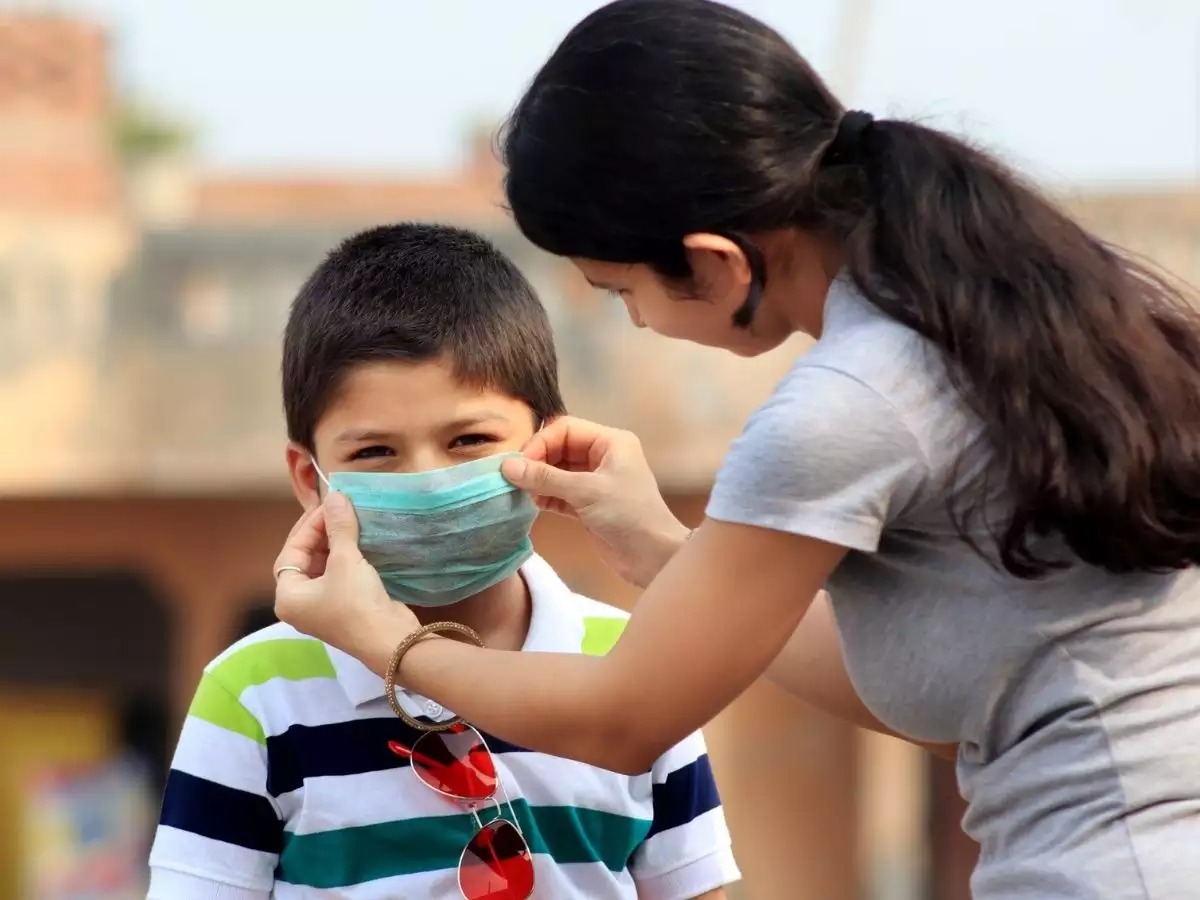
Covid-19 cases in children on rise; watch out for these signs and symptoms, preventive measures

“Flu viruses such as SARS CoV-2 and Influenza virus, predominantly causes respiratory tract illness, while Adenovirus, a DNA virus, causes a variety of illness in addition to respiratory tract infections, such as conjunctivitis, ear infections, gastroenteritis, hepatitis, myocarditis, meningoencephalitis etc. The symptoms are usually fever, sore throat, running nose, cough, body ache, fatigue, shortness of breath, diarrhoea etc. In most cases, it is difficult to differentiate these based on symptoms alone,” says Dr Rohit Kumar Garg, Consultant, Department of Infectious Diseases at Amrita Hospital, Faridabad.

Signs of severe Covid in kids

“Parents must be watchful of symptoms and if high-grade fever is lasting for beyond 5 days or the cough is worsening, if the kid is lethargic, unable to feed, finding it difficult to breath, diarrhoea is worsening or the lips are seen parched or peeled, it’s a sign that your child may need hospital care,” says Dr Pal.

“Some patients may develop severe illness, such as pneumonia. Symptoms like persistent fever, severe cough, shortness of breath, low oxygen saturation, troubled, fast, noisy breathing, may help to suspect severe illness,” says Dr Garg.

Preventive measures for kids

“It is still critical for the kids and most importantly their parents to remain vigilant and protect themselves and their kids by teaching them to follow the Covid preventive measures in schools and nearby areas where they play with other kids like regular masking, self-hygiene and washing their hands and face frequently after coming from outside, sanitizing themselves properly at regular intervals. Also, parents are advised to undergo the RT-PCR test in case they see any symptoms as a precautionary step, says Dr Grover.

“Any child having fever, cough, cold, as a general principal should not be sent to school and get tested. Sports and other activities where kids are in close contact should be avoided in schools. Frequent handwashing, not touching nose or mouth is important. Kids over 5 years should be wearing masks and overcrowding in social gatherings and outings must be avoided,” says Dr Sidana.

Why Covid cases have been on rise in India

Dr. Pavithra Venkatagopalan, Coronavirologist and Covid Awareness Specialist, Rotary Club of Madras NextGen sheds light on why the number of Covid cases have been on rise for a couple of weeks in India.

“The number of cases of coronavirus has increased in the last few weeks in India. We have to first look at if the number of tests has increased. We are a country that is quite crowded giving a lot of infections a good environment to breed. Nowadays, a lot of respiratory infections are going on and some of them are taking a long time to heal, people are suffering for a longer time. Typically, this has been the flu but doctors will diagnose you when you are going through a severe respiratory infection, and they will have you test for known respiratory infections which are flu and cold.

While the XBB 1.16 has a change in the spike that allows it to infect people easily, it does not have a direct impact on the number of hospitalisations,” says Dr Pavithra.

Need for booster campaign

“It is also time for us to start with a booster campaign for Covid. It has to become like an annual booster that we all should be taking once a year. These thing matter, especially to people who are more vulnerable than the average population. Young children from 12-13 years onwards have been vaccinated, schools have had vaccination campaigns, most adults have had two doses, some have had one booster shot and some even had two booster shots. We have to work on the enthusiasm of people to get the annual vaccines as they become available so that the number of people carrying the infection will be reduced. This will help protect people whose immune systems are weaker like people with comorbidities, immuno-supressed people, people who have had transplants, women who are pregnant, and the population that can’t be vaccinated just yet. We have to bring that campaign back and increase awareness around vaccinations so that the number of people that can transmit the particles are reduced and thereby reducing the number of infections and severe cases,” adds Dr Pavithra.

Read more at-https://bit.ly/3KghEf6

Categories
COVID-19 Government Guidelines Medical Updates Medicine & Health

Free sugars linked with higher risk of cardiovascular disease: Study

The authors suggest that replacing free sugars with non-free sugars – mostly those naturally occurring in whole fruits and vegetables – and a higher fibre intake, may help protect against cardiovascular disease.

An increased diet of free sugars – both added sugars and those found naturally in honey and fruit juice linked to an increased risk of cardiovascular disease, according to a study. The findings support the global dietary recommendation to limit free sugar consumption to less than 5 per cent of total daily energy consumption.

The findings of the study were published in BMC Medicine.

Free sugars linked with higher risk of cardiovascular disease: Study

Rebecca Kelly and colleagues analysed data from 110,497 individuals from the UK Biobank who had completed at least two dietary assessments. The researchers tracked individuals for around 9.4 years and during this time, total cardiovascular disease (heart disease and stroke combined), heart disease, and stroke occurred in 4,188, 3,138, and 1,124 participants, respectively.

The authors found total carbohydrate intake was not associated with cardiovascular disease outcomes. However, when looking at the types and sources of carbohydrates consumed, they found that higher free sugar intake from foods such as sugary drinks, fruit juice and sweets, was associated with increased risk of all cardiovascular disease outcomes. For each 5% higher total energy from free sugars, the associated risk of total cardiovascular disease was 7% higher. The authors found that the risk of heart disease was 6% higher, while the risk of stroke was 10% higher. Additionally, consuming five grams higher fibre per day was associated with 4% lower risk of total cardiovascular disease, but this association did not remain significant after accounting for body mass index (BMI).

The authors suggest that replacing free sugars with non-free sugars – mostly those naturally occurring in whole fruits and vegetables – and a higher fibre intake, may help protect against cardiovascular disease.

Read more at-https://bit.ly/3k5OeXT

Categories
COVID-19 Government Guidelines Medical Equipments Medical Updates Medicine & Health

Global roll-out of 12 billion COVID-19 vaccine doses largest-ever but access an issue: WHO

Synopsis

Addressing the annual general meeting of the Developing Countries Vaccine Manufacturers Network (DCVMN) virtually on Thursday, he flagged the issue of inequities in access to COVID-19 vaccines.

World Health Organization (WHO) director-general Dr Tedros Adhanom Ghebreyesus has said that global roll-out of more than 12 billion COVID-19 vaccine doses is the largest and fastest in human history.
Addressing the annual general meeting of the Developing Countries Vaccine Manufacturers Network (DCVMN) virtually on Thursday, he flagged the issue of inequities in access to COVID-19 vaccines.

The three-day event is being co-hosted by the Pune-based Serum Institute of India (SII), the world’s largest vaccine manufacturer by volume, said a statement.
“Global roll-out of more than 12 billion COVID-19 vaccine doses is the largest and fastest in history with an estimated 60 per cent doses produced by manufacturers in developing countries. Despite this achievement, stark inequities in access to COVID-19 vaccines remain,” he said.

Global roll-out of 12 billion COVID-19 vaccine doses largest-ever but access an issue: WHO

“These inequities are due partly to the fact that globally vaccine production is too concentrated. To address this, the WHO and our partners have established the mRNA Tech Transfer hub in South Africa to facilitate the know-how in low & middle-income countries,” Ghebreyesus said.
Adar Poonawalla, CEO of SII, said it was a proud moment for his company to co-host the 23rd DCVMN annual general meeting in Pune.

“Today, the world is more aware and focused on chalking out an ambition-to-action roadmap for future pandemic preparedness. For that, building the infrastructure and regulations to ensure global equity and timely access to vaccines is the foremost priority,” Poonawalla said.

Union Minister for Health and Family Welfare Mansukh Mandaviya delivered the inaugural address.
DCVMN is an international alliance of manufacturers from developing countries who are engaged in innovation, research, development, manufacturing and supply of high-quality vaccines to 170 countries.

The organisation aims to protect people against known and emerging infectious diseases globally by increasing the production of high-quality vaccines in developing countries.

Read more at-https://bit.ly/3gKtK55

Categories
COVID-19 Medical Updates

Covid vaccine: Over 92 cr doses administered in India so far, says Health Ministry

The cumulative coronavirus vaccine doses administered in India crossed 92 crores on Tuesday, the Union Ministry of Health and Family Welfare said.

More than 54 lakh vaccine doses have been administered in the country till 7 pm today and the tally is expected to increase with the compilation of the final reports by late in the night, the ministry said.

The Covid-19 vaccination campaign as a tool to protect the most vulnerable population groups in the country from the deadly virus continues to be regularly reviewed and monitored at the highest level, the ministry underlined.

The nationwide vaccination program was rolled out on January 16 with healthcare workers getting inoculated in the first phase. Vaccination of frontline workers started on February 2.

The next phase of Covid-19 vaccination commenced from March 1 for people over 60 years and those aged 45 and above with specified co-morbid conditions. The country launched vaccination for all people aged more than 45 years from April 1.

The Centre then decided to expand its vaccination drive by allowing everyone above 18 to be vaccinated from May 1.

Meanwhile, India logged 18,346 new Covid-19 infections, the lowest in 209 days, taking the total tally of Covid-19 cases to 3,38,53,048, while the active cases declined to 2,52,902, the lowest in 201 days, according to the government data.

The death toll climbed to 4,49,260 with 263 fresh fatalities, according to the data updated at 8 am.

The daily rise in new coronavirus infections has remained below 30,000 for 11 straight days.

The active Covid-19 cases comprise 0.75 percent of the total infections, the lowest since March 2020, while the national Covid-19 recovery rate was recorded at 97.93 percent, the highest since March 2020, the ministry said.

A decrease of 11,556 cases has been recorded in the active coronavirus caseload in a span of 24 hours.

source: https://www.livemint.com/

Categories
COVID-19 Government Guidelines Medicine & Health

India has administered 800 million Covid vaccine doses till now

India had administered at least 800 million Covid vaccine doses by Sunday, September 19. In another development relating to the vaccine, Global pharma major Pfizer and BioNTech SE said trial results of Covid vaccine showed that it is safe and produced a robust neutralizing antibody response in children aged five to 11 years, and they plan to seek regulatory approvals as soon as possible.

Meanwhile, by 9am on Sunday, 804,372,331 vaccine doses were given across the states and UTs. As many as 8,542,732 doses were administered on the day.

In the 18-45 age group, 325,321,724 people have been given the first dose while 59,105,510 have got their second shot as well.

Among the healthcare workers, 10,368,565 have been given the first dose while 8,723,015 have got their second dose as well. Among the frontline workers, 18,344,648 have got their first dose and 14,480,304 have got their second dose too.

Meanwhile, the country, also the world’s largest vaccine producer, will resume exports and donations of surplus coronavirus vaccines in October after halting them during a devastating surge in domestic infections in April, the Union health minister said on Monday.

Health minister Mansukh Mandaviya said more than 300 million vaccine doses would be produced in October and one billion in the last three months of the year.”India will be resuming the export of vaccines… in order to fulfill the commitment of India towards Covax,” Mandaviya said in a statement.

source: https://www.hindustantimes.com/

Categories
COVID-19 Medical Updates Medicine & Health

In 6 months since launch of drive: Vaccine coverage crosses 50 cr doses

Just over six months after it launched the Covid-19 vaccination drive, India on Friday completed administering a cumulative 50 crore doses.

According to the Union Health Ministry, cumulative vaccination coverage of the country touched 50.03 crore doses, after 43.29 lakh doses were administered on Friday.

“India’s fight against Covid-19 receives a strong impetus. Vaccination numbers cross the 50 crore mark. We hope to build on these numbers and ensure our citizens are vaccinated under #SabkoVaccineMuftVaccine movement,” Prime Minister Narendra Modi tweeted.

On January 16, India launched the vaccination drive prioritising healthcare and frontline workers. As of Friday, 1.03 crore healthcare workers had received their first dose, and 79.51 lakh had received both doses. Also, 1.8 crore frontline workers had received their first dose, and 1.16 crore their second dose.

On March 1, the Centre opened up vaccination for the most vulnerable groups: people above the age of 60 years, and those above 45 years with associated comorbidities. Amid the second wave, on April 1, India rolled out a new phase, making every person above the age of 45 years eligible for a shot.

According to official data, in the 60-plus age group, 7.8 crore have got the first dose and 3.8 crore the second dose. In the 45-plus age group, 11.07 crore have got the first dose and 4.19 crore the second dose.

On May 1, India expanded its vaccination coverage to include everyone aged 18 years and above; but the 18-44 age group could get vaccinated from only 50 per cent of the doses available in the open market and procured by state governments and private hospitals. On June 21, India returned to centralised procurement of vaccines, after several states faced difficulties in procuring and managing funding of vaccines.

According to the official data, 17.23 crore beneficiaries in the 18-44 years group have received their first dose, and 1.12 crore have got their second dose. Significantly, for the 18-44 years age group, which constitutes the largest cohort, five states have administered more than 1 crore doses: Uttar Pradesh, Maharashtra, Gujarat, Rajasthan and Madhya Pradesh.

The following states have vaccinated more than 10 lakh beneficiaries of the 18-44 years group with the first dose: Andhra Pradesh, Assam, Chhattisgarh, Delhi, Haryana, Jharkhand, Kerala, Telangana, Himachal Pradesh, Odisha, Punjab, Uttarakhand and West Bengal.

On Friday, the Health Ministry said that 43,29,673 vaccine doses were given till 7 pm. “As many as 32,10,613 beneficiaries were vaccinated for 1st dose and 11,19,060 beneficiaries received 2nd dose of vaccine as per the provisional report till 7 pm. Final reports would be completed for the day by late tonight,” the ministry said.

source: https://indianexpress.com/

Categories
COVID-19 Government Guidelines

COVID-19 vaccinations near 12 crore-mark in India: Health Ministry

A total of 66,689 COVID Vaccination Centres (CVCs) were operational, marking a rise of an average of 21,689 operational centres (45,000 CVCs on an average are functional on any given day).

The total number of COVID-19 vaccine doses administered in the country approached the 12 crore-mark on Friday with more than 26.14 lakh doses being given till 8 pm, the Union Health Ministry said on Friday.

A total of 66,689 COVID Vaccination Centres (CVCs) were operational, marking a rise of an average of 21,689 operational centres (45,000 CVCs on an average are functional on any given day).

Workplace vaccinations have also enabled such a high turnout of beneficiaries, it said. The cumulative number of COVID-19 vaccine doses administered in the country stands at 11,97,87,239, according to the 8 pm provisional report.

These include 91,04,680 healthcare workers (HCWs) who have taken the first dose and 56,69,734 HCWs who have taken the second dose, 1,06,58,497 frontline workers (FLWs) who have received the first dose and 52,94,889 FLWs who have taken the second dose.

Besides, 3,96,39,132 and 10,44,958 beneficiaries over 45 to 60 years old have been administered the first and second dose, respectively, while 4,48,99,446 and 34,75,903 people aged above 60 have taken the first and second dose, respectively.

Total 26,14,326 vaccine doses were given till 8 pm on Friday, the ninety-first day of the nationwide COVID-19 vaccination drive.

Out of which 19,91,780 beneficiaries were vaccinated for the first dose and 6,22,546 beneficiaries received the second dose of the vaccine according to the provisional report, the ministry said, adding that final reports would be completed for the day by late night.

The countrywide vaccination drive was rolled out on January 16 with healthcare workers getting inoculated and vaccination of frontline workers started from February 2.

The next phase of COVID-19 vaccination commenced from March 1 for those over 60 years of age and for people aged 45 and above with specified co-morbid conditions. India launched vaccination for all people aged more than 45 from April 1.

source: https://www.newindianexpress.com/

Categories
COVID-19 Medicine & Health

Serum Institute’s clinical trial for Covovax covid-19 vaccine begins

Under the trial protocol, 460 participants will be part of a cohort to determine whether the vaccine manufactured by Serum Institute provides the same immune response as the one developed by Novavax.

Serum Institute of India’s phase 2 and 3 bridging study of 1,600 participants for the covid-19 vaccine Covovax has started at one of the trial sites in Pune, with at least one more site expected to begin screening as early as Tuesday, two people aware of the development said, on condition of anonymity.

“The trials have started at a hospital in Pune on Thursday. More will start enrolling soon,” one of the sources said.

Another clinical trial site Hamdard Institute of Medical Sciences and Research at New Delhi will begin screening of some participants on Tuesday, another source said.

A spokesperson for Serum Institute decline to comment on the commencement of Covovax trials.

Covovax is Serum Institute’s version of the covid-19 vaccine developed by US-based Novavax, which earlier this month had announced that the jabs have an efficacy of 96% against the original strain determined in a phase 3 trial conducted in the UK. This is the highest efficacy so far achieved for a covid-19 vaccine against the original strain of the coronavirus.

However, the efficacy of the vaccine dropped to 86.3% against the mutant variant that is now the dominant strain in the UK. On average, the efficacy of the vaccine was 89.7%, the company had said.

In another phase 2 trial conducted in South Africa, where another mutant variant is dominant, the overall efficacy dropped to 48.6%.

While the efficacy is lower against the mutant strains, the vaccine still has shown better results as compared to the jab co-developed by AstraZeneca plc and the University of Oxford. In a trial result published with the New England Journal of Medicine earlier this month, the vaccine was found to have only a 10.4% efficacy against the South Africa variant of the coronavirus.

Serum Institute also contract manufactures the AstraZeneca vaccine under the brand Covishield, which is the most-widely available jab in India as well as World Health Organization-led Covax.

The Pune-based company expects to launch Covovax by August, but will start stockpiling the vaccine from April, chief executive officer Adar Poonawalla had said at the Bloomberg Equity Summit earlier this month. The company will be manufacturing 1 billion doses of the vaccine, which will be supplied to both India and Covax.

The trial of 1,600 participants will be conducted at 19 sites across the country, including the Hamdard Institute and All India Institute of Medical Sciences at Delhi, Sahyadri Super specialty Hospital, Noble Hospital and Dr. D. Y. Patil Medical College, Hospital and Research Centre at Pune and School of Tropical Medicine at Kolkata.

Under the trial protocol, 460 participants will be part of a cohort to determine whether the vaccine manufactured by Serum Institute provides the same immune response as the one developed by Novavax. While three-fourths of these will get Covovax, the remaining will be administered Novavax’s vaccine.

The 1,140 participants will be in the cohort for determining safety of the vaccine, with three-fourths getting Covovax, and the rest a placebo.

source: https://www.livemint.com/

Categories
COVID-19 Government Guidelines

Covid-19 vaccine for 60-plus and above 45 with comorbidity from March 1

People aged more than 60 years and those who are 45 plus and have comorbidities will be able to get a vaccine against Covid-19 at a government centre or a private hospital from March 1.

Announcing this, the central government on Wednesday said people above 45 years of age will have to show a certificate stating they have comorbidities.

Addressing a press briefing on Cabinet decisions, Union minister Prakash Javadekar said the vaccination will be carried out at more than 10,000 government centres and over 20,000 private vaccination centres across the country.

“From March 1, people above 60 years of age and those above 45 years of age with comorbidities will be vaccinated at 10,000 government and over 20,000 private vaccination centres,” Prakash Javadekar said.

Free Covid-19 vaccine at govt centres

The minister said Covid-19 vaccine will be provided free-of-cost at government centres.

However, people will have to pay for the vaccine if they get it from a private centre.

“Those who want to get vaccinated from private hospitals will have to pay. The amount they would need to pay will be decided by the Union Health Ministry within three-four days as they are in discussion with vaccine manufacturers and hospitals,” Prakash Javadekar said.

This is part of the next phase of India’s nationwide Covid-19 vaccination that started on January,16. In the first phase of the vaccination drive, healthcare workers on Covid-19 duty were vaccinated. The second phase covered other frontline workers and people engaged in essential services.

Age limit increased from 50 to 60 years

Government sources privy to the development said earlier all people aged more than 50 years were to be covered in this phase of vaccination, but the government later decided to fix the eligibility age limit at 60 years.

The number of people aged more than 60 years in India is less than those who fall in the age group of 45 to 50 plus.

Sources say, during Covid-19 vaccination, data of only those who are more than 60 years will be recorded in the Co-Win app for free vaccines at government hospitals.

So far, India has approved only two vaccines for it’s Covid-19 vaccination drive. The first one is Covishield which has been developed by the Oxford University and AstraZeneca and is being manufactured by the Serum Institute of India.

The second vaccine is Covaxin, developed and manufactured by Bharat Biotech.

It is unclear at present if people will have a choice to select which vaccine they would like to take.

source: https://www.indiatoday.in/