
Categories
COVID-19 Medical Updates Medicine & Health

Covid-19: Bharat Biotech in talks to take vaccine candidate global

India’s Bharat Biotech is in discussions with more than 10 countries that have shown an interest in a potential COVID-19 vaccine it is developing with a government agency, a company executive told Reuters on Friday.

The company, based in Hyderabad, this week received initial approval from Indian authorities to conduct late-stage trials for its vaccine candidate, COVAXIN.

The potential vaccine was found to be safe without any major adverse events in the first two stages of the trials involving about 1,000 people, Executive Director Sai Prasad said in a phone interview, adding that more than 90% of them developed antibodies against the novel coronavirus.

“We are in active discussions with more than 10 countries that have shown an interest in COVAXIN,” he said.

“We are talking to some of the countries about partnerships to conduct clinical trials and introduce the vaccine, and in some countries, we are in talks to manufacture the vaccine locally.”

He declined to name the countries but said they were located in South America, Asia and Central Asia, and Eastern Europe.

For third-stage trials in India, Bharat Biotech plans to enroll about 25,000 to 26,000 participants in around 12-14 states, he added.

India’s Zydus Cadila is currently conducting mid-stage trials of its own vaccine hopeful, while Serum Institute is making potential vaccines from AstraZeneca NSE 1.51 %, Novavax, and Codagenix Inc, as well as developing its own.

India has the world’s second-highest number of reported coronavirus cases at 7.8 million, more than a 100,000 of whom have died.
 

Categories
Medical Updates Uncategorized

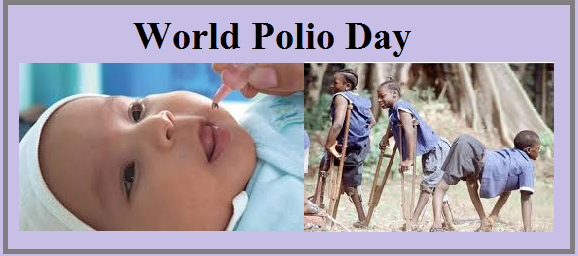
World Polio Day observed on 24 oct 2020

History of Polio

World Polio Day is observed on October 24 every year to raise awareness for polio vaccination and eradication of polio. The World Polio Day was established by Rotary International over a decade ago to commemorate the birth of Jonas Salk who led the first team to develop a vaccine against poliomyelitis.

Theme 2020

2020 theme for World Polio Day is “Stories of Progress: Past and Present.” As per WHO use of the poliovirus vaccine and subsequent widespread use of the oral poliovirus, developed by Albert Sabin, led to the establishment of the Global Polio Eradication Initiative (GPEI) in 1988. As of 2013, GPEI had reduced polio worldwide by 99%.

Through the Global Polio Eradication Initiative (GPEI), CDC works with partners to eradicate polio and end the suffering from this devastating disease. Stopping polio in all forms will require us to be resilient, adapt, and innovate to deliver a polio-free world. CDC and polio partners are adapting polio eradication efforts to mitigate the obstacles presented by covid-19.

What is Polio?

Polio is a crippling and potentially fatal infectious disease. There is no cure, but there are safe and effective vaccines. Polio can be prevented through immunization. The Polio vaccine, given multiple times, almost always protects a child for life. The strategy to eradicate polio is, therefore based on preventing infection by immunizing every child until transmission stops, and the world is polio-free.

World Polio Day: Polio prevention & treatment

There are two types of vaccine that can prevent polio:

  • Inactivated poliovirus vaccine (IPV) given as an injection in the leg or arm, depending on the patient’s age. Only IPV has been used in the United States since 2000.
  • Oral poliovirus vaccine (OPV) is still used throughout much of the world.

The Polio vaccine protects children by preparing their bodies to fight the poliovirus.

The day also celebrates progress and the people, volunteers, and local health workers, who make it possible by getting their own children vaccinated. It honors the people working to reach every last child until no child’s future is threatened by the impact of this disease.

source: https://www.indiatoday.in/information/story/world-polio-day-2020-history-theme-and-all-you-need-to-know-1734679-2020-10-24

Categories
COVID-19 Medical Updates

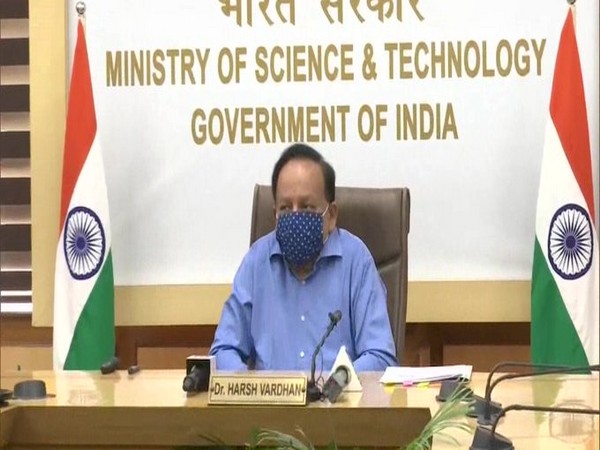
Dr. Harsh Vardhan launches CuRED, COVID-19 clinical trials portal

The Union Health Minister Dr. Harsh Vardhan on October 20, 2020, launched CuRED (CSIR Ushered Repurposed Drugs). A website that will provide comprehensive information about the COVID-19 trials that CSIR- Council of Scientific and Industrial Research is engaged in a partnership with ministries, government departments, and industries.

The Minister lauded the efforts of CSIR for being at the forefront of the ongoing fight against COVID-19 and prioritizing clinical trials, generating data for their regulatory approval, and helping launch drugs and diagnostics in the market. He commended the approach of using repurposed drugs and also, synthesizing COVID-19 drugs through new processes and transferring to Industry.

CSIR is also working with the Ministry of AYUSH for clinical trials of AYUSH drugs and has undertaken safety & efficacy trials of AYUSH prophylactics and therapeutics based on individual plant-based compounds and in combination. Five clinical trials involving Withaniasomnifera, Tinosporacordifolia + Piper longum(in combination), Glycyrrhizaglabra, Tinosporacordifolia & Adhatodavasica (individually and in combination) and AYUSH-64 formulation are undergoing safety and efficacy trials.

A key clinical trial of CSIR is the Sepsivac (Mw) against COVID -19 in partnership with Cadila. The phase 2 clinical trial has been completed successfully on critically ill COVID-19 patients, and more extensive Phase 3 trial is on the anvil. Further, the Phase 2 trial of phytopharmaceutical AQCH on Covid-19 patients with Sun Pharma and DBT is underway.

In addition to clinical trials of repurposed drugs and vaccines, CSIR has been involved in clinical trials of diagnostics and devices.

Dr. Harsh Vardhan emphasized that while the scientists are working on developing drugs and vaccines, as of now, social distancing, wearing masks and other precautions are essential and must be duly followed if we have to win the fight against COVID-19.

Dr. Shekhar C Mande, Secretary, DSIR and DG-CSIR, Dr.Ranjana Aggarwal, Dir, NISTADS, and Dr. Geetha Vani Rayasam, Senior Principal Scientist & Head, Science Communication and Dissemination Directorate CSIR HQ, were present on the occasion. CSIR Directors, Heads of Departments, and Scientists involved in Clinical Trials joined the event virtually.

Categories
COVID-19 Medical Updates

No Fasting: Doctor’s advice to COVID -19 patients

COVID-19 is an ongoing pandemic, affects different people in different ways. Most infected people will develop mild to moderate illness and recover without hospitalization. As the festive season has started in India celebrates Navratri, followed by Karwachauth. People of the country do fast during these festivals.

Doctors have advised people to avoid fasting during this festive season and make necessary changes to safeguard their health, especially if they are recovering from a Covid infection or belong to the high-risk group.

“People who are Covid positive or are recovering from Covid infection should avoid fasting during Navratri or Karwa Chauth. Those who are considered highly susceptible to the virus — elderly, people with diabetes, hypertension or other comorbidities, and pregnant and lactating women — should in no way fast during the pandemic,” said Col Vijay Dutta, senior consultant, internal and respiratory medicine at Indian Spinal Injuries Centre, New Delhi.

“Intermittent fasting shifts the primary energy source of the body from glucose to free fatty acid (FFA) which helps burn fat. However, fasting may reduce the body’s innate defence mechanisms as well as adaptive immune responses as immune cells which rely on glucose to sustain their function and proliferation. Reduced glucose availability and hypoinsulinemia during fasting may have negative effects on immune mechanisms,” he explained.

The doctors also advised pregnant and lactating women not to fast in such conditions. They cautioned that the whole day fasting could interfere with natural metabolism causing a hormonal imbalance which may lead to acidity, bloating, nausea, and discomfort.

Gauri Agarwal, a senior gynaecologist & fertility expert at Seeds of Innocence, New Delhi, said that the whole day of fasting can affect the blood sugar levels in pregnant women.

Pregnant women or lactating mothers should avoid fasting on both Navratri and Karwa Chauth. Day-long fasting can create stress on the body and adversely impact the blood sugar level, pushing it higher than normal.

source:https://www.tribuneindia.com/news/health/avoid-fasting-docs-advice-to-high-risk-covid-candidates-158017