
Most parents believe that the way to raise their children is to raise them the way they were raised.
Most parents believe that the way to raise their children is to raise them the way they were raised. After all, most parents have “done well” in life and so should their children adhering to the same school of parenting. I say “doing well” as we in India we are very particular about “doing well”.
The old school needs tweaking as times have changed and changing at an unprecedented pace. A generational shift in terms of what is acceptable and what is the norm is not 20 or 10 anymore it is 5 years now. I see this everyday, when I interact with a 10 year old and her or his sibling who is 5 years younger. This poses a big challenge as parents need to adopt, adapt and be open to change.
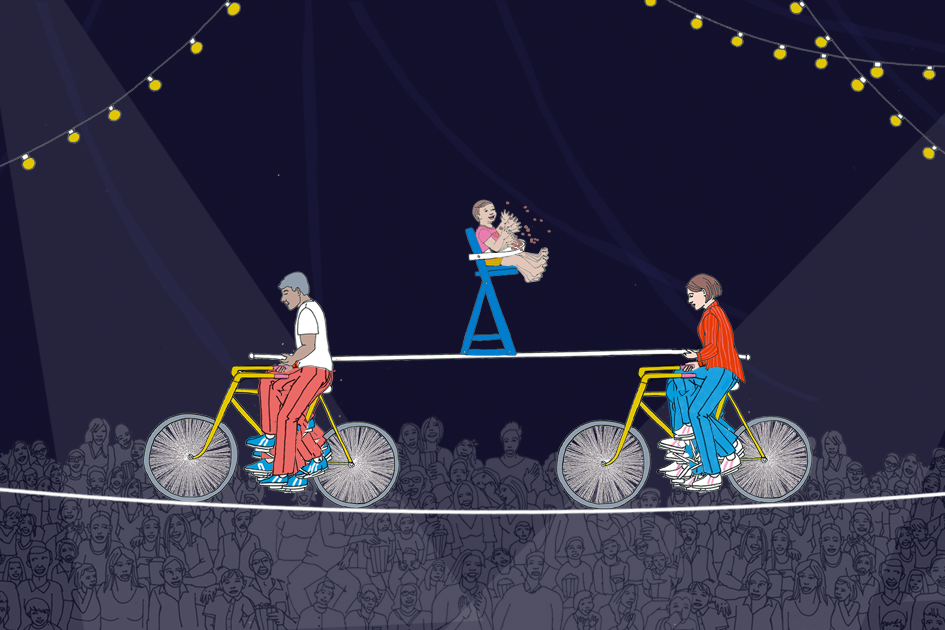
New age parenting requires parents to embrace new parenting styles. While the fundamentals in terms of instilling virtues that are important like humility, honesty, compassion, forgiveness, gratitude among others remain unchanged, the approach on how to get through to children needs recalibration.
How does one communicate with children who don’t want to hear, forget listen. One can do that by having a meaningful two way communication with the child driving the conversation – the topic, the duration, the frequency, the flow, and when to end. The conversation has to be devoid of sermonising, comparisons and in “my experience”. It would be good to remember what Charles Wadsworth has said.
“By the time a man realizes that maybe his father was right, he usually has a son who thinks he’s wrong”.
While such a conversation can take place with an older child, it is important to realise that young children are remarkably perceptive. Their eyes closely observe, their ears intensely listen and their minds keenly process what their environment has to offer. These experiences at a young age can have a lifelong impression.

Parents should not forget what Jim Hansen had said “They (your children) don’t remember what you try to teach them. They remember what you are”.
While conventional parenting expects children to show deference, accept without protest what a parent wants and not engage in a debate or an argument, that today is an unrealistic expectation. Children have access to a lot of information and will accept only what meets with their knowledge of the subject and not just because it is expected. Children will respect their parents but that respect needs to be earned. It can no longer be taken for granted. I know, you must wonder, what am I saying. Look around with an open mind and you might agree.
A strong bond needs to be formed with children at a young age and then as the child goes older, the relationship needs to evolve into a deep friendship. A child will always need someone they can turn to, who will love her or him unconditionally and won’t be judgemental. Who can be better than a parent at that.
Some dos and don’ts:
1. Making Mistakes and Accepting Flaws
• No parent is perfect, so parents shouldn’t expect their children to be perfect.
• Every mistake is a lesson; parents and children must learn together.
• Parents need to avoid being judgemental as that can destroy a parent–child relationship.
2. Be a Dreamer
• Parents need to encourage children to dream.
• Parents should help fulfil the dreams of our children to the greatest extent possible.
• Just because a child wants to do something different, he or she should not be discouraged.
• Parents must not kill our child’s dream.
• Parents should not expect their children to fulfil their (parents’) dreams.
3. Handling Pressure
• Children face a lot of pressure to perform anyway. Parents should not add to that pressure.
• Parents should handle pressure better themselves and serve as role models.
• Some amount of pressure is inevitable, so we need to help our children learn to feed off it.
4. Forgive and forget
Unless children see their parents forget and forgive, and that too frequently, they will find it very hard to even try to walk down the path of forgiveness.
5. Be the Change
• If parents themselves do not want to change, they should not expect any change in their children.
• If children see their parents change, they will want to do the same.
Read More At-https://bit.ly/3tzyn5a