Categories
COVID-19 Medical Equipments Medical Updates Medicine & Health

Blood oxygen monitors don’t work as well on people with darker skin: FDA

Synopsis

As smartwatches now claim to read blood oxygen levels, the US Food and Drug Administration (FDA) has raised fresh concerns over pulse oximeters that monitor blood oxygen levels in the hospital and at home.

As smartwatches now claim to read blood oxygen levels, the US Food and Drug Administration (FDA) has raised fresh concerns over pulse oximeters that monitor blood oxygen levels in the hospital and at home.

According to an FDA advisory panel, blood oxygen monitors need to be more carefully regulated as they don’t work as well on people with darker skin tones.

In 2021 during the pandemic, the FDA had issued an alert saying that these devices have “limitations”.

Blood oxygen monitors don't work as well on people with darker skin: FDA

“As part of its premarket evaluation of pulse oximeters, FDA has long required premarket data assessing pulse oximeter performance in subjects with different skin pigmentation. However, a December 2020 published report suggests that pulse oximeters may be less accurate in patients with darker skin pigmentation,” said the FDA panel in its report.

The panel reviewed multiple research studies that show oximeters don’t work as well on darker skin.

It delayed Covid treatments in Black patients because the devices didn’t show dropping oxygen levels, according to one study.

The over-the-counter pulse oximeters or “wellness” devices aren’t reviewed by the FDA.

An assessment of the US pulse oximeter market demonstrates the use of these devices increased during the first year of the Covid-19 pandemic.

Since the December 2020 study, additional real-world studies have been published suggesting increased risk for missed diagnosis of “occult hypoxemia”, delays in treatment eligibility decisions and worse patient outcomes among subjects with darker skin pigmentation.

“Occult hypoxemia” is defined as Sao2 less than 88 per cent despite a Spo2 of greater than 92 per cent, based on previously published parameters.

Pulse oximeters are widely used by many types of healthcare providers and consumers to obtain an indirect measure (SpO2) of arterial blood oxygen saturation (SaO2).

“We need to take appropriate steps to remove the growing uncertainty around these devices and ensure the health and safety of the public,” anesthesiologist Jesse Ehrenfeld told the panel, reports The Verge.

Read more at-https://bit.ly/3NBPWKY

Categories
Government Guidelines Medical Updates Medicine & Health

Responsive Policymaking For Achieving India’s Tobacco Control Goals

About 200 million people use smokeless tobacco, 72 million use beedis and 28 million use cigarettes in India. However, the focus of tobacco control and taxation has been on cigarette smokers only. This blinkered approach ignores the plight of the socio-economically disadvantaged people who use beedis or smokeless tobacco.

We need to start conversations with our patients about tobacco use – more so about smokeless tobacco. But the usual Power Talks tend to demonize Nicotine as a root cause of all ills, treat tobacco as a taboo and cast uncalled-for assumptions about smokers.

The first step would be to accept that nicotine and tobacco are not interchangeable: Nicotine by itself is not carcinogenic. Delinking the two can radically alter the way we go about reducing the suffering and deaths from tobacco. We need to educate ourselves all over again about nicotine.

Responsive Policymaking For Achieving India’s Tobacco Control Goals


Consider the stats and facts critical to tobacco control –

A single “cessation-only” strategy to get all people to quit will not produce spectacular results.

The quit rate in India is about 0.5% annually. (a 99.5% failure rate).

It takes smokers over 30 attempts to finally quit – and the large majority never manage to do so; because the likelihood of quitting diminishes with each attempt, as per a study by Chaiton et al in 2016.

Over 70% of smokers want to quit, but only 7% manage to do so, as per the US CDC in 2017.

The Government’s plan to add Nicotine Replacement Therapy products (NRT) — chewing gums, patches, tablets, oral strips and lozenges — to the National List of Essential Medicines (NLEM) is a very welcome step in helping people to quit tobacco, more so as the prevalent problem here is smokeless tobacco. The objective could be better served if products like nicotine pouches and inhalers are also considered for inclusion in the NLEM.

We need to understand that an awareness initiative that portrays the truth about nicotine, without hedging, obfuscation or prevarication will give hope to those of us in tobacco harm reduction.

Also, there is a need for a review of the prohibition on e-cigarettes. Cigarette sales have sharply plummeted in countries that allow e-cigarettes or vaping, proving that they are true substitutes. Significantly, the US FDA has approved e-cigarette and vaping devices. A statement by 15 past presidents of the Society for Research on Nicotine and Tobacco (SRNT) – a globally respected organisation dedicated to evidence-based research on tobacco and nicotine use, has called for considering the use of e-cigarettes and vaping as a means to double the quit rate.

The real question one needs to ask is – which one is safer, vaping or cigarettes? While the UK bodies have stated that vaping is 95% safer than cigarettes, other public health bodies have chosen not to answer this question at all.

It boggles the mind that a less harmful method (e-cigarettes) has been banned while cigarettes and beedis continue to be freely available in India. The argument around the “gateway theory” that vaping leads to increased smoking has been comprehensively debunked. Moreover, the UK bodies hold that vaping is not smoking.

During a recent interaction with diverse stakeholders, I was not surprised to see the government policy of bans – like the Prohibition of Electronic Cigarettes Bill, 2019 – receiving a big thumbs-down from tobacco harm reduction leaders and medical practitioners.

Key Takeaways from the discussion –

Ban on the sale and manufacture of e-cigarettes has failed abysmally

We lost a public health opportunity to regulate these devices, hold manufacturers to safety standards and enforcement of age checks

Vaping has been driven underground, where it is freely available to people of all ages with little safety or standards

The reasons for the ban – EVALI, teen vaping, higher health risks – have been debunked.

We need to include tobacco users in policymaking

We need to re-focus our national tobacco control programme on the real problem – smokeless tobacco

India’s harm-reduction campaign can greatly benefit from recent breakthroughs in the UK, Japan, and New Zealand. They have embraced the use of reduced-risk products for combating the harms of tobacco. The same goes for Sweden with its sinuous and nicotine pouches.

Australia’s controversial step of making e-cigarettes available only on a doctor’s prescription is not optimal as social smokers do not always identify as smokers and hence, they are less likely to seek medical help. Also, policies that restrict reduced-risk products have the unintended effect of increasing tobacco use.

In making laws that affect tobacco users, we need to respect their agency and autonomy as well as consider their views. “Nothing about me without me” – a phrase uttered by Valerie Billingham in 1998 captures everything one needs to say about inclusion and shared decision-making.

Read more at-https://bit.ly/3T59PuY


Categories
COVID-19 Government Guidelines Medical Updates Medicine & Health

India adds 1,604 Covid-19 cases, active caseloads fall by 485

Synopsis
According to the health ministry, the active cases comprise 0.04 percent of the total infections, while the national Covid-19 recovery rate was recorded at 98.77 percent. Active Covid-19 caseloads fell by 485 in a span of 24 hours.

India’s coronavirus caseloads rose by 1,604 in the last 24 hours to take the total tally to 4,46,52,266, while the active cases fell to 18,317, the Union Health Ministry said.

With eight more fatalities, the death toll has climbed to 5,29,016, the data updated by the government at 8 am said.

The new fatalities include three deaths reconciled by Kerala.

India adds 1,604 Covid-19 cases, active caseloads fall by 485

According to the health ministry, the active cases comprise 0.04 percent of the total infections, while the national Covid-19 recovery rate was recorded at 98.77 percent.

Active Covid-19 caseloads fell by 485 in a span of 24 hours.

Daily positivity rate stood at 1.02 percent, and the weekly positivity rate was at 1.08 per cent.

Case fatalitity rate was at 1.18 percent, while the number of people who have recuperated from the disease rose to 4,41,04,933.

India’s COVID-19 tally had crossed the 20-lakh mark on August 7, 2020, 30 lakh on August 23, 40 lakh on September 5 and 50 lakh on September 16. It went past 60 lakh on September 28, 70 lakh on October 11, crossed 80 lakh on October 29, 90 lakh on November 20 and surpassed the one-crore mark on December 19.

The country crossed the grim milestone of two crore on May 4 and three crore on June 23 last year. It crossed the four-crore mark on January 25 this year.

According to ministry data, 219.63 crore doses of vaccines have been administered in the country so far under the Covid-19 vaccination drive.
Read more at-https://bit.ly/3FGSFkB

Categories
Medical Equipments Medical Updates Medicine & Health

Health tips on rebuilding your work life after suffering a heart stroke

Returning to work after suffering a cardiac arrest? Here’s what you need to know about the kind of help you require and a back-to-work program that can help to create a safe workspace for people with heart stroke tendency .

Stroke is a major public health challenge in India, specifically with the annual stroke cases rising since 2000 and this non-communicable disease with a high burden is one of the leading causes of disability in the country. Furthermore, stroke can affect persons of various age groups but an alarming number of people are getting affected in the age group of 30 to 40 years, which makes up a considerable size of the working population.

Stroke can affect muscle strength, walking ability, balance, speech, bladder control and can lead to psychological problems and loss of independence to a certain extent. While there have been advancements in stroke care, there are still challenges in rehabilitating person with stroke hence, it is important to ensure that timely and correct treatment is provided to persons with stroke to mitigate the long-term effects and enable them to lead healthy lives.

Health tips on rebuilding your work life after suffering a heart stroke

However, it is natural for a person to face certain difficulties after a stroke. This instantly affects confidence levels when one returns to work, and often lack the courage to ask for support in performing their duties.

In an interview with HT Lifestyle, Dr Shiva Kumar R, Clinical Coordinator, Senior Consultant Neurologist Epileptologist at Sakra World Hospital in Bengaluru, insisted that employees should speak up about the kind of help they require. According to him, some quick factors to keep in mind are:

1. Your commute to work and alternatives if you cannot travel to the office every day

2. The number of hours your body will allow putting in for work without straining yourself

3. Create a list of tasks that you can and cannot perform in line with your job description and discuss it with your manager

4. Proactive work reviews with your team to smoothen out any operational issues and share responsibilities or delegate tasks if need be

5. Most notably, one must have a clear communication with their manager on the effects of stroke, medication, and emotional state of mind for a mutually beneficial arrangement for everyone involved at work

He said, “On several occasions, companies are not equipped to navigate the challenges of person with stroke and provide them with the support they need. There is an acute need for guidance and back-to-work programs that foster an inclusive working environment for employees with difficulties.” He revealed that some elements in a back-to-work program that can help to create a safe workspace for people with stroke. These include:

1. Ergonomic workstations and equipment such as stand-sitting desks, among others

2. Speech recognition software to aid patients suffering from speech impairment

3. Reviewing the company’s leave policies so that an employee can take personal time off without feeling guilty or facing any financial strain

4. Flexible working hours and models, that allows employees to work from home permanently if needed

5. Most importantly, communicating and being flexible with your employee who is returning to work after a stroke

Dr Shiva Kumar R suggested, “A stroke should not hinder letting one live their life to the fullest. When employers and employees can work cohesively to chart a plan that works for everyone, it can be a major confidence booster for the person affected with stroke. That, in turn, would lead to enhanced emotional well-being and greater productivity. It is imperative that instead of viewing this issue with fear and reluctance, it is addressed with compassion and acceptance.”

Read more at-https://bit.ly/3zwXHMo

Categories
Government Guidelines Medical Updates Medicine & Health Techniques

India to see 80% increase in investment of digital healthcare tools in the next 5 years: MoS Jitendra Singh

Synopsis

Singh added that India has all the essential ingredients for the exponential growth in this sector, including a large population, a robust pharma and medical supply chain, smartphone users, and technical manpower.

The COVID-19 pandemic has accelerated the adoption of digital technologies across industries, including health care, which resulted in new innovations and an uptake in virtual care.

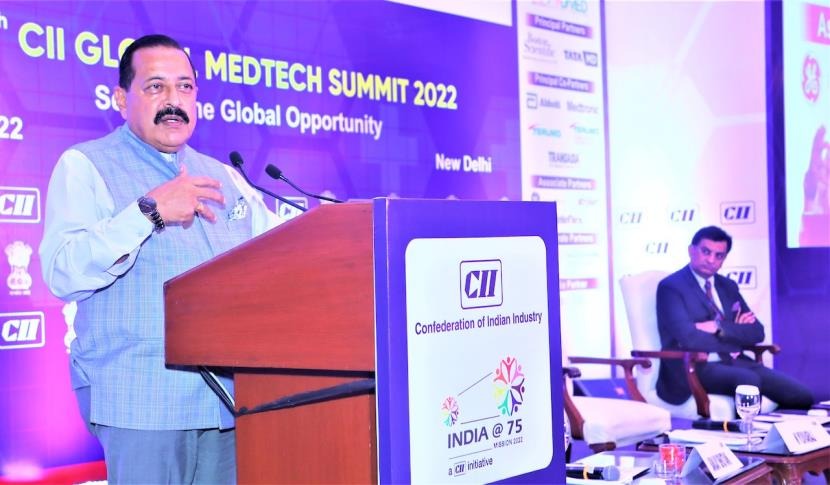
Speaking at the Global Digital Health Summit, Expo & Innovation Awards Addressing the summit, Minister of State for Science and Technology, Jitendra Singh, said, “This summit is an excellent opportunity to focus on research and innovation priorities, particularly in relation to the digital advances in the healthcare sector. Spurred by the COVID-19 pandemic, rapid digitisation, increasing internet and smartphone penetration, and government initiatives like Make in India and National Digital Health Mission, the healthcare sector is digitizing and innovating at an accelerated speed,” said Singh.

The Minister added that under PM Modi’s leadership healthcare has become more focused on innovation and technology over the past few years. 80% of the healthcare systems are aiming to increase their investment in digital healthcare tools in the coming five years. Indian innovators are developing pathbreaking health-tech products and solutions. The government is applying these digital health developments through the Ayushman Bharat Digital Mission,” said Singh.
India to see 80% increase in investment of digital healthcare tools in the next 5 years: MoS Jitendra Singh

Singh added that India has all the essential ingredients for the exponential growth in this sector, including a large population, a robust pharma and medical supply chain, smartphone users, and technical manpower. “As the pace of digital innovation accelerates, the opportunities for healthcare companies and manufacturers will multiply and patient outcomes will improve,” Singh said.

In a bid to address issues critical to building a digital ecosystem aiming at digital health for all and how organisations can adopt digital technologies, the Global Digital Health Summit, Expo & Innovation Awards kicked off at New Delhi’s Vigyan Bhawan on October 28, 2022 with an attendance of more than 1500 delegates from 50 countries.

The two-day summit began with a welcome address by the Summit co-chair Brian O’Connor and a keynote address by Bakul Patel, Senior Director – Global Digital Health, Strategy and Regulatory, Google. It was followed by a panel discussion on ‘Return on Investment in Digital Health’. Chaired by Rajendra Pratap Gupta, Chairman – Dynamic Coalition on Digital Health, IGF – United Nations, and the panel featured Cathy Wolfe, President & CEO, GGM, Wolters Kluwer, USA; Dr Devi Shetty, Chairman & Executive Director, Narayana Health; Rustom Lawyer, Co-founder & CEO, Augnito; Anand Iyer, Chief Analytics Officer, Welldoc Inc, USA; and Manivannan Selvaraj, Founder & MD, Kauvery Group of Hospitals. The session highlighted the importance of the clinical decision support system (CDSS), challenges, and the way forward for affordable and accessible healthcare.

“In India, as of 2020, the ratio of doctors to population stands at 7.35 to 10,000. It is important to overcome the ratio and provide cost-efficient access to quality care and onboard into digital health. CDSS provides evidence-based medicine, which is way faster and diverse than experience-based medicine. This arrangement not only helps with reducing physician burnout but also ensures improved patient outcomes. Equitable healthcare, the right care at the right time, improved outcomes can result in immediate ROI,” said Wolfe.

Commenting on the way forward, Lawyer shared, “I believe that better healthcare for all is possible by leveraging the power of digital tech artificial intelligence. For best results, we need to build ICT strategy and framework keeping technology investment as a profit centre rather than a cost centre, drive population health analytics by investing in technology that introduces and enhances EMR adoption, invest in solutions that make it easier for doctors to adopt digital solutions such as ABDM,  and invest in technology that augments current workforce as shortage of doctors cannot be solved overnight.”

The second half of the event had Patricia Mechael, Co-founder – Global Digital Health Index, delivering the keynote address wherein she highlighted the challenges in data sharing and accessibility, followed by a panel discussion on ‘Adoption of digital health across the continuum of care: hospitals, pharma, clinicians- challenges and solutions’, featuring Rajesh Ranjan Singh, CEO – WISH Foundation; Uma Nambiar, MD – Zeeden Life Sciences; Sudarashan Jain, Secretary-General, Indian Pharmaceuticals Alliance; Manivannan Selvaraj, Founder & MD, Kauvery Group of Hospitals; Ruchi Tushir, VP & GM – Wolters Kluwer GGM India; and Binu Sharma, Senior Director Nursing, Max Healthcare Institute.

“Data accessibility plays an important role in delivering high quality patient care as it provides clinicians with immediate access to patient records, including medical history, test results and relevant information provided by other clinicians. With access to the right data, clinicians can deliver exceptional healthcare by making informed decisions substantially faster,reducing wait times and contributing to providing better healthcare at a better cost. However, access to data that is clean, complete, accurate for use is still an ongoing battle in the healthcare sector. This needs to be addressed immediately,” said Mechael in her keynote address.

The summit concluded with another panel discussion on ‘Making India a World Leader in Digital Health Implementation’ featuring Bharat Lal, Director General – National Centre for Good Governance, GoI; Vaidya Rajesh Kotecha, Secretary – AYUSH, GoI; Vivek Sehgal, Director General – Organisation of Pharmaceutical Producers of India; and Sanjay Sood, Project Director – eSanjeevani (National Telemedicine Service), C-DAC Mohali.

Other highlights of the event included the release of ‘Women’s Health Guideline’ and ‘Digital Health for All – By 2028’, and launch of Project Concern 2028 and Health Parliament.
Read More at-https://bit.ly/3gYmAKD

Categories
COVID-19 Medical Equipments Medical Updates

BXX variant of Covid virus spreads, but less severe

Synopsis

According to him the proportion of BXX which is a recombinant variant has increased gradually by20-30% in the country. BA2.75 continues to be the dominant variant accounting for 60% of Covid-19 cases. An INSACOG member said they are monitoring the spread. A review meeting was held on Friday to evaluate the Covid-19 situation across the country.

The Indian Sars-CoV-2 Consortium on Genomics (INSACOG), a network of laboratories monitoring genomic variations of the Covid-19 virus, has found the proportion of BXX sub-variant increasing in the country. However, the good news is that the severity and hospitalisation have not increased, a member told ET.

According to him the proportion of BXX which is a recombinant variant has increased gradually by20-30% in the country. BA2.75 continues to be the dominant variant accounting for 60% of Covid-19 cases.

BXX variant of Covid virus spreads, but less severe

An INSACOG member said they are monitoring the spread. A review meeting was held on Friday to evaluate the Covid-19 situation across the country.

In the last few weeks multiple Omicron subvariants like BQ.1, and BXX have been detected along with other emerging sub-variants like BA5.1.7 and BF.7. BQ.1 is an offshoot of the variant related to the BA.5 version that drove the surge in the US.

Keeping in view the expected rise in the number of cases due to the festival season, the Union health minister also held a meeting to review the situation last week.

Read more at-https://bit.ly/3Fp3Lul

Categories
Medical Updates Medicine & Health

Cancer drugs could potentially be used to fight Malaria: Research

A cancer medication undergoing clinical testing has demonstrated the potential to protect from, cure, and prevent transmission of malaria.

cancer treatment presently in clinical testing has the potential to guard against, cure, and prevent malaria transmission. The groundbreaking discovery by a multinational team led by Penn State researchers gives new hope against a disease that kills over 500,000 people each year, disproportionately impacting children under the age of five, pregnant women, and HIV patients. (Also read: Here’s how to take care of malaria patients )

The research team, led by experts from the University of Cape Town (UCT), published their findings in the journal Science Translational Medicine.

Cancer drugs could potentially be used to fight Malaria: Research

“Disruptions to malaria vaccinations, treatment, and care during the COVID-19 pandemic, combined with increasing reports of resistance to first-line artemisinin-based combination therapies have led to an increase of malaria cases and deaths worldwide,” said Manuel Llinas, distinguished professor of biochemistry and molecular biology and of chemistry at Penn State. “The identification of new ways to treat the disease is crucial for malaria control. Ideal treatments would operate differently than current front-line drugs to circumvent current drug resistance and act on multiple targets or stages of the parasite’s life cycle in order to slow future resistance.”

The researchers wanted to see if sapanisertib, a medicine now in clinical trials for the treatment of tumors such as breast cancer, endometrial cancer, glioblastoma, renal cell carcinoma, and thyroid cancer, could be used to treat malaria.

Sapanisertib has the ability to guard against, cure, and prevent malaria transmission by killing the malaria parasite at various phases of its life cycle inside its human host. This includes when the parasite is in the host’s liver, where it first develops and multiplies; when it is in the host’s red blood cells, where clinical signs are detected; and when it splits sexually within the host’s red blood cells to generate the parasite’s transmissible forms. Because the transmissible form is normally taken up by the female Anopheles mosquito during a blood meal and carried on to infect another person during subsequent blood meals, eliminating the parasite should also prevent subsequent infections.

The researchers also discovered that sapanisertib inhibits various proteins called kinases in the malaria parasite, which is how the medicine kills the human malaria parasite.

Sapanisertib’s multistage activity and antimalarial efficacy, combined with potent inhibition of multiple protein targets — including at least two that have previously been shown to be vulnerable targets for chemotherapeutic intervention — will serve as the foundation for future research into the potential of repurposing sapanisertib to treat malaria.

Repurposing existing drugs

The research team used a technique known as drug repurposing, which tries to uncover new uses for an existing drug approved by a regulatory agency in one illness area but not in another. This strategy is used to avoid the difficulties of discovering and developing a new medicine from scratch, which is a time-consuming and expensive procedure with minimal returns in terms of the number of drugs that eventually make it to market.

“The problem is amplified in neglected and tropical diseases such as malaria where existing resources are strained and the financial returns low,” said Kelly Chibale, founder and director of the UCT Drug Discovery and Development Centre, Neville Isdell Chair in African-centric Drug Discovery and Development at UCT, and leader of the research team. “The drug repurposing approach of investigating existing drugs as potential therapies for other diseases shortens the process as in most cases the candidates, in this case, sapanisertib, will have been through several stages of clinical development and will have well-known exposure and safety profiles in humans.”

While novel uses for approved treatments have occasionally been discovered by chance in the drug repurposing approach, strategies exist to identify drugs that can be used for other diseases rationally. In this investigation, the researchers used medicines that act on human protein targets and may be active on similar protein targets in the malaria parasite.

Tarrick Qahash, an undergraduate turned technician in Penn State’s Llinas lab, employed mass spectrometry-based metabolomics to determine the parasite’s reaction to a number of antimalarial drugs as part of the Malaria Drug Accelerator project supported by the Bill and Melinda Gates Foundation.

“In cancer, sapanisertib inhibits a protein kinase called mTOR that regulates a variety of cellular processes, including immune response and autophagy. However, until this study, it was unclear how it would affect the malaria parasite,” said Llinas. “We used a process called metabolic fingerprint profiling and found that the parasite’s response to sapanisertib resembled inhibition by other protein kinase inhibitors we had investigated. Through its effects on the parasite’s metabolism of hemoglobin–a protein that carries oxygen through the blood–we determined that sapanisertib primarily inhibits the kinase called PfPI4Kb, but we also found that it can target a kinase called PKG.”

Because of their relevance in cellular function, kinases have been widely researched as therapeutic targets in numerous disorders. This makes them appealing for use in other disorders, such as malaria. Kinase targets that are required for various phases of the malaria parasite life cycle have previously been discovered.

Potential impact

This research opens up new possibilities for the rational creation of malaria medications that target two or more protein targets in the malaria parasite. This could also benefit patients in a clinical setting since it makes it more difficult for the parasite to build resistance to a treatment that kills through numerous routes.

Recognizing the possible safety issues associated with utilizing a cancer medicine to treat malaria, the study team is now working to understand the drivers of sapanisertib efficacy, dose needs, and therapeutic window for malaria. The goal is to assess how the estimated human dose of sapanisertib for malaria differs from the maximum tolerated dose used to treat cancer.

“This work highlights the importance of local and international research partnerships to solve critical human challenges based on mutual interest and responsibility,” said Chibale. “It demonstrates how advances in science and medicine can be made when industry and academic institutions share knowledge and expertise.”

Read more at-https://bit.ly/3fkaR8B

Categories
COVID-19 Government Guidelines Medical Equipments Medical Updates Medicine & Health

Global roll-out of 12 billion COVID-19 vaccine doses largest-ever but access an issue: WHO

Synopsis

Addressing the annual general meeting of the Developing Countries Vaccine Manufacturers Network (DCVMN) virtually on Thursday, he flagged the issue of inequities in access to COVID-19 vaccines.

World Health Organization (WHO) director-general Dr Tedros Adhanom Ghebreyesus has said that global roll-out of more than 12 billion COVID-19 vaccine doses is the largest and fastest in human history.
Addressing the annual general meeting of the Developing Countries Vaccine Manufacturers Network (DCVMN) virtually on Thursday, he flagged the issue of inequities in access to COVID-19 vaccines.

The three-day event is being co-hosted by the Pune-based Serum Institute of India (SII), the world’s largest vaccine manufacturer by volume, said a statement.
“Global roll-out of more than 12 billion COVID-19 vaccine doses is the largest and fastest in history with an estimated 60 per cent doses produced by manufacturers in developing countries. Despite this achievement, stark inequities in access to COVID-19 vaccines remain,” he said.

Global roll-out of 12 billion COVID-19 vaccine doses largest-ever but access an issue: WHO

“These inequities are due partly to the fact that globally vaccine production is too concentrated. To address this, the WHO and our partners have established the mRNA Tech Transfer hub in South Africa to facilitate the know-how in low & middle-income countries,” Ghebreyesus said.
Adar Poonawalla, CEO of SII, said it was a proud moment for his company to co-host the 23rd DCVMN annual general meeting in Pune.

“Today, the world is more aware and focused on chalking out an ambition-to-action roadmap for future pandemic preparedness. For that, building the infrastructure and regulations to ensure global equity and timely access to vaccines is the foremost priority,” Poonawalla said.

Union Minister for Health and Family Welfare Mansukh Mandaviya delivered the inaugural address.
DCVMN is an international alliance of manufacturers from developing countries who are engaged in innovation, research, development, manufacturing and supply of high-quality vaccines to 170 countries.

The organisation aims to protect people against known and emerging infectious diseases globally by increasing the production of high-quality vaccines in developing countries.

Read more at-https://bit.ly/3gKtK55

Categories
COVID-19 Government Guidelines Medical Updates Medicine & Health

Omicron, sub-lineages remain dominant variant in India: INSACOG

Synopsis
Amid the declining trajectory of daily Covid-19 cases in India, the Indian SARS-CoV-2 Consortium on Genomics (INSACOG) on Sunday said that the Omicron and its sub-lineages continue to be the dominant variant in India.

New Delhi, Amid the declining trajectory of daily Covid-19 cases in India, the Indian SARS-CoV-2 Consortium on Genomics (INSACOG) on Sunday said that the Omicron and its sub-lineages continue to be the dominant variant in India.

“Omicron and its sub-lineages continue to be the dominant variant in India. BA.2 and its descendent lineages, in particular, BA.2.75 has been mostly found over the last week in different parts of India,” the INSACOG said in its recent bulletin about India’s current scenario.

It further said that the incidence of BA.5 has decreased in the last few weeks. Any surge in hospitalisation or any disease severity has not been observed during this time-period.

Omicron, sub-lineages remain dominant variant in India: INSACOG

Globally, the INSACOG said that the Omicron is the most abundant variant of concern (VOC) circulating worldwide, accounting for 99.4 per cent of sequences reported globally. BA.5 Omicron descendent lineages continue to be dominant globally.

“The prevalence of BA.4 descendent lineages, including BA.4.6 decreased during last week. The prevalence of BA.2 descendent lineages (BA.2.X) remained constant last week. BA.2.75, an Omicron descendent lineage under monitoring, still shows a relatively low prevalence globally, however, a number of countries have observed recent increasing trends,” said the INSACOG.

India reported 1,994 fresh Covid cases and four deaths in the last 24 hours, taking the national fatalities tally to 5,28,961. The active caseload of the country presently stands at 23,432 cases, accounting for 0.05 per cent of the country’s total positive cases, the Union Health Ministry said on Sunday.
Read more at-https://bit.ly/3Dsw7SR

Categories
Medical Updates Medicine & Health

Centre of Excellence for cancer care and blood disorders at Amrita Hospital, Faridabad

Synopsis
Amrita Hospital’s Department of Hematology, Medical Oncology and BMT helps patients treat blood disorders, benign diseases, as well as blood cancers and solid cancers in adults and children.

Established in 1998 as the Amrita Institute of Medical Sciences, Amrita Hospital is recognised as a Centre of Excellence in Quality Healthcare, Education and Research. Over the years, Amrita Hospital has provided affordable healthcare to over 1.21 crore outpatients and 8.87 lakh inpatients. The hospital has spent over Rs. 700 crores exclusively towards healthcare charity and has performed more than 23,000 surgeries annually. Needless to say, the hospital has earned a reputation for being  affordable and providing quality medical care to the general population.

Centre of Excellence for cancer care and blood disorders at Amrita Hospital, FaridabadWhen it comes to people who are suffering from diseases that need extra care, expert care is crucial. For instance, people suffering from diseases like cancer need special healthcare facilities and constant medical attention. If we are to look at the number of cancer cases in India, which stands at around 8,00,000 new cases per year, the availability of quality healthcare in Oncology is the need for the hour for the general population.

This is where Amrita Hospital and its Department of Hematology, Medical Oncology and BMT come into the picture. The department treats blood disorders, benign diseases, as well as blood cancers and solid cancers in adults and children. The treating team has been trained at some of the best centres in India and abroad.

Alongside managing the disease, the department strongly believes in spreading awareness and preventing cancer. In fact, the doctors state that about 70% of cancers are preventable just by stopping tobacco use, moderating alcohol intake, consuming sufficient fibre in the diet, avoiding red meat ingestion, and engaging in adequate physical activity.

The most common cancer in India is breast cancer, with a high fatality rate, mainly because 75% of women are diagnosed at an advanced stage. As per the doctors at Amrita Hospital, breast cancer is curable if detected at an early stage. This can be done by self-breast examination and breast cancer screening. Cervical cancer is the second most common cancer among women in India, and more than 90% can be prevented by having the cervical cancer vaccine (Human papillomavirus/HPV) at the appropriate age. The ideology at Amrita Hospital is to reach out to the community at the grass-root level and make people aware of tobacco cessation and cancer screening.

The hospital promotes and nurtures a strong culture of evidence-based treatment backed by a robust tumour board environment where all treatment plans are rigorously reviewed and discussed between various allied departments like Medical Oncology, Hematology, Radiation oncology, Surgical oncology, Nuclear medicine, pathology, and Radiology to ensure optimal outcomes.

Amrita Hospital offers a state of the art precision oncology, systemic anti-cancer therapy, immunotherapy and targeted therapy for appropriate clinical situations after appropriate molecular and genomic work-up. For the elderly, the department provides age-applicable solutions and personalised treatment strategies. Patients and families are actively encouraged to participate in the tumour board discussion so that treatment plans are communicated transparently, and a mutual decision can be taken.

Amrita Hospital has a Blood and Marrow transplant (BMT) unit for all kinds of bone marrow transplants, including autologous transplants, allogenic transplants, matched siblings, as well as unrelated and haploidentical transplants. The transplant unit looks after pediatric and adult patients in need of stem cell transplants for haematological disorders such as aplastic anaemia, thalassemia, immunodeficiency disorders, sickle cell disease, myeloma, lymphomas and leukaemias. The hospital has  the support of various ultramodern departments and support services, including laboratories, a blood bank, interventional radiology and Intensive Care Units within the hospital.

Chimeric Antigen Receptor – T (CAR- T) cell therapy will also be available as a therapeutic as well as a research tool in the cancer centre soon. The focus of the department is not only on treating blood disorders and cancer but also in helping the patient and the family holistically and compassionately, which will help them deal with the emotional, social and financial distress associated with the diseases.

Read more at:-https://bit.ly/3z2AYaJ