Categories
Government Guidelines Medical Equipments Medical Updates Medicine & Health Techniques

Budget 2023: NATHEALTH seeks rationalisation of GST for healthcare sector

Synopsis

​​In its submission to the finance ministry on Wednesday , the industry body said that the healthcare sector has not been able to derive the benefits of the GST transition in comparison to other sectors. In fact, the embedded taxes in the sector have increased in the post-GST regime compared to pre-GST period, it noted.

Healthcare industry body NATHEALTH has sought rationalisation of GST and enhanced insurance coverage especially in smaller cities and towns from the upcoming Budget.

n its submission to the finance ministry on Wednesday , the industry body said that the healthcare sector has not been able to derive the benefits of the GST transition in comparison to other sectors.

In fact, the embedded taxes in the sector have increased in the post-GST regime compared to pre-GST period, it noted.

Budget 2023: NATHEALTH seeks rationalisation of GST for healthcare sector

The industry body has recommended imposition of 5 per cent merit rate on the output healthcare services for all healthcare establishments (both private and government) with the option to claim full input tax credits.
Levying 5 per cent GST rate on output services for all private hospitals and an optional dual rate structure for government healthcare establishments could be an alternative, it added.

Presently GST is exempt on the healthcare services. NATHEALTH recommends imposition of 5 merit rate on these services as this would allow healthcare service providers to claim input tax credit, thereby lowering their embedded taxes burden.

NATHEALTH also sought clearance of working capital arrears both for providers and procurement organisations.

“It is imperative to build infrastructural capabilities so that people have greater access to quality and critical healthcare services. Viability gap funding by the government is essential to set up hospitals in tier-1 and tier-2 cities, encouraging increased investment in the healthcare infrastructure,” NATHEALTH President Shravan Subramanyam said.

Uniform adoption of Ayushman Bharat Digital Mission is another imperative which calls for clearly defined delivery models for innovative modules developed by private players, he added.

“If all payment backlogs both for providers and suppliers under insurance and public procurement are cleared, it would significantly improve the availability of healthcare infrastructure,” Subramanyam said.
It also sought an increase in budgetary allocation for the health sector.

Read more at-https://bit.ly/3hcmL5C

Categories
COVID-19 Government Guidelines Medical Equipments Medical Updates Medicine & Health

Omicron: 7 important tips to prevent Covid infection in winter season

It is important for people to protect themselves from seasonal flu and the possible new immune strains of the Omicron variant of SARS-CoV-2. Here are some tips to follow.

Covid-19 pandemic is far from over and one needs to be especially cautious in winters as it’s the season of viral infections including influenza and Covid. Amid pandemic turning less aggressive and people dropping guards, scientists and infectious disease specialists warn that Covid appropriate measures should continue. WHO Director-General Tedros Adhanom Ghebreyesus said: “Gaps in testing … and vaccination are continuing to create the perfect conditions for a new variant of concern to emerge that could cause significant mortality.” Omicron, the highly contagious variant of Covid, has more than 500 sublineages that is evolving fast. It is important to get tested when one has flu-like symptoms and wear masks in crowded areas. Regular hand-washing should not be ignored and it is important to keep good ventilation in offices, restaurants and other public areas.

Omicron: 7 important tips to prevent Covid infection in winter season

“Covid 19 is a virus and we have been getting viral during the winters. It is important for people to protect themselves from seasonal flu and the possible new immune strains of the Omicron variant of SARS-CoV-2. It’s essential to safeguard yourself from the cold weather and stay healthy throughout the season. Though it seems difficult, there are several ways to keep the commonly suffering ailments away from your family,” says Dr Rajesh Chawla, Senior Consultant Pulmonology and Critical Care, Indraprastha Apollo Hospitals, New Delhi.

Sticking to the basic rules to prevent Covid spread, people should continue to follow measures to keep the deadly infection at bay. Children, elderly and those will chronic illnesses especially should be cautious.

Here are 7 tips to prevent Covid infection this winter season by Dr Chawla:

• Know the symptoms: The flu and COVID-19 are caused by different viruses, but they are both infectious respiratory diseases, spread by droplets and aerosols when infected people cough, sneeze, speak, sing, breathe, etc. They have similar symptoms, including cough, runny nose, sore throat, fever, headache and fatigue. People may have varying levels of illness with both the flu and COVID-19. Because symptoms are similar, it is important to take a test, so that treatment can begin quickly, if needed.

• Cover coughs and sneeze: Following a good respiratory hygiene is extremely important. It is important to cover the mouth and nose with a bent elbow or tissue when one coughs or sneezes.

• Get vaccinated: It is essential to get vaccine. Elderly and those with underlying conditions like high blood pressure, lung and heart disease, diabetes, obesity or cancer must get them vaccinated. The more fully vaccinated people there are, the better protected they are as well.

• Wear a mask: Masks help stop people from spreading the virus or being infected when droplets containing the virus are inhaled or come directly into contact with the eyes, nose or mouth

• Keep physical distancing: It is important for all viral infections which can spread from an infected person’s mouth or nose in small liquid particles when they cough, sneeze, speak, sing or breathe. Understanding, the situation, it is advisable to Keep a physical distance of at least 1 metre from other people

• Keep hands clean: People may pick up a virus by touching surfaces that have been contaminated, then touching your eyes, nose or mouth with those hands. Cleaning hands frequently eliminates germs that may be on the hands, including viruses.

• Meet outside or increase ventilation: All these viral infections including COVID-19 is more easily transmitted in crowded and poorly ventilated spaces and where people spend long periods of time together. Settings with increased risk of outbreaks include restaurants, offices and places of worship. Hence, it is advisable to go outside, whenever possible

“There is an increased risk of both the flu and COVID-19 circulating over the next few months. For a safer winter, it is important to understand the symptoms and who is at risk, get vaccinated, take steps to protect, and stay safe,” concludes Dr Chawla.

Read more at-https://bit.ly/3XZrXub

Categories
Government Guidelines Medical Updates Medicine & Health Techniques

Nikon India enters healthcare sector with microscopy solutions

Synopsis

The company has launched its ‘AXR Point’ scanning confocal microscope that has the capability to provide a field of view of 25mm in one single shot thereby helping researchers to generate most accurate statistical data while imaging, Nikon India said in a statement.

Imaging products firm Nikon India Pvt Ltd on Tuesday announced its foray into the healthcare sector through system product microscopy business.

The company has launched its ‘AXR Point’ scanning confocal microscope that has the capability to provide a field of view of 25mm in one single shot thereby helping researchers to generate most accurate statistical data while imaging, Nikon India said in a statement.

Nikon India enters healthcare sector with microscopy solutions

The product is targeted at premier research institutes, research centres funded and established by the India government, academic educational institutions, clinical centres such as hospitals and medical research institutes to boost research and development in medicine, it added.

“We plan to install AXR system in a few research institutes in India namely IIT Bhilai, IIT Mumbai, ACTREC Mumbai to name a few,” Nikon India Managing Director Sajjan Kumar said.

He said the microscopy business offers huge potential, and “we are extremely upbeat about its growth prospects…Our expected annual turnover for FY 22-23 will be around 5 per cent of Nikon’s India operations and we anticipate it to grow 10 per cent plus by the end of next year.”

Read More At-https://bit.ly/3tAjHmf

Categories
Government Guidelines Medical Updates Medicine & Health

Health Ministry working on guidelines to scrap bond policy for doctors

The Union Health Ministry is working to finalise guidelines to do away with the bond policy for doctors based on the National Medical Commission’s recommendations in this regard, official sources said.

In pursuance of the Supreme Court’s directions, the Health Ministry constituted a committee under the chairmanship of Dr. B. D. Athani, Principal Consultant, Directorate General of Health Services, in 2019 to examine the matter. The committee submitted its report in May 2020 and it was forwarded to the National Medical Commission (NMC) for comments.

The NMC furnished its comments in February 2021. It said the report does not clearly address the origin of the policies on compulsory imposition of bond conditions by the various State governments for students.

Health Ministry working on guidelines to scrap bond policy for doctors

The NMC, in its comments, stated that since the promulgation of the bond policy by the various States, much has changed in medical education in the country and therefore, it may be worth reviewing the merits/effectiveness of this policy by the various States.

“The NMC submitted its detailed observations. In view of its observations and notwithstanding the observations of the SC upholding the legalities related to the bond policies of the state governments, the commission was of the considered view that medical students should not be burdened with any bond conditions and doing so may run contrary to the principles of natural justice,” the source said.

Further, the matter was thoroughly examined by the Ministry and it was proposed that there is a need to re-examine the entire bond policy de-novo along with the views of all States, Union Territories and other stakeholders.

Since then, meetings have been held to deliberate on operationalisation of the uniform bond policy, including finalisation of quantum of bond, manner of enforcement and timely availability of posts in States after completion of internship etc., the source said.

There is no provision of a bond under the NMC Act, 2019 or the erstwhile Indian Medical Council Act, 1956 and regulations made thereunder. The condition of bond is imposed by the State to increase access to improved healthcare services, especially in rural areas by filling the vacant position in community health centres (CHCs) and primary health centres (PHCs).

The amount of bond is decided by the State in lieu of subsidised education being provided in the government medical colleges.

The amount of bond varies from state to state and ranges widely between ₹5 lakh (Goa, Rajasthan, Tamil Nadu) and ₹1 crore (Uttarakhand) for MBBS and up to ₹2-2.5 crore (Kerala, Uttarakhand, Maharashtra) for PG and super-speciality.

The duration of compulsory service also varies between 1 year and 5 years.

“In a meeting, it was observed that there is a consensus that there should be mandatory rural service to enhance availability of doctors in rural and remote areas with flexibility. Also, the bond could be non-financial and implemented through an administrative mechanism,” the source said.

“The Health Ministry is working to finalise guidelines for doing away with the bond policy based on the recommendations by NMC,” the source added.

Read more at-https://bit.ly/3NVlR9D

Categories
Government Guidelines Medical Updates Medicine & Health

Responsive Policymaking For Achieving India’s Tobacco Control Goals

About 200 million people use smokeless tobacco, 72 million use beedis and 28 million use cigarettes in India. However, the focus of tobacco control and taxation has been on cigarette smokers only. This blinkered approach ignores the plight of the socio-economically disadvantaged people who use beedis or smokeless tobacco.

We need to start conversations with our patients about tobacco use – more so about smokeless tobacco. But the usual Power Talks tend to demonize Nicotine as a root cause of all ills, treat tobacco as a taboo and cast uncalled-for assumptions about smokers.

The first step would be to accept that nicotine and tobacco are not interchangeable: Nicotine by itself is not carcinogenic. Delinking the two can radically alter the way we go about reducing the suffering and deaths from tobacco. We need to educate ourselves all over again about nicotine.

Responsive Policymaking For Achieving India’s Tobacco Control Goals


Consider the stats and facts critical to tobacco control –

A single “cessation-only” strategy to get all people to quit will not produce spectacular results.

The quit rate in India is about 0.5% annually. (a 99.5% failure rate).

It takes smokers over 30 attempts to finally quit – and the large majority never manage to do so; because the likelihood of quitting diminishes with each attempt, as per a study by Chaiton et al in 2016.

Over 70% of smokers want to quit, but only 7% manage to do so, as per the US CDC in 2017.

The Government’s plan to add Nicotine Replacement Therapy products (NRT) — chewing gums, patches, tablets, oral strips and lozenges — to the National List of Essential Medicines (NLEM) is a very welcome step in helping people to quit tobacco, more so as the prevalent problem here is smokeless tobacco. The objective could be better served if products like nicotine pouches and inhalers are also considered for inclusion in the NLEM.

We need to understand that an awareness initiative that portrays the truth about nicotine, without hedging, obfuscation or prevarication will give hope to those of us in tobacco harm reduction.

Also, there is a need for a review of the prohibition on e-cigarettes. Cigarette sales have sharply plummeted in countries that allow e-cigarettes or vaping, proving that they are true substitutes. Significantly, the US FDA has approved e-cigarette and vaping devices. A statement by 15 past presidents of the Society for Research on Nicotine and Tobacco (SRNT) – a globally respected organisation dedicated to evidence-based research on tobacco and nicotine use, has called for considering the use of e-cigarettes and vaping as a means to double the quit rate.

The real question one needs to ask is – which one is safer, vaping or cigarettes? While the UK bodies have stated that vaping is 95% safer than cigarettes, other public health bodies have chosen not to answer this question at all.

It boggles the mind that a less harmful method (e-cigarettes) has been banned while cigarettes and beedis continue to be freely available in India. The argument around the “gateway theory” that vaping leads to increased smoking has been comprehensively debunked. Moreover, the UK bodies hold that vaping is not smoking.

During a recent interaction with diverse stakeholders, I was not surprised to see the government policy of bans – like the Prohibition of Electronic Cigarettes Bill, 2019 – receiving a big thumbs-down from tobacco harm reduction leaders and medical practitioners.

Key Takeaways from the discussion –

Ban on the sale and manufacture of e-cigarettes has failed abysmally

We lost a public health opportunity to regulate these devices, hold manufacturers to safety standards and enforcement of age checks

Vaping has been driven underground, where it is freely available to people of all ages with little safety or standards

The reasons for the ban – EVALI, teen vaping, higher health risks – have been debunked.

We need to include tobacco users in policymaking

We need to re-focus our national tobacco control programme on the real problem – smokeless tobacco

India’s harm-reduction campaign can greatly benefit from recent breakthroughs in the UK, Japan, and New Zealand. They have embraced the use of reduced-risk products for combating the harms of tobacco. The same goes for Sweden with its sinuous and nicotine pouches.

Australia’s controversial step of making e-cigarettes available only on a doctor’s prescription is not optimal as social smokers do not always identify as smokers and hence, they are less likely to seek medical help. Also, policies that restrict reduced-risk products have the unintended effect of increasing tobacco use.

In making laws that affect tobacco users, we need to respect their agency and autonomy as well as consider their views. “Nothing about me without me” – a phrase uttered by Valerie Billingham in 1998 captures everything one needs to say about inclusion and shared decision-making.

Read more at-https://bit.ly/3T59PuY


Categories
COVID-19 Government Guidelines Medical Updates Medicine & Health

India adds 1,604 Covid-19 cases, active caseloads fall by 485

Synopsis
According to the health ministry, the active cases comprise 0.04 percent of the total infections, while the national Covid-19 recovery rate was recorded at 98.77 percent. Active Covid-19 caseloads fell by 485 in a span of 24 hours.

India’s coronavirus caseloads rose by 1,604 in the last 24 hours to take the total tally to 4,46,52,266, while the active cases fell to 18,317, the Union Health Ministry said.

With eight more fatalities, the death toll has climbed to 5,29,016, the data updated by the government at 8 am said.

The new fatalities include three deaths reconciled by Kerala.

India adds 1,604 Covid-19 cases, active caseloads fall by 485

According to the health ministry, the active cases comprise 0.04 percent of the total infections, while the national Covid-19 recovery rate was recorded at 98.77 percent.

Active Covid-19 caseloads fell by 485 in a span of 24 hours.

Daily positivity rate stood at 1.02 percent, and the weekly positivity rate was at 1.08 per cent.

Case fatalitity rate was at 1.18 percent, while the number of people who have recuperated from the disease rose to 4,41,04,933.

India’s COVID-19 tally had crossed the 20-lakh mark on August 7, 2020, 30 lakh on August 23, 40 lakh on September 5 and 50 lakh on September 16. It went past 60 lakh on September 28, 70 lakh on October 11, crossed 80 lakh on October 29, 90 lakh on November 20 and surpassed the one-crore mark on December 19.

The country crossed the grim milestone of two crore on May 4 and three crore on June 23 last year. It crossed the four-crore mark on January 25 this year.

According to ministry data, 219.63 crore doses of vaccines have been administered in the country so far under the Covid-19 vaccination drive.
Read more at-https://bit.ly/3FGSFkB

Categories
Government Guidelines Medical Updates Medicine & Health Techniques

India to see 80% increase in investment of digital healthcare tools in the next 5 years: MoS Jitendra Singh

Synopsis

Singh added that India has all the essential ingredients for the exponential growth in this sector, including a large population, a robust pharma and medical supply chain, smartphone users, and technical manpower.

The COVID-19 pandemic has accelerated the adoption of digital technologies across industries, including health care, which resulted in new innovations and an uptake in virtual care.

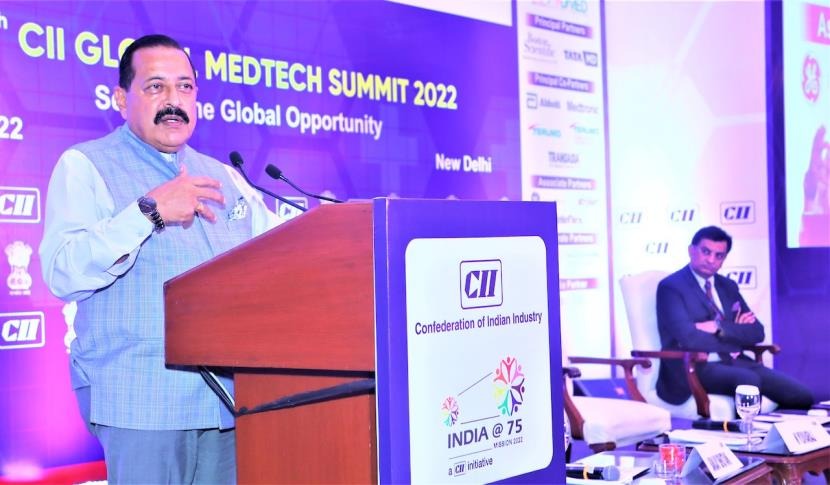
Speaking at the Global Digital Health Summit, Expo & Innovation Awards Addressing the summit, Minister of State for Science and Technology, Jitendra Singh, said, “This summit is an excellent opportunity to focus on research and innovation priorities, particularly in relation to the digital advances in the healthcare sector. Spurred by the COVID-19 pandemic, rapid digitisation, increasing internet and smartphone penetration, and government initiatives like Make in India and National Digital Health Mission, the healthcare sector is digitizing and innovating at an accelerated speed,” said Singh.

The Minister added that under PM Modi’s leadership healthcare has become more focused on innovation and technology over the past few years. 80% of the healthcare systems are aiming to increase their investment in digital healthcare tools in the coming five years. Indian innovators are developing pathbreaking health-tech products and solutions. The government is applying these digital health developments through the Ayushman Bharat Digital Mission,” said Singh.
India to see 80% increase in investment of digital healthcare tools in the next 5 years: MoS Jitendra Singh

Singh added that India has all the essential ingredients for the exponential growth in this sector, including a large population, a robust pharma and medical supply chain, smartphone users, and technical manpower. “As the pace of digital innovation accelerates, the opportunities for healthcare companies and manufacturers will multiply and patient outcomes will improve,” Singh said.

In a bid to address issues critical to building a digital ecosystem aiming at digital health for all and how organisations can adopt digital technologies, the Global Digital Health Summit, Expo & Innovation Awards kicked off at New Delhi’s Vigyan Bhawan on October 28, 2022 with an attendance of more than 1500 delegates from 50 countries.

The two-day summit began with a welcome address by the Summit co-chair Brian O’Connor and a keynote address by Bakul Patel, Senior Director – Global Digital Health, Strategy and Regulatory, Google. It was followed by a panel discussion on ‘Return on Investment in Digital Health’. Chaired by Rajendra Pratap Gupta, Chairman – Dynamic Coalition on Digital Health, IGF – United Nations, and the panel featured Cathy Wolfe, President & CEO, GGM, Wolters Kluwer, USA; Dr Devi Shetty, Chairman & Executive Director, Narayana Health; Rustom Lawyer, Co-founder & CEO, Augnito; Anand Iyer, Chief Analytics Officer, Welldoc Inc, USA; and Manivannan Selvaraj, Founder & MD, Kauvery Group of Hospitals. The session highlighted the importance of the clinical decision support system (CDSS), challenges, and the way forward for affordable and accessible healthcare.

“In India, as of 2020, the ratio of doctors to population stands at 7.35 to 10,000. It is important to overcome the ratio and provide cost-efficient access to quality care and onboard into digital health. CDSS provides evidence-based medicine, which is way faster and diverse than experience-based medicine. This arrangement not only helps with reducing physician burnout but also ensures improved patient outcomes. Equitable healthcare, the right care at the right time, improved outcomes can result in immediate ROI,” said Wolfe.

Commenting on the way forward, Lawyer shared, “I believe that better healthcare for all is possible by leveraging the power of digital tech artificial intelligence. For best results, we need to build ICT strategy and framework keeping technology investment as a profit centre rather than a cost centre, drive population health analytics by investing in technology that introduces and enhances EMR adoption, invest in solutions that make it easier for doctors to adopt digital solutions such as ABDM,  and invest in technology that augments current workforce as shortage of doctors cannot be solved overnight.”

The second half of the event had Patricia Mechael, Co-founder – Global Digital Health Index, delivering the keynote address wherein she highlighted the challenges in data sharing and accessibility, followed by a panel discussion on ‘Adoption of digital health across the continuum of care: hospitals, pharma, clinicians- challenges and solutions’, featuring Rajesh Ranjan Singh, CEO – WISH Foundation; Uma Nambiar, MD – Zeeden Life Sciences; Sudarashan Jain, Secretary-General, Indian Pharmaceuticals Alliance; Manivannan Selvaraj, Founder & MD, Kauvery Group of Hospitals; Ruchi Tushir, VP & GM – Wolters Kluwer GGM India; and Binu Sharma, Senior Director Nursing, Max Healthcare Institute.

“Data accessibility plays an important role in delivering high quality patient care as it provides clinicians with immediate access to patient records, including medical history, test results and relevant information provided by other clinicians. With access to the right data, clinicians can deliver exceptional healthcare by making informed decisions substantially faster,reducing wait times and contributing to providing better healthcare at a better cost. However, access to data that is clean, complete, accurate for use is still an ongoing battle in the healthcare sector. This needs to be addressed immediately,” said Mechael in her keynote address.

The summit concluded with another panel discussion on ‘Making India a World Leader in Digital Health Implementation’ featuring Bharat Lal, Director General – National Centre for Good Governance, GoI; Vaidya Rajesh Kotecha, Secretary – AYUSH, GoI; Vivek Sehgal, Director General – Organisation of Pharmaceutical Producers of India; and Sanjay Sood, Project Director – eSanjeevani (National Telemedicine Service), C-DAC Mohali.

Other highlights of the event included the release of ‘Women’s Health Guideline’ and ‘Digital Health for All – By 2028’, and launch of Project Concern 2028 and Health Parliament.
Read More at-https://bit.ly/3gYmAKD


Categories
COVID-19 Government Guidelines Medical Equipments Medical Updates Medicine & Health

Global roll-out of 12 billion COVID-19 vaccine doses largest-ever but access an issue: WHO

Synopsis

Addressing the annual general meeting of the Developing Countries Vaccine Manufacturers Network (DCVMN) virtually on Thursday, he flagged the issue of inequities in access to COVID-19 vaccines.

World Health Organization (WHO) director-general Dr Tedros Adhanom Ghebreyesus has said that global roll-out of more than 12 billion COVID-19 vaccine doses is the largest and fastest in human history.
Addressing the annual general meeting of the Developing Countries Vaccine Manufacturers Network (DCVMN) virtually on Thursday, he flagged the issue of inequities in access to COVID-19 vaccines.

The three-day event is being co-hosted by the Pune-based Serum Institute of India (SII), the world’s largest vaccine manufacturer by volume, said a statement.
“Global roll-out of more than 12 billion COVID-19 vaccine doses is the largest and fastest in history with an estimated 60 per cent doses produced by manufacturers in developing countries. Despite this achievement, stark inequities in access to COVID-19 vaccines remain,” he said.

Global roll-out of 12 billion COVID-19 vaccine doses largest-ever but access an issue: WHO

“These inequities are due partly to the fact that globally vaccine production is too concentrated. To address this, the WHO and our partners have established the mRNA Tech Transfer hub in South Africa to facilitate the know-how in low & middle-income countries,” Ghebreyesus said.
Adar Poonawalla, CEO of SII, said it was a proud moment for his company to co-host the 23rd DCVMN annual general meeting in Pune.

“Today, the world is more aware and focused on chalking out an ambition-to-action roadmap for future pandemic preparedness. For that, building the infrastructure and regulations to ensure global equity and timely access to vaccines is the foremost priority,” Poonawalla said.

Union Minister for Health and Family Welfare Mansukh Mandaviya delivered the inaugural address.
DCVMN is an international alliance of manufacturers from developing countries who are engaged in innovation, research, development, manufacturing and supply of high-quality vaccines to 170 countries.

The organisation aims to protect people against known and emerging infectious diseases globally by increasing the production of high-quality vaccines in developing countries.

Read more at-https://bit.ly/3gKtK55

Categories
COVID-19 Government Guidelines Medical Updates Medicine & Health

Omicron, sub-lineages remain dominant variant in India: INSACOG

Synopsis
Amid the declining trajectory of daily Covid-19 cases in India, the Indian SARS-CoV-2 Consortium on Genomics (INSACOG) on Sunday said that the Omicron and its sub-lineages continue to be the dominant variant in India.

New Delhi, Amid the declining trajectory of daily Covid-19 cases in India, the Indian SARS-CoV-2 Consortium on Genomics (INSACOG) on Sunday said that the Omicron and its sub-lineages continue to be the dominant variant in India.

“Omicron and its sub-lineages continue to be the dominant variant in India. BA.2 and its descendent lineages, in particular, BA.2.75 has been mostly found over the last week in different parts of India,” the INSACOG said in its recent bulletin about India’s current scenario.

It further said that the incidence of BA.5 has decreased in the last few weeks. Any surge in hospitalisation or any disease severity has not been observed during this time-period.

Omicron, sub-lineages remain dominant variant in India: INSACOG

Globally, the INSACOG said that the Omicron is the most abundant variant of concern (VOC) circulating worldwide, accounting for 99.4 per cent of sequences reported globally. BA.5 Omicron descendent lineages continue to be dominant globally.

“The prevalence of BA.4 descendent lineages, including BA.4.6 decreased during last week. The prevalence of BA.2 descendent lineages (BA.2.X) remained constant last week. BA.2.75, an Omicron descendent lineage under monitoring, still shows a relatively low prevalence globally, however, a number of countries have observed recent increasing trends,” said the INSACOG.

India reported 1,994 fresh Covid cases and four deaths in the last 24 hours, taking the national fatalities tally to 5,28,961. The active caseload of the country presently stands at 23,432 cases, accounting for 0.05 per cent of the country’s total positive cases, the Union Health Ministry said on Sunday.
Read more at-https://bit.ly/3Dsw7SR

Categories
COVID-19 Government Guidelines Medical Updates Medicine & Health

Harnessing the power of partnerships in expanding Covid vaccine coverage

On the first anniversary of India’s COVID-19 vaccination drive, the Hon’ble Health Minister, Mansukh Mandaviya, observed that Jan Bhagidari helped to fuel India’s achievements in its successful vaccination journey. This, in fact, echoes the sentiment of Hon’ble Prime Minister of India, Narendra Modi, who emphasizes that the functioning of any robust democracy lies in the power of the collective that Jan Bhagidari stands for.

As someone with extensive experience in of public health, this principle has always resonated with me. I do believe that it’s the coming together of so many people – healthcare professionals, the larger scientific community, vaccine manufacturers, development partners, local leaders and frontline health workers all under the leadership of the Government of India – that has ensured India’s success in administering more than 2 billion COVID-19 vaccine doses to its eligible population in record time.

I am proud to be associated with a project that has contributed in its own way toward India’s exceptional vaccination trajectory: the MOMENTUM Routine Immunization Transformation and Equity Project. Operational across 18 states and union territories, and supported by USAID, the project has been a key driver in augmenting the efforts of the Ministry of Health and Family Welfare to improve the uptake of COVID-19 vaccination across states in record time. In many ways, it carries forward the country’s legacy of reaching the unreached, leaving no one behind and ensuring everyone has equitable access to vaccines.

Harnessing the power of partnerships in expanding Covid vaccine coverage

From hard-to-reach areas; tribal communities where confidence in and awareness about vaccines tends to be lower; vulnerable groups such as migrant workers, transgenders, elderly, disabled people, pregnant and lactating mothers– the project has helped to weave a safety net for those at the margins. Most importantly, the project has reiterated the country’s strength of successful collaborations — in this case, with multiple local partners at the state and community levels across a diverse mix — health workers, community champions, faith-based leaders, beneficiaries-turned-influencers and others.

For instance, in Chhattisgarh, an influencer from the trans community ensured that gender doesn’t become a barrier to availing the benefits of a life-saving vaccine. This influencer, Kanchan Sendre, worked hard to ensure an uptick in vaccinations for her community – she was so effective that she earned the title, ‘Vaccine Didi’. In Punjab, collaborations were done with the Shiromani Gurdwara Parbandhak Committee which ensured that all visitors could undergo the immunization process during their visit to the iconic Golden temple. In Madhya Pradesh, key religious and community leaders of Taj-Ul Masjid — one of Asia’s biggest mosques — came forward to help organize a large-scale COVID-19 vaccination-cum-awareness session. More than 400 key religious leaders from various parts of the state and the Director of Immunization of MP participated to increase awareness levels about COVID-19 and the vaccine.

Assam saw the innovative ‘Wellness on Wheels’ initiative — a vehicle with Covid-19 vaccination messages. The vehicle enabled vaccinators to reach out to remote villages and vaccinate vulnerable people who may otherwise struggle to access healthcare. In fact, this initiative saw a total of over 51,000 vaccinations (as on Sep 30, 2022), covering over 1200 villages.

To a large extent, the project typifies the essence of Jan Bhagidari. At every level, every stakeholder has played a significant role to ensure that the greater goal of vaccines for all is achieved. It is only apt to say that that these achievements have come at a time when India is celebrating Azadi ka Amrit Mahotsav. This is also a time to acknowledge that projects such as this have successfully developed strategies to mobilize communities by developing locally contextual interventions.

In this context, there are two standout cases illustrative of the power of people: polio and tuberculosis. In Uttar Pradesh, perhaps the most inventive tool was the Bulawa Toli – a children’s brigade would go through neighborhoods shouting slogans and inviting younger children to visit the nearest polio booth for the vaccine. When it comes to TB, community engagement has been critical too. Earlier this year, another strong example of community-focused initiative by the government came in the form of the Ni-kshay Mitra under the ‘Pradhan Mantri TB-Mukt Bharat Abhiyaan.’ As part of this initiative, a range of stakeholders – cooperative societies, corporate entities, elected representatives, non-governmental organizations, political parties and individuals etc. – can consider supporting and adopting districts and blocks or even one or more TB patients across states in India, in the fight against TB.

From the time of its launch on September 9, approximately 10.5 lakh TB patients have consented to receive nutritional, diagnostic, and vocational support in their journey of battling TB. As of now, over 33,000 people from various backgrounds have signed up as Ni-kshay Mitras, who will now be providing nutrition and other support to over 10.2 lakh patients – an example of how society can truly unite to overcome any adversity. And the numbers are increasing at a rapid pace.

Across different public health issues, the nature of interventions may change. But what has consistently helped our country overcome all obstacles, has been the ability to galvanize the community. And to further strengthen the efficacy of community action vis-à-vis public health, it’s important to continually work toward devising locally-relevant solutions for optimal impact. All this ties in with the broader tenets of Jan Bhagidari, too. I am confident that with such strong foundations, the country’s healthcare systems will be secure and stronger than ever before.

Read more At-https://bit.ly/3sfkHve