Categories
COVID-19 Government Guidelines Medical Updates Medicine & Health

Mandatory COVID-19 tests for all international passengers if necessary, says Centre

Synopsis

As a health minister, Mandaviya said he has spoken to many countries and WHO about what all precautions are needed to be taken and also understand in which direction the pandemic is moving.

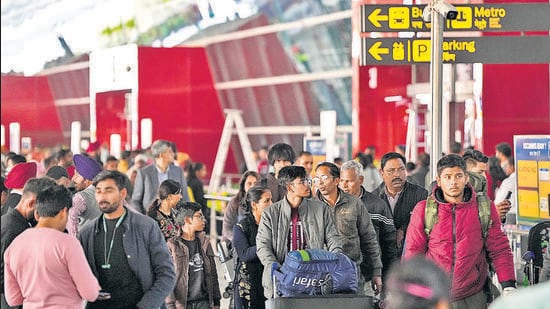
In the wake of surge in COVID-19 cases in many countries, India has started 2 per cent random sampling of international travellers coming to the country and may consider making it mandatory for all if necessary, Health Minister Mansukh Mandaviya said on Thursday. He was responding to queries of some Opposition MPs after his suo moto statement in Rajya Sabha on the latest COVID-19 situation and India’s preparedness.

“We are constantly monitoring the situation. There are no direct flights between China and India but people come via other routes,” he said in response to a query by Raghav Chadha of AAP on whether the government would ban direct flights from China.

As a health minister, Mandaviya said he has spoken to many countries and WHO about what all precautions are needed to be taken and also understand in which direction the pandemic is moving.

“At a primary stage, we have already started doing 2 per cent random sampling of any traveller coming to India,” he said.

The minister further said “in the coming days the percentage could be increased and if necessary we will make it mandatory for everyone coming to India”.
Mandatory COVID-19 tests for all international passengers if necessary, says Centre

Mandaviya also said the focus of the government is to ensure that no unknown variant of the virus enters India and at the same time there is now impediment on travelling.

The minister assured the Upper House that all the oxygen plants were running and a review has also been done about the availability of medicines.

“We are prepared and ready to provide the requirement of medicines and vaccines in the country,” he said.

Mandaviya also informed that an expert committee has given approval to nasal vaccine to combat the virus, doing away with the requirements of jabs.

“We are fully prepared to fight the virus,” he asserted.

Referring to the letter written to Rajasthan Chief Minister Ashok Gehlot and Congress leader Rahul Gandhi to follow appropriate covid protocol during the Bharat Jodo Yatra, he said it was his responsibility as a health minister to write after few MPs from the state had pointed out to him about people, including the Himachal Pradesh chief minister who took part in the event contracted the virus.

“We have never done politics on covid crisis and we don’t even want to do it,” Mandaviya asserted.

In his statement, he said in the recent days there have been reports of rise in COVID-19 cases in many countries such China, Japan, South Korea, the US, France, Greece and Italy.

The evolving nature of the virus poses threat to global health in a way that impacts virtually every country, he said adding the Centre has asked states to remain alert and create awareness about wearing face masks and using hand sanitisers, especially in view of upcoming festivals and new year celebrations.

He further said states have also been advised to focus on heightened surveillance within the community and to undertake requisite control and containment measures, increase the whole genome sequencing of all positive cases for timely detection of newer variants, if any.
Read more at-https://bit.ly/3I8KnmN
Categories
COVID-19 Government Guidelines Medical Updates Medicine & Health

Omicron BF.7: Is mixing Covid vaccines more effective against the new subvariant? What experts say

Omicron BF.7: Is mixing Covid vaccines more effective against the new subvariant?

Amid rising cases of Omicron BF.7 in China and other parts of the world, there has been concerns of a fresh wave triggered by the subvariant in India in the coming months. Omicron BF.7 was first found in India in July and so far, just 4 cases have been detected across Gujarat and Odisha. Experts say we do not need to press the panic button as yet but at the same time renew social distancing measures and keep our guards on.

Getting booster shots is one of the ways to boost immunity against the new variant. According to a new AIG study, Hyderabad-based Biological E’s Corbevax booster in individuals already vaccinated with Covishield can offer maximum protection against Omicron variants. The study found that people who were given Corbevax showed higher levels of antibodies.

Following incidents of people inadvertently taking different vaccines in two separate doses, Indian Council of Medical Research (ICMR) study found that mix and match of vaccines had no adverse effect. There has, however, been concern around whether it is safe or mixing of two different vaccines could actually be more effective and provide better shield against different variants of Coronavirus.

So, can combining vaccines offer better protection against Omicron BF.7 and new emerging subvariants? We asked experts.

Omicron BF.7: Is mixing Covid vaccines more effective against the new subvariant? What experts say

‘MIXING SHOTS A PROMISING STRATEGY’

“Mixing Covid shots or what we call as heterologous boosting is a promising strategy in our fight against this pandemic. As per limited research it has been found that waning immunity is a concern in giving us protection from the virus. Mixing shots such as vector-based vaccines (Covishield) followed by mRNA based (Pfizer) can result in boosted or better immune protection. mRNA based vaccines generate a good antibody response and vector-based vaccines provide a good T Cell response. So, a combination of both seems to provide a promising protection,” says Dr. Shivanshu Raj Goyal, Consultant Pulmonologist, Artemis Hospitals, Gurugram.

“Side effects can vary from individuals but mixing vaccines is a good strategy to provide safe and effective protection and in some cases mixing vaccines mount lifetime immunity by kicking memory B and T cells into action, less seen otherwise. Whatever strategy we should follow and most beneficial to all would be updated timely by MoHFW on timely intervals and should be followed,” says Dr Goyal.

‘NO SIDE EFFECTS, IT CAN BOOST IMMUNITY’

“Mass Covid vaccination has played a key role in limiting the severity of Covid waves across India. Various Covid vaccines have been used globally after scientific approval the curb this pandemic. With the recent news of new variants, booster dose is to protect you and enhance your protection against severe covid infections. Sometimes availability or shortage of the same make of vaccine is a problem. However, mixing the vaccines has no side effects rather it can boost the immunity and give multiple ways to our immune system to identify the offending virus and act rapidly,” says Dr Rahul Sharma, Additional Director Pulmonology, Fortis Hospital Noida.

‘Mixing Covid vaccines need of the hour’

Covid vaccines booster strategy is need of the hour. Usually, sequential boosters are recommended.

Mixing heterologous immune response is an emerging concept. In initial US-based trials and studies it was observed that though it was necessity borne intervention turned out to be useful owing to mixing of vaccines resulted in increase in type of immune responses and potential prolonged immunogenic effect. Researchers have found that following one dose of the AstraZeneca with a dose of the Pfizer-BioNTech vaccine produces more stronger and better immune responses, as measured by blood tests.

Mixing vaccines gives advantage in pathogen recognition and better immunogenic responses in terms of all arms of immunity, says Dr Neha Rastogi Panda, Consultant Infectious Diseases, Fortis Memorial Research Institute, Gurugram.

‘Mixing of vaccines proven to be non-inferior or superior’

“Government of India has permitted the usage of Corbevax vaccine as a precaution dose after completion of six months from administration of second dose of either Covaxin or Covishield vaccines in adult population in August 2022. Decision of this by Covid-19 working Group was based on scientific evidence generated through double blinded randomised control trial of Corbevax vaccine phase-3 clinical study evaluating immunogenicity and safety of booster dose Corbevax vaccine in adult volunteers previously vaccinated with two doses of either Covaxin or Covishield. As per the global scientific evidence, usage of mixing of two different vaccines have been proven to be non-inferior or superior as compared to single vaccine usage in Covid-19 illness in terms of immunogenicity which is measured by antibodies level and T cell mediated immunity measured by CD4 and CD8 levels,” says Dr Manoj Sharma, Senior Consultant, Internal medicine, Fortis Hospital Vasant Kunj.

“Mixing of two different vaccines may give the immune system multiple ways to recognise a pathogen (Virus). In a Spanish study, 448 individuals who received a mix of AstraZenecia dose followed By Pfizer BioNTech dose, robust immune response was noted with fewer side effects. Similarly, Sputnik vaccine when combined with AstraZenecia also revealed stronger immune response,” says Dr Sharma.

Benefits of heterologous vaccination

Although the approved COVID vaccines provide a high level of protection against symptomatic infection and severe illness, there is increasing evidence to suggest waning of immunity over time. Also, it has been seen that some of the subvariants/sub lineages are immune-evasive i.e., can cause infection in those already having some immunity against SARS CoV-2 virus. Heterologous vaccination approach refers to the mixing of more than one type of vaccines. There are reasons to believe that immunization with different types of vaccines might provide immunological advantages. Mixing of vaccines provides a broadened level of protection, and for a longer duration. There is sufficient scientific data available to date to suggest superior immunological response with heterologous vaccines approach. Studies have shown better and prolonged immunological response following mixing and matching, both inactivated as well as mRNA-based vaccines. This benefit has been found with mixing of vaccines in primary series as well as booster dosing,” says Dr Rohit Kumar Garg, Consultant, Department of Infectious Diseases, Amrita Hospital, Faridabad.

Read more at-https://bit.ly/3WEIdjf

Categories
COVID-19 Government Guidelines Medical Equipments Medical Updates Medicine & Health

Ayurveda expert on herbs to help keep flu, RSV and Omicron at bay

A strong immune system protects one from disease-causing agents and lowers chances of experiencing severe symptoms in case of any infections, says Dr Archana Sukumaran.

Winter is the season of piping hot tea and coffee, staying curled up in your blankets and also of cold, cough and fever that threaten to ruin the joy associated with the cold months. A good immunity can help you be at the top of your health and cut risk of getting infected with seasonal flu, RSV and new strains of Covid and Omicron. The symptoms of all these viral and respiratory infections are similar and most of the people are reporting fever, cough, cold, runny nose, sore throat, headaches and sneezing. In fact, flu, RSV and Covid are together raising hospitalisation cases especially in children in US and other parts of the world.

Ayurveda recommends different herbs, foods and other tips depending on the Ritucharya to cope with seasonal changes. According to the ancient medicinal practice, winter season is divided into two spans based on the intensity of the cold. The first half is called Hemanta, with comparatively milder chill, while the other half, with a more chill, is known as Sisira.

Ayurveda expert on herbs to help keep flu, RSV and Omicron at bay

“As we all know, winters are more or less lethargic. This feeling tends to escalate the dosha in the body with this same lethargy, the Kapha. Winters are generally believed to be the Kapha season. When it is stabilised, it brings strength to the body, while on its countermand, it causes all the winter blues in the form of cold, flu, muscle stiffness, etc,” says Dr Archana Sukumaran of Kerala Ayurveda.

“Some authors also believe that Vata dosha is also on the verge of rising due to increased coldness and dryness in the atmosphere. According to Ayurveda, the winters are also the season that gives the most strength to the body,” adds Dr Archana.

Herbs and remedies to boost your immunity

Dr Archana says the endurance of the body changes as the conditions change and a strong immune system protects one from disease-causing agents and lowers chances of experiencing severe symptoms in case of any infections.

“Each season requires a distinct regimen and food to deal with the outside environment and temperature,” says the Ayurveda experts.

She also suggests a few herbs that can be effectively incorporated into your diet to boost your immunity.

● Shundi (Zingiber officinale): The constant companion of all delicious Indian meals, dry ginger is the best herb that can impart immunity. It has abundant potential to normalize the digestive fire and reduce the accumulation of Ama, the product of improper digestion, the key factor for forming flu-like symptoms. This Gastrointestinal stimulant has an expressive immunomodulatory property that helps to impart tissue-level protection.

How to include in your diet

Dry ginger can be most effectively incorporated into your diet as an infusion to teas, mild sugar, dry ginger candy, or even a pinch to enhance the taste of your salads. Tuss nil syrup is enriched with Shundi, which can help keep a dry cough away.

● Amla (Emblica Officinalis): The sour goodness of Indian gooseberry is well acclaimed throughout the world. This tiny fruit is filled with innumerable health benefits.

How to include in your diet

Simply munching on this sour punch, pickling it, or even having a glass of gooseberry juice can tremendously help you gain Vitamin C. You can also try Amla effervescent tablets or Chyavanprash to improve your strength, immunity, and longevity. Although there are plenty of companies manufacturing chyavanprash, for best results, go for the original formula that uses a wild variety of amlas rich in tannin instead of the large hybrid ones.

● Tulsi (Ocimum sanctum): The aromatic goodness of Indian basil is not only a compulsory component of religious rituals but a vital factor available in our homes that can enhance immunity responses to its optimum. Although it mildly increases pitta content, it normalises the function of both Vata and Kapha entities. It has antimicrobial action that helps to protect the body, particularly the respiratory system, against pathogenic interventions.

How to take

Inhaling the steam of tulsi-infused water is an ideal method to relieve respiratory congestion.

● Haridra (Curcuma longa): The compulsory ingredient of every Indian home, turmeric is a must-have herb to boost immunity. It has Usha Virya (Hot potency) with Krimighna (Antimicrobial) action. It is a natural detoxifying agent that helps to improve immunity. It relieves depression, anxiety, and other cognitive malfunctions and improves mental health.

How to add it to your diet

Consuming the revolutionary Golden milk is the best yet most simple you can adopt daily to impart the wellness of Haridra in your lives. You can also try turmeric effervescent tablets to improve your immunity.

● Black pepper/Long pepper: Pepper is one of the best herbs to balance Kapha because of its hot potency.

How to add it to your diet

You can include pepper in your diet or in delicious recipes such as soups or Rasam to keep cold at bay. Agasthyarasayanam, an original formula with long pepper as one of the ingredients, helps keep cold and cough at bay while acting as a lung detox.

Other Ayurveda recipes for Flu season

Doing nasya with Anu thailam, a unique blend of 30 balancing ingredients such as leptadenia or jivanti, liquorice or yashtimadhu, fragrant swamp mallow or hrivera & Indian bael or Bilva, and other herbs processed in goat’s milk and sesame oil helps in clearing the accumulated doshas from the nasal passage and helps you breathe better.

– Similarly, another popular Ayurvedic remedy- Karpooradi Thailam- a warming chest rub oil, soothes down and clears congestion in winter. Suitable even for kids, simply rub the oil over your chest and steam inhalation to enjoy uninterrupted breathing.

“Along with these, the proper dietary habits and the right regimen according to seasonal change is necessary to tune the body with the music of nature,” says Dr Archana.

Read more at-https://bit.ly/3W0TGJ5

Categories
COVID-19 Government Guidelines Medical Equipments Medical Updates Medicine & Health

Omicron: 7 important tips to prevent Covid infection in winter season

It is important for people to protect themselves from seasonal flu and the possible new immune strains of the Omicron variant of SARS-CoV-2. Here are some tips to follow.

Covid-19 pandemic is far from over and one needs to be especially cautious in winters as it’s the season of viral infections including influenza and Covid. Amid pandemic turning less aggressive and people dropping guards, scientists and infectious disease specialists warn that Covid appropriate measures should continue. WHO Director-General Tedros Adhanom Ghebreyesus said: “Gaps in testing … and vaccination are continuing to create the perfect conditions for a new variant of concern to emerge that could cause significant mortality.” Omicron, the highly contagious variant of Covid, has more than 500 sublineages that is evolving fast. It is important to get tested when one has flu-like symptoms and wear masks in crowded areas. Regular hand-washing should not be ignored and it is important to keep good ventilation in offices, restaurants and other public areas.

Omicron: 7 important tips to prevent Covid infection in winter season

“Covid 19 is a virus and we have been getting viral during the winters. It is important for people to protect themselves from seasonal flu and the possible new immune strains of the Omicron variant of SARS-CoV-2. It’s essential to safeguard yourself from the cold weather and stay healthy throughout the season. Though it seems difficult, there are several ways to keep the commonly suffering ailments away from your family,” says Dr Rajesh Chawla, Senior Consultant Pulmonology and Critical Care, Indraprastha Apollo Hospitals, New Delhi.

Sticking to the basic rules to prevent Covid spread, people should continue to follow measures to keep the deadly infection at bay. Children, elderly and those will chronic illnesses especially should be cautious.

Here are 7 tips to prevent Covid infection this winter season by Dr Chawla:

• Know the symptoms: The flu and COVID-19 are caused by different viruses, but they are both infectious respiratory diseases, spread by droplets and aerosols when infected people cough, sneeze, speak, sing, breathe, etc. They have similar symptoms, including cough, runny nose, sore throat, fever, headache and fatigue. People may have varying levels of illness with both the flu and COVID-19. Because symptoms are similar, it is important to take a test, so that treatment can begin quickly, if needed.

• Cover coughs and sneeze: Following a good respiratory hygiene is extremely important. It is important to cover the mouth and nose with a bent elbow or tissue when one coughs or sneezes.

• Get vaccinated: It is essential to get vaccine. Elderly and those with underlying conditions like high blood pressure, lung and heart disease, diabetes, obesity or cancer must get them vaccinated. The more fully vaccinated people there are, the better protected they are as well.

• Wear a mask: Masks help stop people from spreading the virus or being infected when droplets containing the virus are inhaled or come directly into contact with the eyes, nose or mouth

• Keep physical distancing: It is important for all viral infections which can spread from an infected person’s mouth or nose in small liquid particles when they cough, sneeze, speak, sing or breathe. Understanding, the situation, it is advisable to Keep a physical distance of at least 1 metre from other people

• Keep hands clean: People may pick up a virus by touching surfaces that have been contaminated, then touching your eyes, nose or mouth with those hands. Cleaning hands frequently eliminates germs that may be on the hands, including viruses.

• Meet outside or increase ventilation: All these viral infections including COVID-19 is more easily transmitted in crowded and poorly ventilated spaces and where people spend long periods of time together. Settings with increased risk of outbreaks include restaurants, offices and places of worship. Hence, it is advisable to go outside, whenever possible

“There is an increased risk of both the flu and COVID-19 circulating over the next few months. For a safer winter, it is important to understand the symptoms and who is at risk, get vaccinated, take steps to protect, and stay safe,” concludes Dr Chawla.

Read more at-https://bit.ly/3XZrXub

Categories
COVID-19 Medical Equipments Medical Updates Medicine & Health

Blood oxygen monitors don’t work as well on people with darker skin: FDA

Synopsis

As smartwatches now claim to read blood oxygen levels, the US Food and Drug Administration (FDA) has raised fresh concerns over pulse oximeters that monitor blood oxygen levels in the hospital and at home.

As smartwatches now claim to read blood oxygen levels, the US Food and Drug Administration (FDA) has raised fresh concerns over pulse oximeters that monitor blood oxygen levels in the hospital and at home.

According to an FDA advisory panel, blood oxygen monitors need to be more carefully regulated as they don’t work as well on people with darker skin tones.

In 2021 during the pandemic, the FDA had issued an alert saying that these devices have “limitations”.

Blood oxygen monitors don't work as well on people with darker skin: FDA

“As part of its premarket evaluation of pulse oximeters, FDA has long required premarket data assessing pulse oximeter performance in subjects with different skin pigmentation. However, a December 2020 published report suggests that pulse oximeters may be less accurate in patients with darker skin pigmentation,” said the FDA panel in its report.

The panel reviewed multiple research studies that show oximeters don’t work as well on darker skin.

It delayed Covid treatments in Black patients because the devices didn’t show dropping oxygen levels, according to one study.

The over-the-counter pulse oximeters or “wellness” devices aren’t reviewed by the FDA.

An assessment of the US pulse oximeter market demonstrates the use of these devices increased during the first year of the Covid-19 pandemic.

Since the December 2020 study, additional real-world studies have been published suggesting increased risk for missed diagnosis of “occult hypoxemia”, delays in treatment eligibility decisions and worse patient outcomes among subjects with darker skin pigmentation.

“Occult hypoxemia” is defined as Sao2 less than 88 per cent despite a Spo2 of greater than 92 per cent, based on previously published parameters.

Pulse oximeters are widely used by many types of healthcare providers and consumers to obtain an indirect measure (SpO2) of arterial blood oxygen saturation (SaO2).

“We need to take appropriate steps to remove the growing uncertainty around these devices and ensure the health and safety of the public,” anesthesiologist Jesse Ehrenfeld told the panel, reports The Verge.

Read more at-https://bit.ly/3NBPWKY

Categories
COVID-19 Government Guidelines Medical Updates Medicine & Health

India adds 1,604 Covid-19 cases, active caseloads fall by 485

Synopsis
According to the health ministry, the active cases comprise 0.04 percent of the total infections, while the national Covid-19 recovery rate was recorded at 98.77 percent. Active Covid-19 caseloads fell by 485 in a span of 24 hours.

India’s coronavirus caseloads rose by 1,604 in the last 24 hours to take the total tally to 4,46,52,266, while the active cases fell to 18,317, the Union Health Ministry said.

With eight more fatalities, the death toll has climbed to 5,29,016, the data updated by the government at 8 am said.

The new fatalities include three deaths reconciled by Kerala.

India adds 1,604 Covid-19 cases, active caseloads fall by 485

According to the health ministry, the active cases comprise 0.04 percent of the total infections, while the national Covid-19 recovery rate was recorded at 98.77 percent.

Active Covid-19 caseloads fell by 485 in a span of 24 hours.

Daily positivity rate stood at 1.02 percent, and the weekly positivity rate was at 1.08 per cent.

Case fatalitity rate was at 1.18 percent, while the number of people who have recuperated from the disease rose to 4,41,04,933.

India’s COVID-19 tally had crossed the 20-lakh mark on August 7, 2020, 30 lakh on August 23, 40 lakh on September 5 and 50 lakh on September 16. It went past 60 lakh on September 28, 70 lakh on October 11, crossed 80 lakh on October 29, 90 lakh on November 20 and surpassed the one-crore mark on December 19.

The country crossed the grim milestone of two crore on May 4 and three crore on June 23 last year. It crossed the four-crore mark on January 25 this year.

According to ministry data, 219.63 crore doses of vaccines have been administered in the country so far under the Covid-19 vaccination drive.
Read more at-https://bit.ly/3FGSFkB

Categories
COVID-19 Medical Equipments Medical Updates

BXX variant of Covid virus spreads, but less severe

Synopsis

According to him the proportion of BXX which is a recombinant variant has increased gradually by20-30% in the country. BA2.75 continues to be the dominant variant accounting for 60% of Covid-19 cases. An INSACOG member said they are monitoring the spread. A review meeting was held on Friday to evaluate the Covid-19 situation across the country.

The Indian Sars-CoV-2 Consortium on Genomics (INSACOG), a network of laboratories monitoring genomic variations of the Covid-19 virus, has found the proportion of BXX sub-variant increasing in the country. However, the good news is that the severity and hospitalisation have not increased, a member told ET.

According to him the proportion of BXX which is a recombinant variant has increased gradually by20-30% in the country. BA2.75 continues to be the dominant variant accounting for 60% of Covid-19 cases.

BXX variant of Covid virus spreads, but less severe

An INSACOG member said they are monitoring the spread. A review meeting was held on Friday to evaluate the Covid-19 situation across the country.

In the last few weeks multiple Omicron subvariants like BQ.1, and BXX have been detected along with other emerging sub-variants like BA5.1.7 and BF.7. BQ.1 is an offshoot of the variant related to the BA.5 version that drove the surge in the US.

Keeping in view the expected rise in the number of cases due to the festival season, the Union health minister also held a meeting to review the situation last week.

Read more at-https://bit.ly/3Fp3Lul

Categories
COVID-19 Government Guidelines Medical Equipments Medical Updates Medicine & Health

Global roll-out of 12 billion COVID-19 vaccine doses largest-ever but access an issue: WHO

Synopsis

Addressing the annual general meeting of the Developing Countries Vaccine Manufacturers Network (DCVMN) virtually on Thursday, he flagged the issue of inequities in access to COVID-19 vaccines.

World Health Organization (WHO) director-general Dr Tedros Adhanom Ghebreyesus has said that global roll-out of more than 12 billion COVID-19 vaccine doses is the largest and fastest in human history.
Addressing the annual general meeting of the Developing Countries Vaccine Manufacturers Network (DCVMN) virtually on Thursday, he flagged the issue of inequities in access to COVID-19 vaccines.

The three-day event is being co-hosted by the Pune-based Serum Institute of India (SII), the world’s largest vaccine manufacturer by volume, said a statement.
“Global roll-out of more than 12 billion COVID-19 vaccine doses is the largest and fastest in history with an estimated 60 per cent doses produced by manufacturers in developing countries. Despite this achievement, stark inequities in access to COVID-19 vaccines remain,” he said.

Global roll-out of 12 billion COVID-19 vaccine doses largest-ever but access an issue: WHO

“These inequities are due partly to the fact that globally vaccine production is too concentrated. To address this, the WHO and our partners have established the mRNA Tech Transfer hub in South Africa to facilitate the know-how in low & middle-income countries,” Ghebreyesus said.
Adar Poonawalla, CEO of SII, said it was a proud moment for his company to co-host the 23rd DCVMN annual general meeting in Pune.

“Today, the world is more aware and focused on chalking out an ambition-to-action roadmap for future pandemic preparedness. For that, building the infrastructure and regulations to ensure global equity and timely access to vaccines is the foremost priority,” Poonawalla said.

Union Minister for Health and Family Welfare Mansukh Mandaviya delivered the inaugural address.
DCVMN is an international alliance of manufacturers from developing countries who are engaged in innovation, research, development, manufacturing and supply of high-quality vaccines to 170 countries.

The organisation aims to protect people against known and emerging infectious diseases globally by increasing the production of high-quality vaccines in developing countries.

Read more at-https://bit.ly/3gKtK55

Categories
COVID-19 Government Guidelines Medical Updates Medicine & Health

Omicron, sub-lineages remain dominant variant in India: INSACOG

Synopsis
Amid the declining trajectory of daily Covid-19 cases in India, the Indian SARS-CoV-2 Consortium on Genomics (INSACOG) on Sunday said that the Omicron and its sub-lineages continue to be the dominant variant in India.

New Delhi, Amid the declining trajectory of daily Covid-19 cases in India, the Indian SARS-CoV-2 Consortium on Genomics (INSACOG) on Sunday said that the Omicron and its sub-lineages continue to be the dominant variant in India.

“Omicron and its sub-lineages continue to be the dominant variant in India. BA.2 and its descendent lineages, in particular, BA.2.75 has been mostly found over the last week in different parts of India,” the INSACOG said in its recent bulletin about India’s current scenario.

It further said that the incidence of BA.5 has decreased in the last few weeks. Any surge in hospitalisation or any disease severity has not been observed during this time-period.

Omicron, sub-lineages remain dominant variant in India: INSACOG

Globally, the INSACOG said that the Omicron is the most abundant variant of concern (VOC) circulating worldwide, accounting for 99.4 per cent of sequences reported globally. BA.5 Omicron descendent lineages continue to be dominant globally.

“The prevalence of BA.4 descendent lineages, including BA.4.6 decreased during last week. The prevalence of BA.2 descendent lineages (BA.2.X) remained constant last week. BA.2.75, an Omicron descendent lineage under monitoring, still shows a relatively low prevalence globally, however, a number of countries have observed recent increasing trends,” said the INSACOG.

India reported 1,994 fresh Covid cases and four deaths in the last 24 hours, taking the national fatalities tally to 5,28,961. The active caseload of the country presently stands at 23,432 cases, accounting for 0.05 per cent of the country’s total positive cases, the Union Health Ministry said on Sunday.
Read more at-https://bit.ly/3Dsw7SR

Categories
COVID-19 Government Guidelines Medical Updates Medicine & Health

Harnessing the power of partnerships in expanding Covid vaccine coverage

On the first anniversary of India’s COVID-19 vaccination drive, the Hon’ble Health Minister, Mansukh Mandaviya, observed that Jan Bhagidari helped to fuel India’s achievements in its successful vaccination journey. This, in fact, echoes the sentiment of Hon’ble Prime Minister of India, Narendra Modi, who emphasizes that the functioning of any robust democracy lies in the power of the collective that Jan Bhagidari stands for.

As someone with extensive experience in of public health, this principle has always resonated with me. I do believe that it’s the coming together of so many people – healthcare professionals, the larger scientific community, vaccine manufacturers, development partners, local leaders and frontline health workers all under the leadership of the Government of India – that has ensured India’s success in administering more than 2 billion COVID-19 vaccine doses to its eligible population in record time.

I am proud to be associated with a project that has contributed in its own way toward India’s exceptional vaccination trajectory: the MOMENTUM Routine Immunization Transformation and Equity Project. Operational across 18 states and union territories, and supported by USAID, the project has been a key driver in augmenting the efforts of the Ministry of Health and Family Welfare to improve the uptake of COVID-19 vaccination across states in record time. In many ways, it carries forward the country’s legacy of reaching the unreached, leaving no one behind and ensuring everyone has equitable access to vaccines.

Harnessing the power of partnerships in expanding Covid vaccine coverage

From hard-to-reach areas; tribal communities where confidence in and awareness about vaccines tends to be lower; vulnerable groups such as migrant workers, transgenders, elderly, disabled people, pregnant and lactating mothers– the project has helped to weave a safety net for those at the margins. Most importantly, the project has reiterated the country’s strength of successful collaborations — in this case, with multiple local partners at the state and community levels across a diverse mix — health workers, community champions, faith-based leaders, beneficiaries-turned-influencers and others.

For instance, in Chhattisgarh, an influencer from the trans community ensured that gender doesn’t become a barrier to availing the benefits of a life-saving vaccine. This influencer, Kanchan Sendre, worked hard to ensure an uptick in vaccinations for her community – she was so effective that she earned the title, ‘Vaccine Didi’. In Punjab, collaborations were done with the Shiromani Gurdwara Parbandhak Committee which ensured that all visitors could undergo the immunization process during their visit to the iconic Golden temple. In Madhya Pradesh, key religious and community leaders of Taj-Ul Masjid — one of Asia’s biggest mosques — came forward to help organize a large-scale COVID-19 vaccination-cum-awareness session. More than 400 key religious leaders from various parts of the state and the Director of Immunization of MP participated to increase awareness levels about COVID-19 and the vaccine.

Assam saw the innovative ‘Wellness on Wheels’ initiative — a vehicle with Covid-19 vaccination messages. The vehicle enabled vaccinators to reach out to remote villages and vaccinate vulnerable people who may otherwise struggle to access healthcare. In fact, this initiative saw a total of over 51,000 vaccinations (as on Sep 30, 2022), covering over 1200 villages.

To a large extent, the project typifies the essence of Jan Bhagidari. At every level, every stakeholder has played a significant role to ensure that the greater goal of vaccines for all is achieved. It is only apt to say that that these achievements have come at a time when India is celebrating Azadi ka Amrit Mahotsav. This is also a time to acknowledge that projects such as this have successfully developed strategies to mobilize communities by developing locally contextual interventions.

In this context, there are two standout cases illustrative of the power of people: polio and tuberculosis. In Uttar Pradesh, perhaps the most inventive tool was the Bulawa Toli – a children’s brigade would go through neighborhoods shouting slogans and inviting younger children to visit the nearest polio booth for the vaccine. When it comes to TB, community engagement has been critical too. Earlier this year, another strong example of community-focused initiative by the government came in the form of the Ni-kshay Mitra under the ‘Pradhan Mantri TB-Mukt Bharat Abhiyaan.’ As part of this initiative, a range of stakeholders – cooperative societies, corporate entities, elected representatives, non-governmental organizations, political parties and individuals etc. – can consider supporting and adopting districts and blocks or even one or more TB patients across states in India, in the fight against TB.

From the time of its launch on September 9, approximately 10.5 lakh TB patients have consented to receive nutritional, diagnostic, and vocational support in their journey of battling TB. As of now, over 33,000 people from various backgrounds have signed up as Ni-kshay Mitras, who will now be providing nutrition and other support to over 10.2 lakh patients – an example of how society can truly unite to overcome any adversity. And the numbers are increasing at a rapid pace.

Across different public health issues, the nature of interventions may change. But what has consistently helped our country overcome all obstacles, has been the ability to galvanize the community. And to further strengthen the efficacy of community action vis-à-vis public health, it’s important to continually work toward devising locally-relevant solutions for optimal impact. All this ties in with the broader tenets of Jan Bhagidari, too. I am confident that with such strong foundations, the country’s healthcare systems will be secure and stronger than ever before.

Read more At-https://bit.ly/3sfkHve