Categories
COVID-19 Government Guidelines Medical Equipments Medical Updates Medicine & Health

Hospitalised patients’ infections may develop from their own bacteria: Study

Nearly 100,000 people die every year in U.S. hospitals of infections they develop after being admitted. But despite intense infection-control efforts, new strains of bacteria keep on emerging, seemingly out of nowhere, to sicken people in hospitals worldwide.

Hospitals have strict hygiene and sanitation protocols to protect patients from bacteria that rarely sicken healthy people but can be deadly for vulnerable patients already hospitalized with serious illnesses.

Nearly 100,000 people die every year in U.S. hospitals of infections they develop after being admitted. But despite intense infection-control efforts, new strains of bacteria keep on emerging, seemingly out of nowhere, to sicken people in hospitals worldwide.

Researchers at Washington University School of Medicine in St. Louis have found evidence pointing to an unexpected source of such bacteria: the hospitalized patients themselves. Studying mice, the researchers discovered that urinary tract infections (UTIs) can arise after sterile tubes, called catheters, are inserted into the urinary tract, even when no bacteria are detectable in the bladder beforehand. Such tubes are commonly used in hospitals to empty the bladders of people undergoing surgery. In the mice, inserting the tubes activated dormant Acinetobacter baumannii (A. baumannii)bacteria hidden in bladder cells, triggering them to emerge, multiply and cause UTIs, the researchers said.

The findings, published January 11 in Science Translational Medicine, suggest that screening patients for hidden reservoirs of dangerous bacteria could supplement infection-control efforts and help prevent deadly infections.

“You could sterilize the whole hospital, and you would still have new strains of A. baumannii popping up,” said co-senior author Mario Feldman, PhD, a professor of molecular microbiology. “Cleaning is just not enough, and nobody really knows why. This study shows that patients may be unwittingly carrying the bacteria into the hospital themselves, and that has implications for infection control. If someone has a planned surgery and is going to be catheterized, we could try to determine whether the patient is carrying the bacteria and cure that person of it before the surgery. Ideally, that would reduce the chances of developing one of these life-threatening infections.”

The findings, published January 11 in Science Translational Medicine, suggest that screening patients for hidden reservoirs of dangerous bacteria could supplement infection-control efforts and help prevent deadly infections.

Hospitalised patients' infections may develop from their own bacteria: Study

“You could sterilize the whole hospital, and you would still have new strains of A. baumannii popping up,” said co-senior author Mario Feldman, PhD, a professor of molecular microbiology. “Cleaning is just not enough, and nobody really knows why. This study shows that patients may be unwittingly carrying the bacteria into the hospital themselves, and that has implications for infection control. If someone has a planned surgery and is going to be catheterized, we could try to determine whether the patient is carrying the bacteria and cure that person of it before the surgery. Ideally, that would reduce the chances of developing one of these life-threatening infections.”

Feldman and Hultgren — along with co-first authors Jennie E. Hazen, a graduate student, and Gisela Di Venanzio, PhD, an instructor in molecular microbiology — investigated whether A. baumannii can hide inside cells like E. coli can. They studied mice with UTIs caused by A. baumannii. They used mice with weakened immune systems because, like people, healthy mice can fight off A. baumannii.

Once the infections had resolved and no bacteria were detected in the mice’s urine for two months, the researchers inserted catheters into the mice’s urinary tracts with a sterile technique. Within 24 hours, about half of the mice developed UTIs caused by the same strain of A. baumannii as the initial infection.

“The bacteria must have been there all along, hiding inside bladder cells until the catheter was introduced,” Hultgren said. “Catheterization induces inflammation, and inflammation causes the reservoir to activate, and the infection blooms.”

Since A. baumannii rarely causes symptoms in otherwise healthy people, many people who carry the bacteria may never know they’re infected, the researchers said. As part of this study, the researchers searched the scientific literature and discovered that about 2 pc of healthy people carry A. baumannii in their urine.

“I wouldn’t put much weight on the precise percentage, but I think we can say with certainty that some percentage of the population is walking around with A. baumannii,” Feldman said.

“As long as they’re basically healthy, it doesn’t cause any problems, but once they’re hospitalized, it’s a different matter. This changes how we think about infection control. We can start considering how to check if patients already have Acinetobacter before they receive certain types of treatment; how we can get rid of it; and if other bacteria that cause deadly outbreaks in hospitals, such as Klebsiella, hide in the body in the same way. That’s what we’re working on figuring out now.”

Read more at-https://bit.ly/3XvfvkG
Categories
COVID-19 Government Guidelines Medical Updates Medicine & Health

India adds 1,604 Covid-19 cases, active caseloads fall by 485

Synopsis
According to the health ministry, the active cases comprise 0.04 percent of the total infections, while the national Covid-19 recovery rate was recorded at 98.77 percent. Active Covid-19 caseloads fell by 485 in a span of 24 hours.

India’s coronavirus caseloads rose by 1,604 in the last 24 hours to take the total tally to 4,46,52,266, while the active cases fell to 18,317, the Union Health Ministry said.

With eight more fatalities, the death toll has climbed to 5,29,016, the data updated by the government at 8 am said.

The new fatalities include three deaths reconciled by Kerala.

India adds 1,604 Covid-19 cases, active caseloads fall by 485

According to the health ministry, the active cases comprise 0.04 percent of the total infections, while the national Covid-19 recovery rate was recorded at 98.77 percent.

Active Covid-19 caseloads fell by 485 in a span of 24 hours.

Daily positivity rate stood at 1.02 percent, and the weekly positivity rate was at 1.08 per cent.

Case fatalitity rate was at 1.18 percent, while the number of people who have recuperated from the disease rose to 4,41,04,933.

India’s COVID-19 tally had crossed the 20-lakh mark on August 7, 2020, 30 lakh on August 23, 40 lakh on September 5 and 50 lakh on September 16. It went past 60 lakh on September 28, 70 lakh on October 11, crossed 80 lakh on October 29, 90 lakh on November 20 and surpassed the one-crore mark on December 19.

The country crossed the grim milestone of two crore on May 4 and three crore on June 23 last year. It crossed the four-crore mark on January 25 this year.

According to ministry data, 219.63 crore doses of vaccines have been administered in the country so far under the Covid-19 vaccination drive.
Read more at-https://bit.ly/3FGSFkB

Categories
COVID-19 Government Guidelines Medical Updates Medicine & Health

Harnessing the power of partnerships in expanding Covid vaccine coverage

On the first anniversary of India’s COVID-19 vaccination drive, the Hon’ble Health Minister, Mansukh Mandaviya, observed that Jan Bhagidari helped to fuel India’s achievements in its successful vaccination journey. This, in fact, echoes the sentiment of Hon’ble Prime Minister of India, Narendra Modi, who emphasizes that the functioning of any robust democracy lies in the power of the collective that Jan Bhagidari stands for.

As someone with extensive experience in of public health, this principle has always resonated with me. I do believe that it’s the coming together of so many people – healthcare professionals, the larger scientific community, vaccine manufacturers, development partners, local leaders and frontline health workers all under the leadership of the Government of India – that has ensured India’s success in administering more than 2 billion COVID-19 vaccine doses to its eligible population in record time.

I am proud to be associated with a project that has contributed in its own way toward India’s exceptional vaccination trajectory: the MOMENTUM Routine Immunization Transformation and Equity Project. Operational across 18 states and union territories, and supported by USAID, the project has been a key driver in augmenting the efforts of the Ministry of Health and Family Welfare to improve the uptake of COVID-19 vaccination across states in record time. In many ways, it carries forward the country’s legacy of reaching the unreached, leaving no one behind and ensuring everyone has equitable access to vaccines.

Harnessing the power of partnerships in expanding Covid vaccine coverage

From hard-to-reach areas; tribal communities where confidence in and awareness about vaccines tends to be lower; vulnerable groups such as migrant workers, transgenders, elderly, disabled people, pregnant and lactating mothers– the project has helped to weave a safety net for those at the margins. Most importantly, the project has reiterated the country’s strength of successful collaborations — in this case, with multiple local partners at the state and community levels across a diverse mix — health workers, community champions, faith-based leaders, beneficiaries-turned-influencers and others.

For instance, in Chhattisgarh, an influencer from the trans community ensured that gender doesn’t become a barrier to availing the benefits of a life-saving vaccine. This influencer, Kanchan Sendre, worked hard to ensure an uptick in vaccinations for her community – she was so effective that she earned the title, ‘Vaccine Didi’. In Punjab, collaborations were done with the Shiromani Gurdwara Parbandhak Committee which ensured that all visitors could undergo the immunization process during their visit to the iconic Golden temple. In Madhya Pradesh, key religious and community leaders of Taj-Ul Masjid — one of Asia’s biggest mosques — came forward to help organize a large-scale COVID-19 vaccination-cum-awareness session. More than 400 key religious leaders from various parts of the state and the Director of Immunization of MP participated to increase awareness levels about COVID-19 and the vaccine.

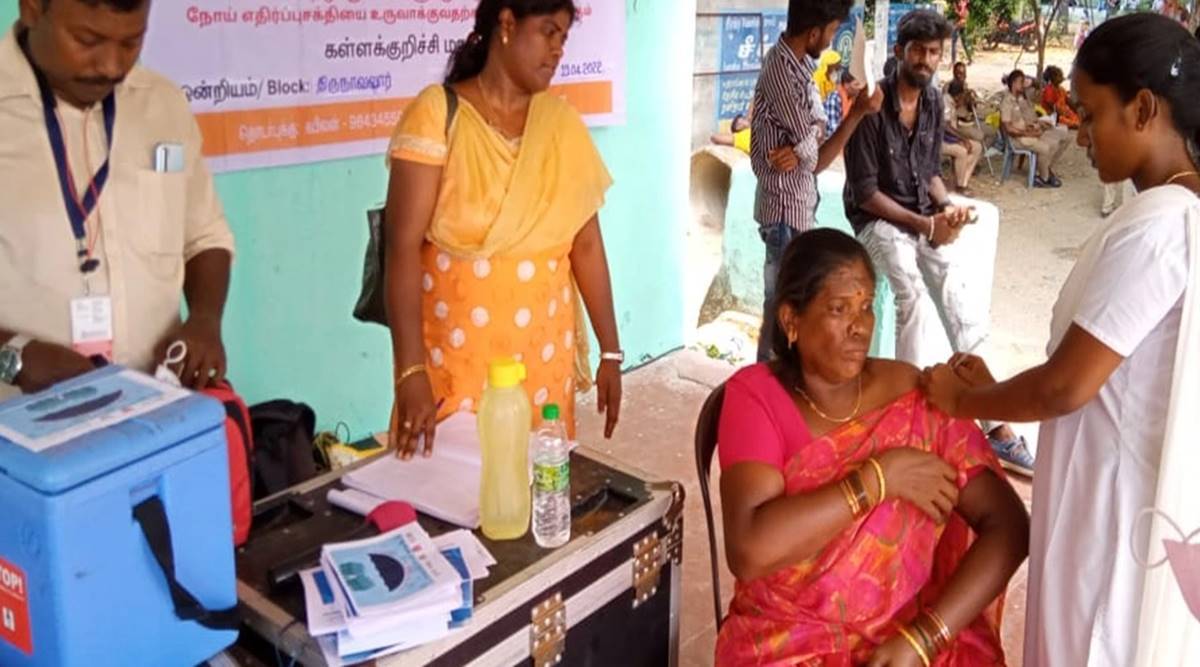
Assam saw the innovative ‘Wellness on Wheels’ initiative — a vehicle with Covid-19 vaccination messages. The vehicle enabled vaccinators to reach out to remote villages and vaccinate vulnerable people who may otherwise struggle to access healthcare. In fact, this initiative saw a total of over 51,000 vaccinations (as on Sep 30, 2022), covering over 1200 villages.

To a large extent, the project typifies the essence of Jan Bhagidari. At every level, every stakeholder has played a significant role to ensure that the greater goal of vaccines for all is achieved. It is only apt to say that that these achievements have come at a time when India is celebrating Azadi ka Amrit Mahotsav. This is also a time to acknowledge that projects such as this have successfully developed strategies to mobilize communities by developing locally contextual interventions.

In this context, there are two standout cases illustrative of the power of people: polio and tuberculosis. In Uttar Pradesh, perhaps the most inventive tool was the Bulawa Toli – a children’s brigade would go through neighborhoods shouting slogans and inviting younger children to visit the nearest polio booth for the vaccine. When it comes to TB, community engagement has been critical too. Earlier this year, another strong example of community-focused initiative by the government came in the form of the Ni-kshay Mitra under the ‘Pradhan Mantri TB-Mukt Bharat Abhiyaan.’ As part of this initiative, a range of stakeholders – cooperative societies, corporate entities, elected representatives, non-governmental organizations, political parties and individuals etc. – can consider supporting and adopting districts and blocks or even one or more TB patients across states in India, in the fight against TB.

From the time of its launch on September 9, approximately 10.5 lakh TB patients have consented to receive nutritional, diagnostic, and vocational support in their journey of battling TB. As of now, over 33,000 people from various backgrounds have signed up as Ni-kshay Mitras, who will now be providing nutrition and other support to over 10.2 lakh patients – an example of how society can truly unite to overcome any adversity. And the numbers are increasing at a rapid pace.

Across different public health issues, the nature of interventions may change. But what has consistently helped our country overcome all obstacles, has been the ability to galvanize the community. And to further strengthen the efficacy of community action vis-à-vis public health, it’s important to continually work toward devising locally-relevant solutions for optimal impact. All this ties in with the broader tenets of Jan Bhagidari, too. I am confident that with such strong foundations, the country’s healthcare systems will be secure and stronger than ever before.

Read more At-https://bit.ly/3sfkHve


Categories
COVID-19 Medical Equipments Medical Updates Medicine & Health

Indonesia approves first home-grown COVID vaccine for emergency use

The Indovac vaccine has been developed by Indonesia’s state-owned pharmaceutical company Bio Farma and the Texas Children’s Hospital Center for Vaccine Development at Baylor College of Medicine.

Indonesia has approved its first domestically-produced COVID-19 vaccine for emergency use for people over 18, the chief of the country’s food and drugs agency (BPOM) was quoted by news media as saying on Wednesday. The Indovac vaccine has been developed by Indonesia’s state-owned pharmaceutical company Bio Farma and the Texas Children’s Hospital Center for Vaccine Development at Baylor College of Medicine.

Indonesia approves first home-grown COVID vaccine for emergency use

Penny Lukito, the head of BPOM, was cited by news portal CNN Indonesia as saying the approval was “given as a primary vaccine for adults. “Penny and a Bio Farma spokesperson did not immediately respond to requests for comment. Bio Farma said this month it would produce 20 million doses of the vaccine in 2022 and 100 million doses by 2024. It has also said it has sought a halal certificate – which would make the vaccine permissible under Islam – from relevant authorities. Indonesia is the world’s biggest Muslim-majority nation.

Bio Farma chief Honesti Basyir said earlier this month that the vaccines were intended to “help reduce the nation’s dependency on imported vaccines,” adding 80% of Indovac is locally-sourced.

Indonesia, which reported one of the highest transmission rates of COVID-19 in the world last year, has used vaccines produced by China’s Sinovac Biotech, Pfizer Inc and BioNTech as well as Moderna Inc. Bio Farma has said it has also sought an emergency use approval from the World Health Organization (WHO). Indonesia is also developing another home-grown vaccine called Inavac.

Read more at-http://surl.li/dftch

Categories
COVID-19 Medical Equipments Medical Updates

Days Away From 1 Billion Vaccine Milestone, India Plans Big Celebration

The Health Ministry is preparing to celebrate administering 100 crore, or a billion vaccine doses with a variety of events across the country, sources.

The Health Ministry expects that India should be able to reach the milestone next week by Monday or Tuesday, the sources said, adding that Prime Minister Narendra Modi may also address the nation to thank healthcare workers for their immense contribution to India’s vaccine drive.

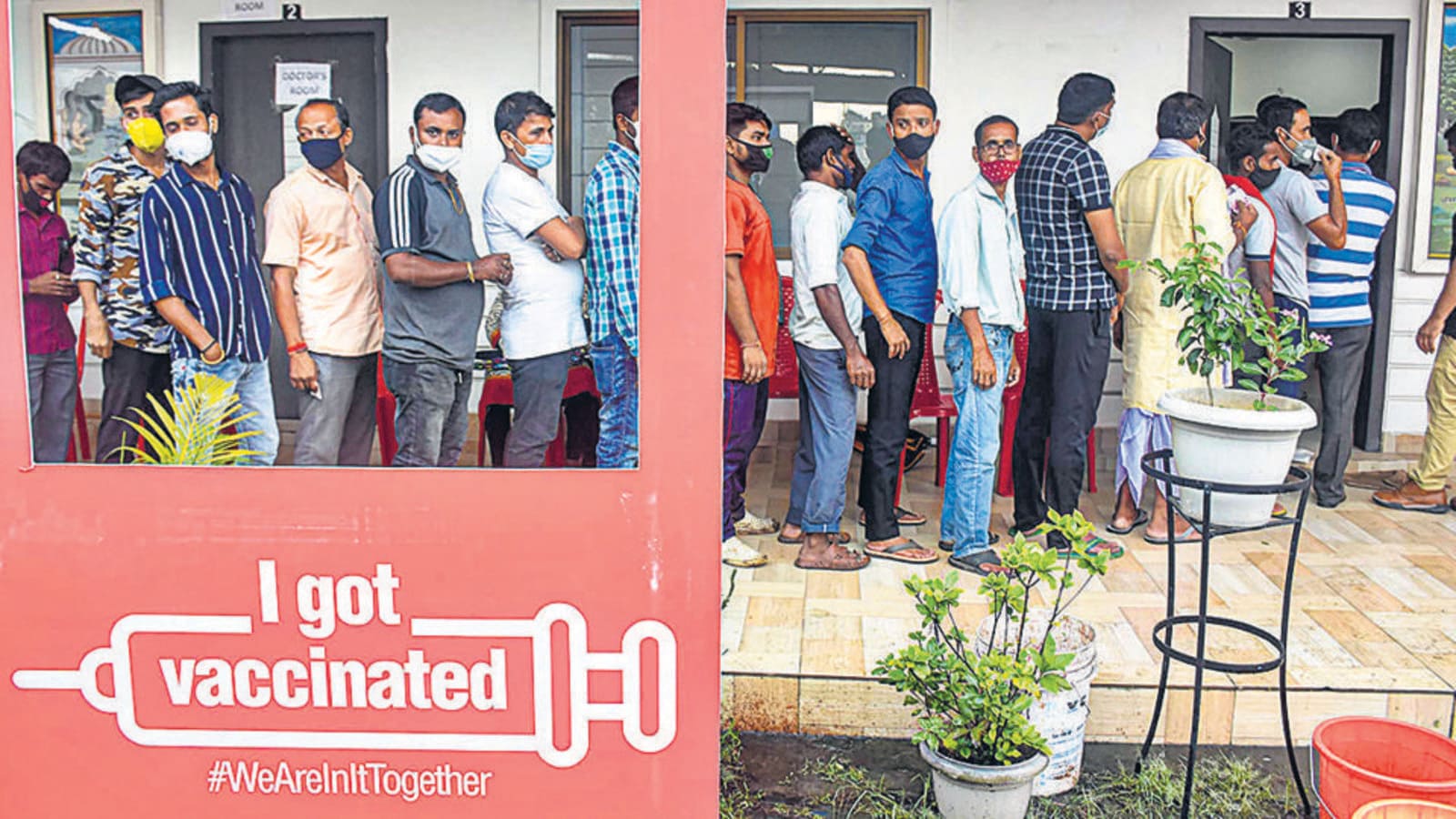
The Union Health Ministry is planning to celebrate the day with events across India, sources told News18, adding that it plans to involve Covid-19 warriors and ground-level healthcare staff, who are key to the vaccination drive.

Health Minister Mansukh Mandaviya has also sought ideas from the Ministry’s officials on how to honor Covid-19 warriors during the celebrations of 100 crore doses, including those who lost their lives in the line of duty.

Special recognition will also likely be announced to motivate the healthcare workers and professionals, and ASHA and Anganwadi workers who have been working tirelessly in the fight against Covid.

The BJP also plans to hold various activities across the country which may include a thank-you drive for doctors and professionals.

On October 10, Mandaviya had hailed India’s vaccine drive after the country crossed the 95 crore-landmark on Sunday, adding that the country is “marching rapidly towards administering 100 crore vaccine doses”.

According to the Cowin dashboard, 96,74,52,484 vaccine doses have been administered as of yet in the country. Thirty-two lakh vaccine doses have been administered on Wednesday till 7 PM.

Meanwhile, more than 97.79 crore COVID-19 vaccine doses have been provided to states and UTs so far, the Union Health Ministry said on Wednesday. Over 8.43 crore balance and unutilized vaccine doses are still available with the states and UTs to be administered, it said.

The vaccination drive has been ramped up through availability of more vaccines, advance visibility of vaccine availability to states and UTs for enabling better planning by them, and streamlining the vaccine supply chain, the ministry said.

More than 97.79 crore vaccine doses have been provided to States/UTs so far through Govt of India (free of cost channel) and through direct state procurement category, the ministry said.

The countrywide vaccination drive was rolled out on January 16 with healthcare workers (HCWs) getting inoculated in the first phase. The vaccination of frontline workers (FLWs) started from February 2.

The next phase of COVID-19 vaccination commenced from March 1 for people over 60 years of age and those aged 45 and above with specified co-morbid conditions. The country launched vaccination for all people aged more than 45 years from April 1.

The government then decided to expand its vaccination drive by allowing everyone above 18 to be vaccinated from May 1. Meanwhile, the Union Health Ministry said that more than 95.96 crore Covid vaccine doses have been provided to states and Union Territories so far.

source: https://www.news18.com/

Categories
COVID-19 Government Guidelines Medicine & Health

India has administered 800 million Covid vaccine doses till now

India had administered at least 800 million Covid vaccine doses by Sunday, September 19. In another development relating to the vaccine, Global pharma major Pfizer and BioNTech SE said trial results of Covid vaccine showed that it is safe and produced a robust neutralizing antibody response in children aged five to 11 years, and they plan to seek regulatory approvals as soon as possible.

Meanwhile, by 9am on Sunday, 804,372,331 vaccine doses were given across the states and UTs. As many as 8,542,732 doses were administered on the day.

In the 18-45 age group, 325,321,724 people have been given the first dose while 59,105,510 have got their second shot as well.

Among the healthcare workers, 10,368,565 have been given the first dose while 8,723,015 have got their second dose as well. Among the frontline workers, 18,344,648 have got their first dose and 14,480,304 have got their second dose too.

Meanwhile, the country, also the world’s largest vaccine producer, will resume exports and donations of surplus coronavirus vaccines in October after halting them during a devastating surge in domestic infections in April, the Union health minister said on Monday.

Health minister Mansukh Mandaviya said more than 300 million vaccine doses would be produced in October and one billion in the last three months of the year.”India will be resuming the export of vaccines… in order to fulfill the commitment of India towards Covax,” Mandaviya said in a statement.

source: https://www.hindustantimes.com/