Categories
COVID-19 Government Guidelines Medical Updates Medicine & Health

New coronavirus variant EG.5 on the rise: WHO, CDC on alert

The EG.5 variant has been spreading rapidly in the US and has higher transmissibility. A US health official says updated vaccines will offer protection.

The World Health Organization (WHO) on Wednesday classified a new strain of COVID-19 as a “variant of interest.” The EG.5 variant has been spreading rapidly in the United States, encompassing over 17% of cases. It has also been detected in China, South Korea, Japan and Canada.

What else do we know about the EG.5 variant of COVID-19?

The WHO said that the new variant does not at present seem to pose an additional public health risk compared to other strains of COVID-19.

“Collectively, available evidence does not suggest that EG.5 has additional public health risks relative to the other currently circulating Omicron descendent lineages,” the organization said.

It said that a more comprehensive evaluation of the risk posed by EG.5 was needed. 

Maria Van Kerkhove, the WHO’s technical lead on COVID-19, said that while EG.5 had increased transmissibility, infections were not more severe than other Omicron variants.

“We don’t detect a change in severity of EG.5 compared to other sublineages of Omicron that have been in circulation since late 2021,” she said.

New coronavirus variant EG.5 on the rise: WHO, CDC on alert

Meanwhile, Dr Mandy Cohen, the director of the US Center for Disease Control and Prevention (CDC), said that updated vaccines to be offered in mid-to-late September will provide protection against the variant.

“Right now, what we’re seeing with the changes in the viruses, they’re still susceptible to our vaccine, they’re still susceptible to our medicines, they’re still picked up by the tests,” Cohen said.

The CDC chief said that the mutations in the virus amounted to “small changes” and “subtypes of what we’ve seen before.”

“We are likely to see this as a recommendation as an annual COVID shot just like we have an annual flu shot,” she said.

Countries not reporting COVID-19 data, WHO says

Meanwhile, WHO Director General Tedros Adhanom Ghebreyesus said that many countries were not reporting coronavirus data to the organization.

He said only 11% had reported hospitalizations and ICU admissions related to COVID-19.

The WHO issued a set of recommendations for reporting data on the virus, particularly mortality and morbidity. It also urged countries to continue offering vaccination.

“About a year ago, we were in a much better situation to either anticipate or act or be more agile,” Van Kerkhove said.

“And now the delay in our ability to do that is growing. And our ability to do this is declining.”

“What we cannot do right now is give you an accurate statistic of how many deaths are actually occurring for Covid-19,” she said.

Read more at-https://shorturl.at/dxBK0
Categories
COVID-19 Government Guidelines Medical Equipments Medical Updates

Health ministry to organise ‘Chintan Shivir’ to explore ways to build trust on Indian drugs

Synopsis

“The aim is to build trust and confidence on the quality of Indian drugs, cosmetics and medical devices in the domestic and global markets.”

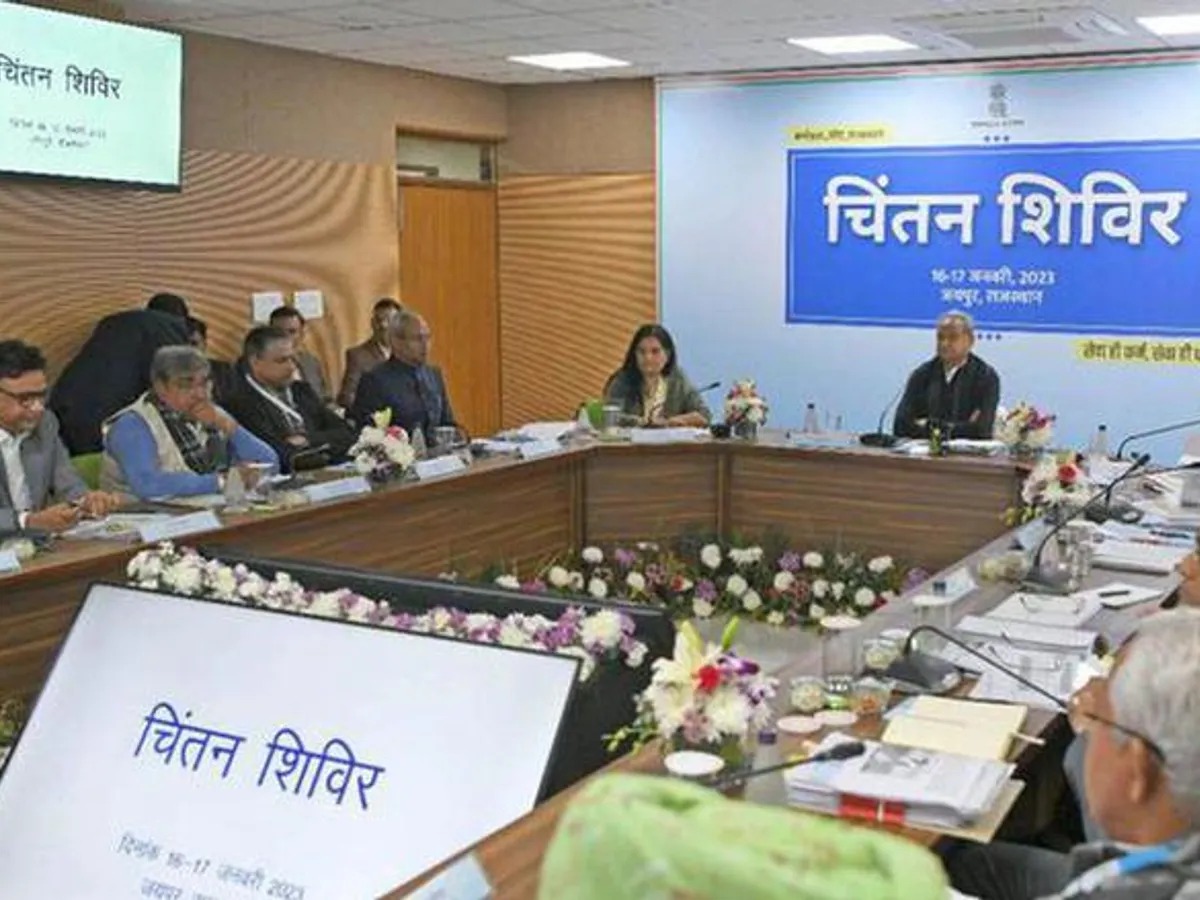
The Union Health Ministry will organise a two-day ‘Chintan Shivir’ from February 26 to explore ways to build trust on Indian drugs, cosmetics and medical devices in domestic and export markets and strengthen the regulations to ensure their quality, officials said on Tuesday. The Chintan Shivir on ‘Drugs: Quality Regulations and Enforcement’ holds significance against the backdrop of questions being raised about the quality of some Indian drugs amid instances of Global Pharma Healthcare recalling entire lots of eye drop linked to vision loss in the US and India-made cough syrups being linked to children deaths in Gambia and Uzbekistan.

At the two-day event to be organised in collaboration with the Department of Pharmaceuticals in Hyderabad, experts and officials will review the predictability, transparency and accountability in the regulation of quality of drugs, ensure compliance to Indian pharmacopoeia standards and develop robust network for pharmacovigilance and materiovigilance programmes, the officials said.

The event will also see introduction of digital tools for uniform and effective regulation.

“The aim is to build trust and confidence on the quality of Indian drugs, cosmetics and medical devices in the domestic and global markets.

“Experts will also deliberate on effective enforcement at the field level for ensuring quality, safety and efficacy till the last mile. Discussions will focus on the present enforcement mechanism in place to address spurious, adulterated and substandard drugs, and the necessity for greater coordination between the states and the Centre in this regard and the issues and challenges in enforcement,” an official said.

Health ministry to organise 'Chintan Shivir' to explore ways to build trust on Indian drugs

The shivir will also deliberate on creation of a unified IT platform for all regulatory activities such as an online National Drug Licensing Portal (NDLS).

The Central Drugs Standard Control Organisation (CDSCO) is the regulatory authority and under the Drugs and Cosmetics Act and rules made thereunder, it is responsible for approval of new drugs, conduct of clinical trials, control over the quality of imported drugs in the country and coordination of the activities of State Drug Control Organizations by providing expert advice with a view of bringing about the uniformity in the enforcement of the said Act, the official explained.

The Drugs and Cosmetics Act, 1940 and rules made thereunder have entrusted various responsibilities to Central and state regulators for regulation of drugs and cosmetics. It envisages uniform implementation of the provisions of the Act and rules for ensuring the safety, rights and wellbeing of patients by regulating the drugs and cosmetics.

Read more at-https://bit.ly/3Iy4Ocl

Categories
Medical Updates Medicine & Health

Indian pharma to step up quality standard to meet global generic demand

Synopsis

In 2019, Indian pharma companies received 19 warning letters. Nearly half were from the Office of Manufacturing Quality, US Food and Drug Administration (FDA). GoI has taken some measures since March 2021. Companies that manufacture and market pharmaceuticals are accountable for their products’ quality. That is not enough. A regulatory overhaul is needed.

The possible link between four cold and cough syrups made by an Indian pharmaceutical company and the death of 66 children in the Gambia is a wake-up call. The World Health Organisation (WHO) has issued a global alert to minimise and prevent further harm.

For India’s drug regulator and government, this is an alarm to step up vigilance. India must continue to be the ‘pharmacy to the world’ by ensuring that the quality of its products is not suspect. For this, GoI must take strong measures.

Indian pharma to step up quality standard to meet global generic demand

India is the third-largest pharma manufacturer, meeting 20% of global generic demand. Multiple assessments project the industry to grow further – $45-65 billion by 2025, and $120-130 billion by 2030. However, non-compliance with quality standards is the biggest challenge.

In 2019, Indian pharma companies received 19 warning letters. Nearly half were from the Office of Manufacturing Quality, US Food and Drug Administration (FDA). GoI has taken some measures since March 2021. Companies that manufacture and market pharmaceuticals are accountable for their products’ quality. That is not enough. A regulatory overhaul is needed.

The current fragmented system, where quality and standardisation become casualties, must be replaced by a modern, independent, statutory regulatory system. The Central Drugs Standard Control Organisation (CDCSO) is the non-statutory regulator under the health ministry. It has no jurisdiction over State Drug Regulatory Authorities that are part of state health departments. Each regulatory body acts independent of the other. This must change.

The pandemic has raised concerns about supply chains and inequity in access. Failure to address quality standards could derail the prospects of one of India’s brightest sectors.

Read more at-shorturl.at/ijmGS