Categories
Government Guidelines Medical Updates Medicine & Health Techniques

Nikon India enters healthcare sector with microscopy solutions

Synopsis

The company has launched its ‘AXR Point’ scanning confocal microscope that has the capability to provide a field of view of 25mm in one single shot thereby helping researchers to generate most accurate statistical data while imaging, Nikon India said in a statement.

Imaging products firm Nikon India Pvt Ltd on Tuesday announced its foray into the healthcare sector through system product microscopy business.

The company has launched its ‘AXR Point’ scanning confocal microscope that has the capability to provide a field of view of 25mm in one single shot thereby helping researchers to generate most accurate statistical data while imaging, Nikon India said in a statement.

Nikon India enters healthcare sector with microscopy solutions

The product is targeted at premier research institutes, research centres funded and established by the India government, academic educational institutions, clinical centres such as hospitals and medical research institutes to boost research and development in medicine, it added.

“We plan to install AXR system in a few research institutes in India namely IIT Bhilai, IIT Mumbai, ACTREC Mumbai to name a few,” Nikon India Managing Director Sajjan Kumar said.

He said the microscopy business offers huge potential, and “we are extremely upbeat about its growth prospects…Our expected annual turnover for FY 22-23 will be around 5 per cent of Nikon’s India operations and we anticipate it to grow 10 per cent plus by the end of next year.”

Read More At-https://bit.ly/3tAjHmf

Categories
Medical Equipments Medical Updates Medicine & Health Techniques

Namma Homeopathy clinic gains popularity in Maharashtra and Karnataka due to its effective treatment

Synopsis

Homeopathy is a proven and effective method of medicine to fight diseases and Namma Homeopathy clinic have shown effective treatment all over India and have successfully treated more than 1 lakh acute and chronic diseases.

The science of homeopathy medicines was founded more than 200 years ago. It is a proven and effective method of medicine to fight diseases. Its classification of medicine is to cure the disease with no side effects and in a natural way. These medicines improve the immunity power of individuals helping the disease condition to reduce gradually and permanently and thereby removing the disease cause from the root. Homeopathy medicine is devoid of chemicals and particles causing adverse patient effect. On the contrary, it improves the overall well-being of the patient.

Keeping in mind these enormous benefits of Homeopathy and to uphold humanity’s quest to have a healthy life, Namma Homeopathy, a unit of Namma Vaidyashaala Pvt Ltd, was established in the year 2017. Today, the homeopathy clinic stands tall with a total of 20 branches across Maharashtra and Karnataka and 200+highly experienced and qualified doctors who have successfully treated more than 1 lakh acute and chronic diseases. Its clinic in Dadar, Mumbai is one of the biggest Homeopathic corporate branches in Asia.
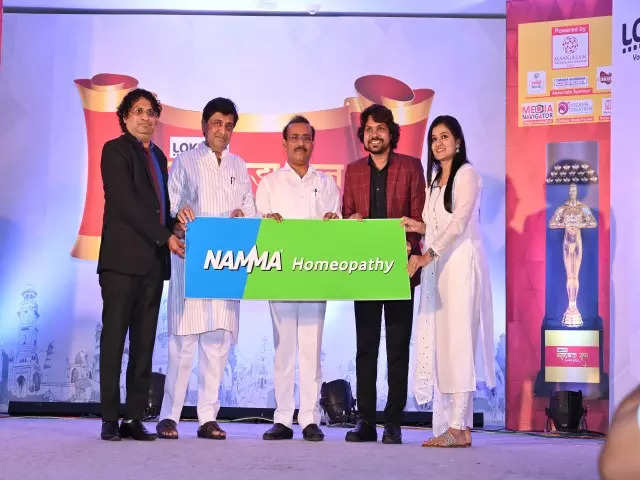
Namma Homeopathy clinic gains popularity in Maharashtra and Karnataka due to its effective treatment

And the impetus behind starting the advanced chain of Homeopathic clinics for promoting wellness among people is none other than Dr More Raghu Prasad, who has carved a niche for himself as a renowned and well-known homeopathic physician. Furthermore, he has earned a name for pioneering research in homeopathic medicine for incurable diseases.

The vision of Namma is to make India a disease-free country, and it has a deep connection with Dr Prasad’s growing years in a rural area. He witnessed the pain of diseased people very closely with no facilities available for treatment. The experience stirred his conscience and paved the way for pursuing the subject of homeopathy in the later part of his life.
He completed his Bachelor of Homeopathic Medicine and Surgery and started Namma Homeopathy to provide a low-cost and effective treatment to the diseased.

Namma Homeopathy is an integrated health system and emphasises treating patients for all chronic problems and incurable conditions like infertility, diabetes, thyroid disorders, PCOD, allergies, asthma, psoriasis, vitiligo, back pain, varicose veins, hair loss, joint pains, gastritis, piles, migraines, anxiety, depression and sexual problems.

Highlighting more on the subject, Dr Prasad says, “At Namma, what comes first is an inclusive approach. The name ‘NAMMA’ means ‘ours’, and it has been coined to align with our belief that the responsibility of creating a healthy society is ‘ours’. It motivates us to act with conscience, perform responsibly, and function with integrity. We have a team of 50+ highly qualified and talented doctors in the research department at Bangalore researching new medicines and formulas for treating incurable diseases, including the Immunogenic Miasmatic 6th Generation Homeopathic Medicines.”

In Immunogenic Miasmatic 6th Generation Homeopathic Treatment, the Medicines act in the immune cells, which improves the immunity power, which is called immunogenic. The medicines work on the disease’s root cause removing the causative factor, which is called miasmatic. It acts according to the new generation’s present lifestyle and environmental condition, which is called the 6th generation. After a lot of research on new diseases, viruses, bacteria, pandemics, and present lifestyle conditions, Dr Prasad’s research team developed this treatment method, and it has successfully treated chronic diseases at their clinics.

“Research Department plays an important role in treating patients at Namma Homeopathy. Our doctors’ research considers the disease pattern, cause, symptom and condition. We have researched a new formula called Advanced Nano Genetic Constitutional medicines, which has helped patients treat diseases from cold to cancer. Its effectiveness has also been found in treating different kinds of arthritis, diabetes, varicose veins, asthma, infertility, and autoimmune disorders. A lot of effort is put into offering the best to our patients without any side effects and with a complete solution. Namma Homeopathy medicines can make a patient better emotionally and mentally,” adds Dr Prasad.

As a part of the diagnosis, doctors at Namma spend good quality time with the patient to understand the cause of the disease. Its research department studies the patient’s case details continuously and upgrades the way of treatment and medicines from time to time. The service team continuously follows up with the patients for appointments, feedback on the services and senior doctor appointments with the patients if needed.

Dr Prasad believes a conducive atmosphere within the clinic is necessary to promote the happiness and well-being of doctors who are the backbone of the Namma. To achieve this, regular CME programs are conducted where specialists, experts and renowned homeopaths from around the world come to train, motivate and enrich the lives of the doctors. The effectiveness of this program has led to a 90-95% success rate of Namma in treating diseases.

It also has a 24/7 call centre to help people to reach this modern science and to get free advice. All 20 branches of Namma Homeopathy are connected and interlinked with software. Patients can start the treatment anywhere and can continue the treatment whereever they are comfortable. The case details are available to doctors on the system, and they can treat patients remotely or else the patients can visit any branch in Karnataka and Maharashtra for their medicines and treatment. It aims to open branches at every 100 km distance and spread awareness about the benefits of Homeopathy treatments.

Namma Homeopathy has launched a web portal where people can get advice online at any time and from any part of the world.

About Namma Homeopathy
Namma Homeopathy, a unit of Namma Vaidyashaala Pvt Ltd, was established in the year 2017. The centre has 11 branches across Karnataka (Malleshwaram, Jayanagar, Mysore, Hassan, Davangere, Hubbli, Shimoga, Gulbarga, Hospete, Udupi, Belgaum) and 9 Branches in Maharashtra (Mumbai – Dadar, Thane, Solapur, Pune, Kolhapur, Aurangabad, Nashik, Nagpur, Nanded). It is home to more than 600 employees who work in various departments, including HR, IT, Patient Counselling, Pharmacy, Call Centre, and other integral services.

Times Group awarded the ‘Excellence award in medical services and treatment in the field of Homeoapthy’ to Namma, which was given by Padmashri Awardee Anupam Kher.

About Dr More Raghu Prasad
Dr More Raghu Prasad, Chairman and Managing Director of Namma Homeopathy, has been a dedicated practitioner of Homeopathy for more than 15 years. He is the founder of Namma Homeopathy, a unit of Namma Vaidyashaala Pvt Ltd.

Read more at-https://bit.ly/3OaJElN

Categories
Medical Updates Medicine & Health

Yoga for asthma: Breathing exercises for patients with bronchial asthma

Yoga expert suggests the following Yoga asanas or easy breathing exercises for patients with bronchial asthma. Here are their steps and health benefits.

Every organ, muscle and system in the body is affected by our breathing, which happens naturally and without our conscious involvement however, when we breathe intentionally like during Yoga practice, we may change this especially for the better for patients with bronchial asthma. Once the entire body is in balance, our thoughts and actions will be in harmony as breathing’s roles include bringing the body into alignment, calming it down and reawakening it.

In an interview with HT Lifestyle, Himalayan Siddhaa Akshar, Founder of Akshar Yoga Institutions, Himalaya Yoga Ashram and World Yoga Organisation, explained, “Controlling our breathing can aid in emotional regulation. You’ll notice that when we cry, when we’re angry, etc., our breathing becomes laboured and shallow. Therefore, by just controlling our breathing, we can control our emotions. We can learn to remain composed and support our own growth.”

Yoga for asthma: Breathing exercises for patients with bronchial asthma

Talking about Yoga for patients with bronchial asthma, he suggested, “It is advised to begin with Shaant gathi (Slow Speed) while learning these techniques for the first time and gradually increase your practise intensity before progressing to Madyam (Medium Speed), then Tivra Gami (Fast Speed). By practising in Tivra gami, you can graduate to that level but Shant gati is still ideal for experienced practitioners because all three of these levels have positive benefits on the body and the mind.”

He recommended the following Yoga exercises or easy breathing techniques:

1. Bhastrika Pranayama

Breathing exercises are known as pranayama and this one is referred to as bhastrika. Your breath should make a sound similar to the bellows blacksmiths use while performing this pranayama.

The practice of bhastrika helps the body’s capacity grow. As you deepen your practice of this breathing method, you’ll benefit in a number of ways—physical, psychological, and spiritual.

Method

• Take up any comfortable position for sitting, such as Sukhasan, Ardhapadmasan, or Padmasana.

Close your eyes, arch your back, and place your hands in the Prapthi Mudra on your knees.

• Take a full, deep breath in and out. Inhalation to exhalation should be a 1:1 ratio. For instance, if you take six breaths in, you must also take six breaths out.

2. Anulom Vilom

The term anulom vilom refers to a specific type of controlled breathing (pranayama) utilised in the practise of yoga. In order to do it, you must keep one nostril closed when inhaling and the other closed while exhaling. After that, the process is repeated in reverse.

A few of the many stated medical and psychological benefits of alternate nostril breathing include stress reduction, improved breathing, and improved circulation. Scientific evidence backs up some of these statements.

Method

• Sit down in a relaxed position, ideally cross-legged. (such as Ardhapadmasan, Sukhasan, or Padmasana) • Align your spine and close your eyes

• The technique entails breathing via your opposing nostrils, with your left nose inhaling and your right nostril expelling.

• To complete a breath cycle, close your right nostril for left-sided inhalation, your left nose for right-sided exhalation, and your right nostril for right-sided inhalation.

• Use your thumb to gently press the air out of your nostril. The right nostril’s airflow is intended to be stopped.

• Make sure that when you inhale through your left nose, your right nostril feels equally pressured.

• Breathe deeply as you inhale.

• As you open your right nose, close your left nostril to let

Himalayan Siddhaa Akshar concluded, “These four pranayama breathing techniques—Basthrika, Udgeeth, Anulom Vilom, and Kapal Bhati—will be very helpful to you. When carried out correctly, it enables us to go deeper and gain a number of physical, psychological, and spiritual benefits. Every practitioner should take the time to completely master them as a result.”

Read more at-https://bit.ly/3GaFCYB

Categories
Medical Updates Medicine & Health

Gambia deaths: ‘WHO yet to give relevant papers’

Synopsis

India’s drug regulator has written thrice to the WHO to provide documents but there has been no response, they said. Last month, the WHO had issued a warning on cough syrups after which Indian health authorities halted all production of the company.

The Indian government has not been able to make headway into the mysterious deaths of children in Gambia as the World Health Organization (WHO) has failed to provide it “relevant documents” needed to investigate and find causality between the deaths and cough syrups made by Maiden Pharmaceuticals, people in the know told ET.

India’s drug regulator has written thrice to the WHO to provide documents but there has been no response, they said. Last month, the WHO had issued a warning on cough syrups after which Indian health authorities halted all production of the company.

Gambia deaths: 'WHO yet to give relevant papers'

“We have so far not got anything from the WHO to take a step forward into the investigation,” said a person in the know.

A detailed email sent by ET to WHO on November 3 regarding the issue did not elicit any response.

Earlier last month, Indian government formed a committee under noted pharmacologist YK Gupta to investigate the mysterious child deaths that were thought to be linked to cough syrups made by Sonipat-based Maiden Pharmaceuticals.

The committee met three times but has not been able to make any headway.

Gambia’s national drug regulatory body, which has also been investigating, has so far not found any link between cough syrups from India and deaths of at least 70 children, and said some children died without consuming the suspected drugs, a local newspaper had reported early this month. However, the real cause of the acute kidney injury cases linked to the child deaths is still “unknown”, Medicines Control Agency ,The Gambia, told The Point newspaper.

Read more at-https://bit.ly/3WWalij

Categories
Medical Equipments Medical Updates Medicine & Health

‘Measles deaths’: Health ministry sends team to Mumbai

“The team will also undertake field visits to investigate the outbreak and assist the state health department in terms of public health measures, management guidelines, and protocols to manage the increasing cases of measles being reported in Mumbai,” said the ministry in a statement.

AFTER REPORTS of increase in suspected measles cases and three deaths in children, the Union Health Ministry on Wednesday rushed a multi-disciplinary team to Mumbai. It is yet to be determined whether the deaths could have been due to measles that can sometimes lead to complications such as encephalitis (swelling in the brain), blindness, and pneumonia.

“We don’t even know whether the deaths are because of measles; the state government has also not categorised these deaths as measles. The team of experts from different fields will determine whether these were in fact measles cases. The team will also see the vaccination status of the children who have died; measles deaths should not occur because our vaccination coverage is nearly 100%,” said an official from the Health Ministry. The team is likely to submit a preliminary report by Thursday evening.

‘Measles deaths’: Health ministry sends team to Mumbai

AFTER REPORTS of increase in suspected measles cases and three deaths in children, the Union Health Ministry on Wednesday rushed a multi-disciplinary team to Mumbai. It is yet to be determined whether the deaths could have been due to measles that can sometimes lead to complications such as encephalitis (swelling in the brain), blindness, and pneumonia.

“We don’t even know whether the deaths are because of measles; the state government has also not categorised these deaths as measles. The team of experts from different fields will determine whether these were in fact measles cases. The team will also see the vaccination status of the children who have died; measles deaths should not occur because our vaccination coverage is nearly 100%,” said an official from the Health Ministry. The team is likely to submit a preliminary report by Thursday evening.

The three-member team is headed by Dr Anubhav Srivastava, Deputy Director, Integrated Disease Surveillance Programme (IDSP), NCDC.

India has seen an increase in the number of measles cases – 11,156 cases of measles have been reported in 2022 till September, according to data from the World Health Organization. To compare, there were 6,078 recorded in 2021, 5,598 cases in 2020, and 10,708 cases in 2019.

Measles is a highly contagious infection with vaccination considered to be one of the most effective intervention for reducing cases and deaths. With a goal of eliminating measles and rubella (another similar viral infection), India launched a one-time immunisation campaign for all children between the ages of 9 months to 15 years in a phased manner 2017 onwards, with almost all states including Maharashtra having completed the vaccination.

Read more at-https://bit.ly/3tiRYGM

Categories
Medical Equipments Medical Updates Medicine & Health

Cholesterol medicines lessen risk of degenerative eye disease of ageing

In high-income nations, AMD is the main contributor to serious vision impairment in elderly adults. The ailment presently affects 67 million individuals in Europe alone, and as the continent’s population ages, it is expected that the number of new cases would skyrocket.

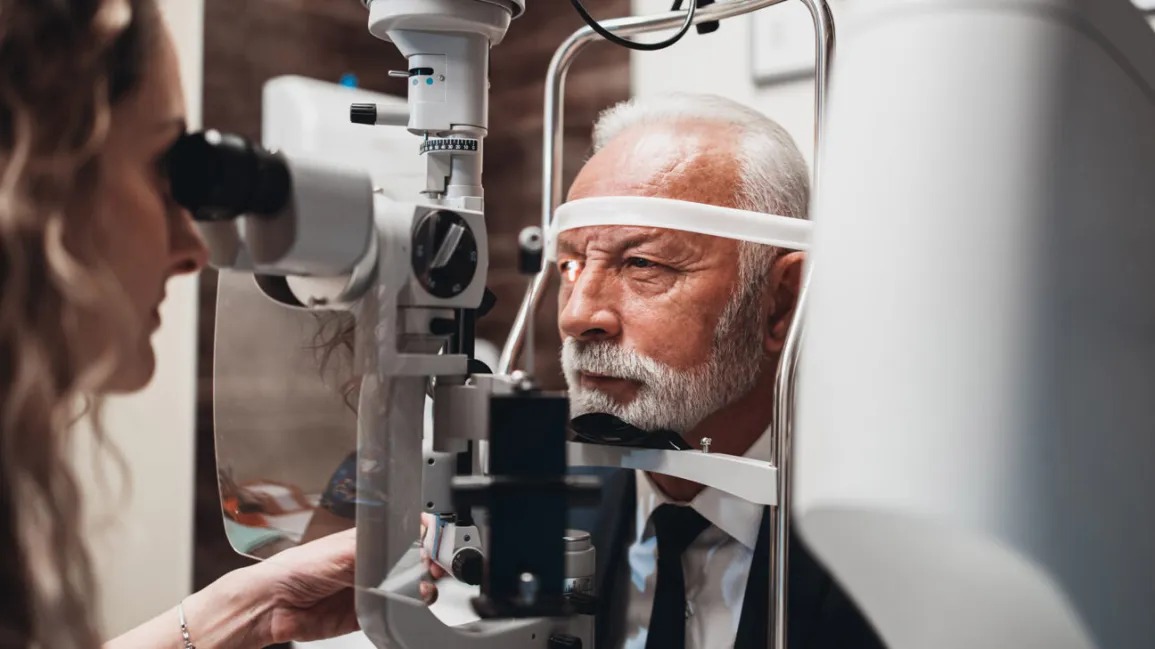
According to a pooled data analysis of the available evidence, which was published online in the British Journal of Ophthalmology, regular use of medications to lower cholesterol and manage type 2 diabetes may reduce the risk of AMD, a degenerative eye condition associated with ageing.

According to the findings, these common medications are associated with a lower prevalence of AMD (age-related macular degeneration) in European populations.

Cholesterol medicines lessen risk of degenerative eye disease of ageing

In high-income nations, AMD is the main contributor to serious vision impairment in elderly adults. The ailment presently affects 67 million individuals in Europe alone, and as the continent’s population ages, it is expected that the number of new cases would skyrocket.

AMD impairs both central vision and fine detail perception. AMD is assumed to be caused by a number of genetic and environmental ageing-related factors, but the best ways to prevent it or halt its growth are yet unknown.

Prior studies have suggested that medications to lower cholesterol, manage diabetes, and reduce inflammation may assist to minimise the chance of getting AMD, but these results were inconsistent and based on small participant numbers.

The researchers aggregated the findings from 14 population-based and hospital-based studies, encompassing 38,694 participants from France, Germany, Greece, Ireland, Italy, Norway, Portugal, Russia, and the UK, in an effort to circumvent these problems.

The studies are a part of the European Eye Epidemiology (E3) project, a pan-European collaborative network whose main goal is to create and analyse sizable pooled datasets to further our understanding of eye illness and vision loss.

All of the participants were over 50 and receiving at least one of the medications listed below: Levodopa used to treat movement difficulties brought on by neurodegenerative diseases; statins to lower cholesterol; insulin to regulate diabetes; steroids to reduce inflammation.

In the studies that were considered, the prevalence of AMD ranged from 12.5 per cent to 64.5 per cent, totalling 9,332 instances, whereas the prevalence of advanced (late) AMD ranged from 0.5 per cent to 35.5 per cent, totalling 951.

After taking into account any potential influencing factors, the pooled data analysis revealed that medications to lower cholesterol or control diabetes were related to, respectively, 15 per cent and 22 per cent lower prevalence of any type of AMD.

Despite the fact that there were only a very small number of such cases, the researchers highlight that no such connections were discovered for any of the other drug classes or for severe AMD in particular.

Theirs are the first large pooled data analysis of its kind to use individual-level data from various population-based and hospital-based studies, highlight the researchers.

“Yet, further longitudinal data are needed to confirm our findings, which are inherently limited by using cross-sectional data only and cannot infer causality,” they cautioned.

But the findings point to a likely key role for metabolic processes in the development of AMD, which may offer potential new avenues for treatment and have implications for public health messaging, they suggest.

“Our study suggests that regular intake of [lipid lowering] and antidiabetic drugs is associated with reduced prevalence of AMD in the general population. Given a potential interference of these drugs with pathophysiological pathways relevant in AMD, this may contribute to a better understanding of AMD aetiology,” they concluded.

Read more at-https://bit.ly/3Ukeafi

Categories
Government Guidelines Medical Updates Medicine & Health

Health Ministry working on guidelines to scrap bond policy for doctors

The Union Health Ministry is working to finalise guidelines to do away with the bond policy for doctors based on the National Medical Commission’s recommendations in this regard, official sources said.

In pursuance of the Supreme Court’s directions, the Health Ministry constituted a committee under the chairmanship of Dr. B. D. Athani, Principal Consultant, Directorate General of Health Services, in 2019 to examine the matter. The committee submitted its report in May 2020 and it was forwarded to the National Medical Commission (NMC) for comments.

The NMC furnished its comments in February 2021. It said the report does not clearly address the origin of the policies on compulsory imposition of bond conditions by the various State governments for students.

Health Ministry working on guidelines to scrap bond policy for doctors

The NMC, in its comments, stated that since the promulgation of the bond policy by the various States, much has changed in medical education in the country and therefore, it may be worth reviewing the merits/effectiveness of this policy by the various States.

“The NMC submitted its detailed observations. In view of its observations and notwithstanding the observations of the SC upholding the legalities related to the bond policies of the state governments, the commission was of the considered view that medical students should not be burdened with any bond conditions and doing so may run contrary to the principles of natural justice,” the source said.

Further, the matter was thoroughly examined by the Ministry and it was proposed that there is a need to re-examine the entire bond policy de-novo along with the views of all States, Union Territories and other stakeholders.

Since then, meetings have been held to deliberate on operationalisation of the uniform bond policy, including finalisation of quantum of bond, manner of enforcement and timely availability of posts in States after completion of internship etc., the source said.

There is no provision of a bond under the NMC Act, 2019 or the erstwhile Indian Medical Council Act, 1956 and regulations made thereunder. The condition of bond is imposed by the State to increase access to improved healthcare services, especially in rural areas by filling the vacant position in community health centres (CHCs) and primary health centres (PHCs).

The amount of bond is decided by the State in lieu of subsidised education being provided in the government medical colleges.

The amount of bond varies from state to state and ranges widely between ₹5 lakh (Goa, Rajasthan, Tamil Nadu) and ₹1 crore (Uttarakhand) for MBBS and up to ₹2-2.5 crore (Kerala, Uttarakhand, Maharashtra) for PG and super-speciality.

The duration of compulsory service also varies between 1 year and 5 years.

“In a meeting, it was observed that there is a consensus that there should be mandatory rural service to enhance availability of doctors in rural and remote areas with flexibility. Also, the bond could be non-financial and implemented through an administrative mechanism,” the source said.

“The Health Ministry is working to finalise guidelines for doing away with the bond policy based on the recommendations by NMC,” the source added.

Read more at-https://bit.ly/3NVlR9D

Categories
COVID-19 Medical Equipments Medical Updates Medicine & Health

Blood oxygen monitors don’t work as well on people with darker skin: FDA

Synopsis

As smartwatches now claim to read blood oxygen levels, the US Food and Drug Administration (FDA) has raised fresh concerns over pulse oximeters that monitor blood oxygen levels in the hospital and at home.

As smartwatches now claim to read blood oxygen levels, the US Food and Drug Administration (FDA) has raised fresh concerns over pulse oximeters that monitor blood oxygen levels in the hospital and at home.

According to an FDA advisory panel, blood oxygen monitors need to be more carefully regulated as they don’t work as well on people with darker skin tones.

In 2021 during the pandemic, the FDA had issued an alert saying that these devices have “limitations”.

Blood oxygen monitors don't work as well on people with darker skin: FDA

“As part of its premarket evaluation of pulse oximeters, FDA has long required premarket data assessing pulse oximeter performance in subjects with different skin pigmentation. However, a December 2020 published report suggests that pulse oximeters may be less accurate in patients with darker skin pigmentation,” said the FDA panel in its report.

The panel reviewed multiple research studies that show oximeters don’t work as well on darker skin.

It delayed Covid treatments in Black patients because the devices didn’t show dropping oxygen levels, according to one study.

The over-the-counter pulse oximeters or “wellness” devices aren’t reviewed by the FDA.

An assessment of the US pulse oximeter market demonstrates the use of these devices increased during the first year of the Covid-19 pandemic.

Since the December 2020 study, additional real-world studies have been published suggesting increased risk for missed diagnosis of “occult hypoxemia”, delays in treatment eligibility decisions and worse patient outcomes among subjects with darker skin pigmentation.

“Occult hypoxemia” is defined as Sao2 less than 88 per cent despite a Spo2 of greater than 92 per cent, based on previously published parameters.

Pulse oximeters are widely used by many types of healthcare providers and consumers to obtain an indirect measure (SpO2) of arterial blood oxygen saturation (SaO2).

“We need to take appropriate steps to remove the growing uncertainty around these devices and ensure the health and safety of the public,” anesthesiologist Jesse Ehrenfeld told the panel, reports The Verge.

Read more at-https://bit.ly/3NBPWKY

Categories
Government Guidelines Medical Updates Medicine & Health

Responsive Policymaking For Achieving India’s Tobacco Control Goals

About 200 million people use smokeless tobacco, 72 million use beedis and 28 million use cigarettes in India. However, the focus of tobacco control and taxation has been on cigarette smokers only. This blinkered approach ignores the plight of the socio-economically disadvantaged people who use beedis or smokeless tobacco.

We need to start conversations with our patients about tobacco use – more so about smokeless tobacco. But the usual Power Talks tend to demonize Nicotine as a root cause of all ills, treat tobacco as a taboo and cast uncalled-for assumptions about smokers.

The first step would be to accept that nicotine and tobacco are not interchangeable: Nicotine by itself is not carcinogenic. Delinking the two can radically alter the way we go about reducing the suffering and deaths from tobacco. We need to educate ourselves all over again about nicotine.

Responsive Policymaking For Achieving India’s Tobacco Control Goals


Consider the stats and facts critical to tobacco control –

A single “cessation-only” strategy to get all people to quit will not produce spectacular results.

The quit rate in India is about 0.5% annually. (a 99.5% failure rate).

It takes smokers over 30 attempts to finally quit – and the large majority never manage to do so; because the likelihood of quitting diminishes with each attempt, as per a study by Chaiton et al in 2016.

Over 70% of smokers want to quit, but only 7% manage to do so, as per the US CDC in 2017.

The Government’s plan to add Nicotine Replacement Therapy products (NRT) — chewing gums, patches, tablets, oral strips and lozenges — to the National List of Essential Medicines (NLEM) is a very welcome step in helping people to quit tobacco, more so as the prevalent problem here is smokeless tobacco. The objective could be better served if products like nicotine pouches and inhalers are also considered for inclusion in the NLEM.

We need to understand that an awareness initiative that portrays the truth about nicotine, without hedging, obfuscation or prevarication will give hope to those of us in tobacco harm reduction.

Also, there is a need for a review of the prohibition on e-cigarettes. Cigarette sales have sharply plummeted in countries that allow e-cigarettes or vaping, proving that they are true substitutes. Significantly, the US FDA has approved e-cigarette and vaping devices. A statement by 15 past presidents of the Society for Research on Nicotine and Tobacco (SRNT) – a globally respected organisation dedicated to evidence-based research on tobacco and nicotine use, has called for considering the use of e-cigarettes and vaping as a means to double the quit rate.

The real question one needs to ask is – which one is safer, vaping or cigarettes? While the UK bodies have stated that vaping is 95% safer than cigarettes, other public health bodies have chosen not to answer this question at all.

It boggles the mind that a less harmful method (e-cigarettes) has been banned while cigarettes and beedis continue to be freely available in India. The argument around the “gateway theory” that vaping leads to increased smoking has been comprehensively debunked. Moreover, the UK bodies hold that vaping is not smoking.

During a recent interaction with diverse stakeholders, I was not surprised to see the government policy of bans – like the Prohibition of Electronic Cigarettes Bill, 2019 – receiving a big thumbs-down from tobacco harm reduction leaders and medical practitioners.

Key Takeaways from the discussion –

Ban on the sale and manufacture of e-cigarettes has failed abysmally

We lost a public health opportunity to regulate these devices, hold manufacturers to safety standards and enforcement of age checks

Vaping has been driven underground, where it is freely available to people of all ages with little safety or standards

The reasons for the ban – EVALI, teen vaping, higher health risks – have been debunked.

We need to include tobacco users in policymaking

We need to re-focus our national tobacco control programme on the real problem – smokeless tobacco

India’s harm-reduction campaign can greatly benefit from recent breakthroughs in the UK, Japan, and New Zealand. They have embraced the use of reduced-risk products for combating the harms of tobacco. The same goes for Sweden with its sinuous and nicotine pouches.

Australia’s controversial step of making e-cigarettes available only on a doctor’s prescription is not optimal as social smokers do not always identify as smokers and hence, they are less likely to seek medical help. Also, policies that restrict reduced-risk products have the unintended effect of increasing tobacco use.

In making laws that affect tobacco users, we need to respect their agency and autonomy as well as consider their views. “Nothing about me without me” – a phrase uttered by Valerie Billingham in 1998 captures everything one needs to say about inclusion and shared decision-making.

Read more at-https://bit.ly/3T59PuY


Categories
COVID-19 Government Guidelines Medical Updates Medicine & Health

India adds 1,604 Covid-19 cases, active caseloads fall by 485

Synopsis
According to the health ministry, the active cases comprise 0.04 percent of the total infections, while the national Covid-19 recovery rate was recorded at 98.77 percent. Active Covid-19 caseloads fell by 485 in a span of 24 hours.

India’s coronavirus caseloads rose by 1,604 in the last 24 hours to take the total tally to 4,46,52,266, while the active cases fell to 18,317, the Union Health Ministry said.

With eight more fatalities, the death toll has climbed to 5,29,016, the data updated by the government at 8 am said.

The new fatalities include three deaths reconciled by Kerala.

India adds 1,604 Covid-19 cases, active caseloads fall by 485

According to the health ministry, the active cases comprise 0.04 percent of the total infections, while the national Covid-19 recovery rate was recorded at 98.77 percent.

Active Covid-19 caseloads fell by 485 in a span of 24 hours.

Daily positivity rate stood at 1.02 percent, and the weekly positivity rate was at 1.08 per cent.

Case fatalitity rate was at 1.18 percent, while the number of people who have recuperated from the disease rose to 4,41,04,933.

India’s COVID-19 tally had crossed the 20-lakh mark on August 7, 2020, 30 lakh on August 23, 40 lakh on September 5 and 50 lakh on September 16. It went past 60 lakh on September 28, 70 lakh on October 11, crossed 80 lakh on October 29, 90 lakh on November 20 and surpassed the one-crore mark on December 19.

The country crossed the grim milestone of two crore on May 4 and three crore on June 23 last year. It crossed the four-crore mark on January 25 this year.

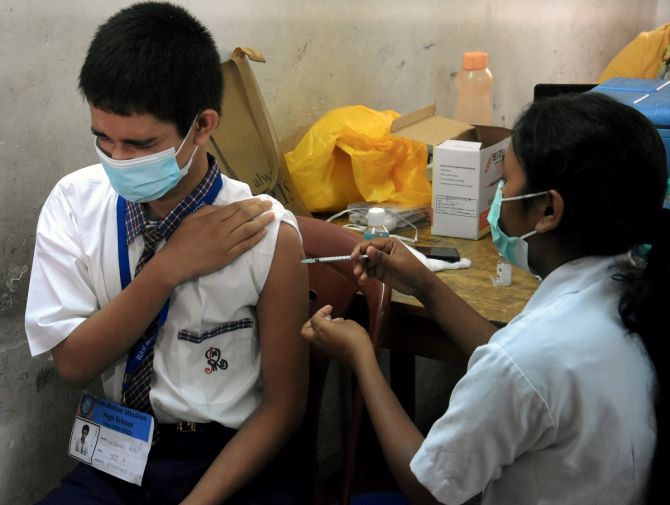
According to ministry data, 219.63 crore doses of vaccines have been administered in the country so far under the Covid-19 vaccination drive.
Read more at-https://bit.ly/3FGSFkB