Categories
COVID-19 Government Guidelines Medicine & Health

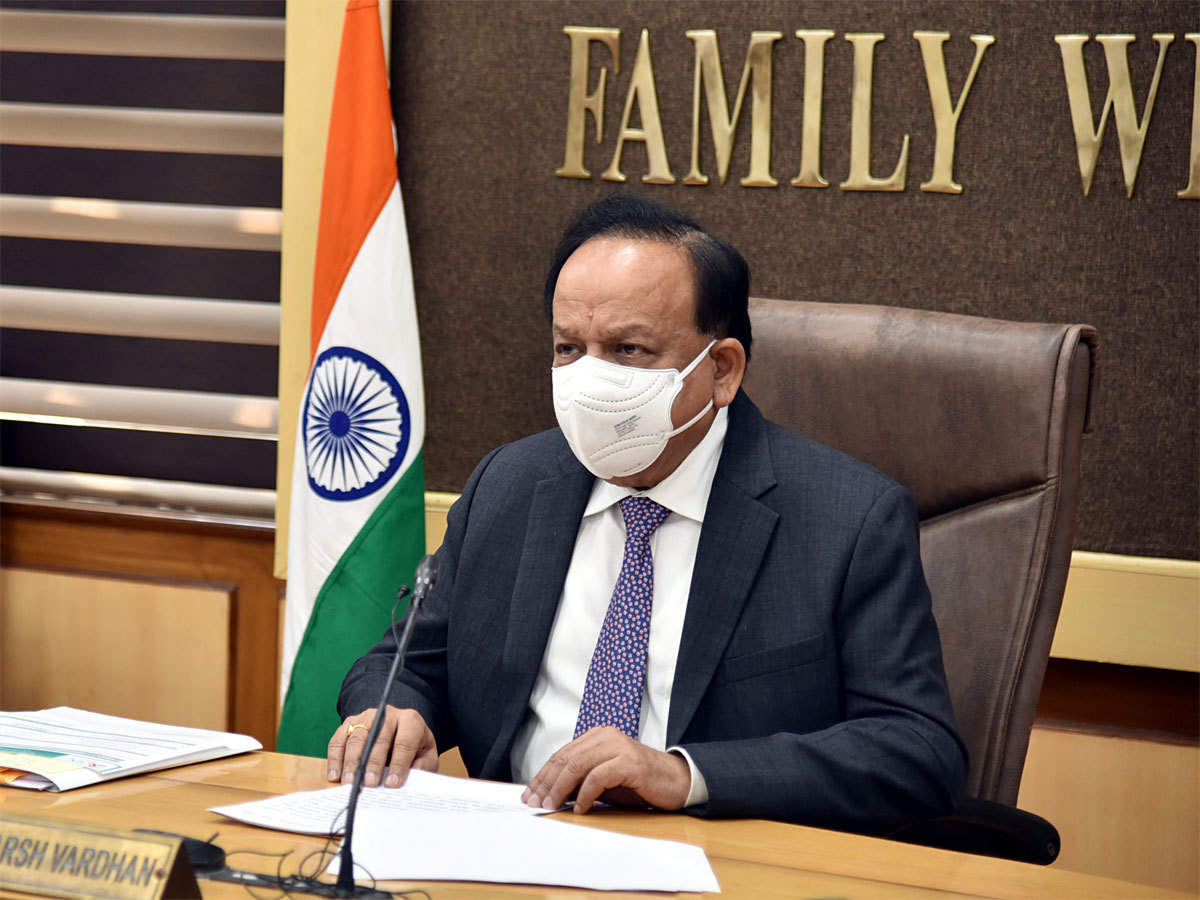
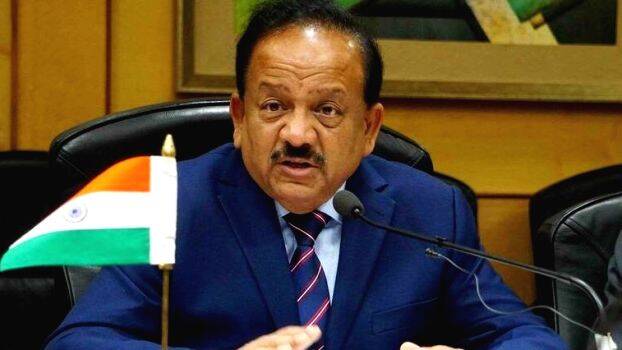
Over six Covid-19 vaccines to come up in India, says Health Minister Harsh Vardhan

Union Health Minister Harsh Vardhan has said that more than six Covid-19 vaccines will come up in India.

He also said that 1.84 crore coronavirus vaccine doses have been administered till Saturday morning, while 23 crore tests have been conducted.

The latest figures from the Health Ministry say that 2.91 crore people had been vaccinated till 7 pm on Saturday.

“India has developed two vaccines, which have been given to 71 countries. Many more nations are seeking the vaccines, and these are not little-known nations…Canada, Brazil and other developed countries are using Indian vaccines with a great zeal,” he said.

“More than half a dozen vaccines are going to come up,” he said.

“Till Saturday morning, 1.84 crore vaccine shots have been given in the country and 20 lakh people were inoculated yesterday,” the minister added.

He was speaking while inaugurating the new green campus of the National Institute of Research in Environmental Health near here.

Prime Minister Narendra Modi wants to create a new India to turn it into a ‘vishwa guru’ (world leader), he added.

“Respect science. There is a need to end politics over it (vaccine) given that it is a scientific fight not a political one. That is why we should work unitedly,” Vardhan said.

The efforts of our scientists are praiseworthy as due to their labour we have achieved all this. Year 2020, apart from being a COVID-19 year, will be remembered as the year of science and scientists, he added.

He said that initially there was only one laboratory in India for COVID-19 testing. “But we have 2,412 testing facilities now,” he added.

“We were the first in the world to isolate the coronavirus. We isolated its mutation. And our scientists helped the ICMR in vaccine. People have praised it (vaccine). Some people tried to create confusion, but truth is unbeatable,” he said.

Talking about the rising infection cases, the minister said this “disturbing trend” was due to the carelessness and misunderstanding.

“People think that as the vaccine has come and all is well now,” he said, while urging them to follow the COVID-19 rules for protection against the virus.

Vaccine update in India

According to a provision report, of the 2,91,92,547 doses administered till now, 73,31,498 were given to healthcare and 72,96,474 frontline workers who have taken the first dose, and 42,58,297 healthcare and 10,53,732 frontline workers who have been given the second dose.

As many as 78,66,241 senior citizens and 13,86,305 aged 45 and above with specific comorbidities have received vaccine doses.

“A total of 9,74,090 vaccine doses were given till 7 pm on Saturday, the 57th day of the nationwide COVID19 vaccination.

“Of these, 8,05,014 beneficiaries were vaccinated for the first dose and 1,69,076 healthcare and frontline workers received the second dose of vaccine according to the provisional report. The final report for the day would be completed by late in the night,” the ministry said in a statement.

The countrywide vaccination drive was rolled out on January 16 with healthcare workers getting inoculated and vaccination of the frontline workers started from February 2.

The next phase of COVID-19 vaccination commenced on March 1 for those who are above 60 years of age and for people aged 45 and above with specified comorbid conditions.
Categories
COVID-19 Government Guidelines

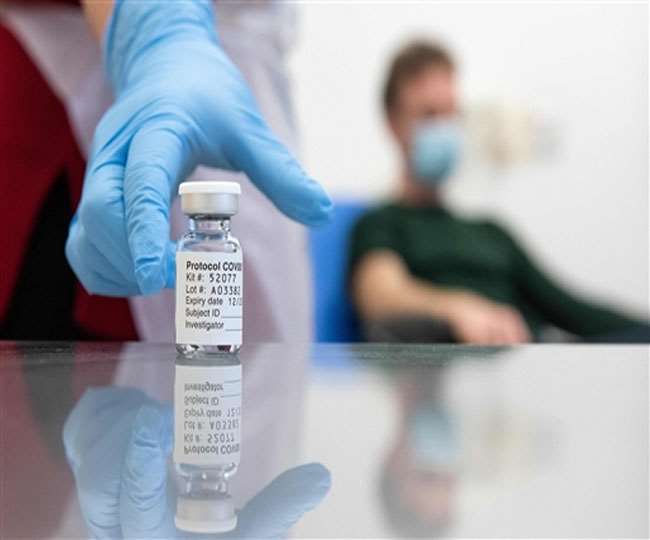
Covid-19 vaccine for 60-plus and above 45 with comorbidity from March 1

People aged more than 60 years and those who are 45 plus and have comorbidities will be able to get a vaccine against Covid-19 at a government centre or a private hospital from March 1.

Announcing this, the central government on Wednesday said people above 45 years of age will have to show a certificate stating they have comorbidities.

Addressing a press briefing on Cabinet decisions, Union minister Prakash Javadekar said the vaccination will be carried out at more than 10,000 government centres and over 20,000 private vaccination centres across the country.

“From March 1, people above 60 years of age and those above 45 years of age with comorbidities will be vaccinated at 10,000 government and over 20,000 private vaccination centres,” Prakash Javadekar said.

Free Covid-19 vaccine at govt centres

The minister said Covid-19 vaccine will be provided free-of-cost at government centres.

However, people will have to pay for the vaccine if they get it from a private centre.

“Those who want to get vaccinated from private hospitals will have to pay. The amount they would need to pay will be decided by the Union Health Ministry within three-four days as they are in discussion with vaccine manufacturers and hospitals,” Prakash Javadekar said.

This is part of the next phase of India’s nationwide Covid-19 vaccination that started on January,16. In the first phase of the vaccination drive, healthcare workers on Covid-19 duty were vaccinated. The second phase covered other frontline workers and people engaged in essential services.

Age limit increased from 50 to 60 years

Government sources privy to the development said earlier all people aged more than 50 years were to be covered in this phase of vaccination, but the government later decided to fix the eligibility age limit at 60 years.

The number of people aged more than 60 years in India is less than those who fall in the age group of 45 to 50 plus.

Sources say, during Covid-19 vaccination, data of only those who are more than 60 years will be recorded in the Co-Win app for free vaccines at government hospitals.

So far, India has approved only two vaccines for it’s Covid-19 vaccination drive. The first one is Covishield which has been developed by the Oxford University and AstraZeneca and is being manufactured by the Serum Institute of India.

The second vaccine is Covaxin, developed and manufactured by Bharat Biotech.

It is unclear at present if people will have a choice to select which vaccine they would like to take.

source: https://www.indiatoday.in/

Categories
COVID-19 Government Guidelines Medical Updates

Arunachal emerges as state with best Covid recovery rate: Health ministry

Frontier state Arunachal Pradesh has emerged as the state with the best Covid recovery fee within the nation, touching almost 99.56%, stated the Union well being ministry on Tuesday.
Union Territories, nonetheless, have come up with a greater report. Daman and Diu, Dadra and Nagar Haveli are marginally forward with a recovery fee of 99.88%.

The virus made deep penetration into the state regardless of the fortified Line of Actual Control negating the potential of the virus being bodily transmitted into the state. But the unfold of the an infection resulted within the expulsion of staff from neighboring Assam and different states in the course of the months of lockdown.
Many imagine, the tough terrain was a bonus throughout as it naturally remoted dwellers. “The terrain has been the main reason why we have been less affected. Even now about 700 people are getting tested. The rate is very good for a state with a population of 14-15 lakh,” stated Arunachal Pradesh well being secretary P Parthiban. He added that the therapy protocol was adopted even in essentially the most distant districts to isolate instances in early phases. “It’s not only the recovery rate, the death rate is also one of the lowest in the state,” he stated.
Stringent measures have been adopted even to examine vans bringing in necessities from different states into ILP (inside line allow) protected Arunachal.

From October onwards, as soon as the festive season unfurled, many in different states, began flouting Covid security guidelines. Masks and social distance have been put aside. But in Arunachal, the screenings continued at about 11 entry factors until about December final 12 months.

While the nation’s Covid-19 recovery fee has touched 97.32%, among the many best on the earth, seven NE states, excluding Sikkim, have higher recovery proportion than the nationwide common. Arunachal Pradesh is adopted by Mizoram (99.36). The different 5 NE states which are among the many 31 states and UTs with higher than nationwide common are Tripura (98.82), Nagaland (98.80), Assam (98.76), Manipur (98.46) and Meghalaya (98.02).

As on February 16 (until 8 am), the cumulative variety of healthcare and frontline staff vaccinated towards Covid-19 within the nation surpassed 87 lakh. Assam stays approach forward of different NE states by way of vaccination. Including each doses, a complete 1,32,475 healthcare staff have been vaccinated within the state.

source : https://newsrush.in/news/

Categories
COVID-19 Government Guidelines Medical Updates

Delhi govt identifies 89 sites, health care workers to be vaccinated first: Satyendra Jain

As the country is all set to begin vaccination drive against the coronavirus disease (Covid-19) from January 16, the Delhi government has identified 89 sites which include 36 state-run hospitals and 53 private hospitals, health minister Satyendar Jain said on Sunday.

Jain also said that only health workers will be administered shots against the Covid-19 in the first phase of the vaccination drive.

The list of hospitals includes AIIMS, Safdarjung, Lok Nayak, GTB, and Hindu Rao, among others. The list of private hospitals includes Max, Fortis, Apollo, BL Kapur, and Gangaram, etc. Vaccines to all the centers will be supplied by the Delhi government and will be free for the beneficiaries.

The Centre on Saturday said that the Covid-19 vaccination drive would begin in the country on January 16, when nearly 30 million healthcare and frontline workers will be inoculated. In the second phase, priority will be given to those above 50 years of age and the under-50 population groups with co-morbidities, together numbering around 27 crores.

As per the ministry, over 61,000 program managers, 200,00 vaccinators, and 370,000 other vaccination team members have been trained so far as part of the training at the states, districts, and block levels.

India’s drugs controller on January 3 granted restricted emergency approval to two companies for their Covid-19 vaccines.

The first vaccine to become available in Delhi will likely be the Oxford-AstraZeneca vaccine, called Covishield in India, and manufactured by Pune’s Serum Institute of India. The other vaccine that has been granted approval for “restricted use in emergency situations” is Bharat Biotech’s Cavoxin.

As of Sunday morning, the country has a total of 10,450,284 confirmed cases of Covid-19, according to the numbers published on the Union health ministry’s website. The number of recoveries reached 10,075,950 after more than 19,200 patients recovered from the viral disease in the span of 24 hours. More than 1.5 lakh people have died so far.

The spread of the virus has been majorly contained in the country as the daily number of new cases has dropped to less than 20,000 from a peak of almost 98,000 in September last year. However, it is still the second worst-hit country after the United States.

Categories
COVID-19 Government Guidelines Medical Updates Medicine & Health

India will have happy New Year with something in hand: DCGI on Covid vax

As India awaits with bated breath for a silver bullet against coronavirus, the Drug Controller General of India(DCGI) on Thursday hinted at the approval of vaccine and said the country will have a ‘happy new year with something in hand.’

The drug regulator is currently analyzing the data submitted by Serum Institute of India, which is manufacturing Oxford-AstraZeneca vaccine and Bharat Biotech, which is making indigenous vaccine in collaboration with ICMR. The expert panel will convene a meeting on January 1 on this.

“The industry and research organisation have stood the test of time. It has been a very wonderful experience. Probably, we will have a happy new year with something in hand. That is what I can hint at,” Drug Controller General of India (DCGI) V G Somani said.

On Wednesday, the Subject Expert Committee (SEC) of the Central Drugs Standard Control Organisation (CDSCO) had met to consider the Emergency Use Authorisation (EUA) request of Pfizer, Serum Institute of India and Bharat Biotech Private Limited.

Further time was, however, requested on behalf of Pfizer. Additional data and information presented by SII and Bharat Biotech was then perused and analysed by the expert panel. The analysis of the additional data and information is going on and it will convene again on January 1, the Centre had said in a statement.

America’s Pfizer was the first one to apply for the accelerated approval on December 4, followed by Serum and Bharat Biotech who applied on December 6 and 7, respectively. Pfizer had, however, requested more time to make a presentation before the committee.

On December 9, the Subject Expert Committee asked Serum Institute of India and Bharat Biotech to submit more data and information to get approval.

The expert panel had then recommended Serum to submit the outcome of the assessment of the UK-MHRA for grant of emergency use approval, the updated safety data of the Phase II/III clinical trial and immunogenicity data from the clinical trial in the UK and India.

Bharat Biotech was recommended to present the safety and efficacy data from the ongoing Phase III clinical trial in the country for further consideration.

Their applications were reviewed again on Wednesday hours after the UK accepted the recommendation of the Medicines and Healthcare Regulatory Agency (MHRA) to authorise Oxford University-AstraZeneca’s Covid-19 vaccine, named Covishield, for emergency use.

The authorisation was significant for India as the Pune-based Serum Institute of India had tied up with the company to conduct clinical trials and manufacture vaccine.

source: https://health.economictimes.indiatimes.com/

Categories
COVID-19 Government Guidelines Medical Updates Medicine & Health

‘India might not need Pfizer vaccine,’ says health minister Harsh Vardhan

India’s Union Health Minister Harsh Vardhan has said that India may not need Pfizer-BioNTech’s COVID-19 vaccine as there are many other vaccine candidates being tested in India, including the indigenous Bharat Biotech candidate Covaxin, which is currently in the final stage of human trials.

In an interview with The Economics Time, Vardhan said, “United States has not even given license to Pfizer. So it does not make sense for other countries like India to consider it. We are in touch with everyone but I feel that we may not need Pfizer vaccine.”

Pfizer has recently applied for emergency use authorization of its vaccine candidate to the FDA. If granted, they will be able to use the vaccine “in high-risk populations…by the middle to end of December 2020.”

Vardhan also said the vaccine would have to first cater to its own country and then fulfil all the order placed by the other countries according to the deals they have signed. He added that Pfizer does not have the “linkages in India to manufacture the vaccine.”

Scroll reported that Vardhan said that no state will be given any preferential treatment and the distribution of vaccines will be equitable. He also stated that healthcare workers will be the first ones to receive the vaccine.

“There will be equitable distribution of vaccine,” he said. “States are part of the national expert group…nobody will get the vaccine by pulling a favor.”

India is currently testing three vaccines and are in various stages of clinical trials. Vardhan said that the vaccine will be made available by February or March 2021.

In Phase 3 of the trials is Oxford University’s vaccine that it has developed with AstraZeneca. The trials are being conducted by Pune based Serum Institute and they will also be responsible for distribution. The vaccine is expected to come out by January 2021.

Dr Reddy’s Laboratories has partnered with the Russian Direct Investment Fund (RDIF) to test its Sputnik V vaccine. It recently received approvals to start Phase 2/3 trials in India and has partnered with the Biotechnology Industry Research Assistance Council (BIRAC) of the Department of Biotechnology (DBT) which gives them access to its clinical trial centres. Dr Reddy’s will also distribute the vaccine if it gets approval in India.

Covaxin, being developed by Bharat Biotech in association with the Indian Council of Medical Research (ICMR) and is in Phase 3 of clinical trials which are being conducted on 26,000 volunteers across 22 centre.

Categories
COVID-19 Government Guidelines Medicine & Health Techniques

‘India to become healthcare provider to the world’


‘India to become a healthcare provider to the world’

The Medical device sector has a crucial role to play in improving accessibility and affordability of healthcare especially with regard to the availability of precision devices stated D V Sadananda Gowda , Union Minister for Chemicals & Fertilizers during his inaugural address at the 12th MedTech Global Summit .
We now must turn our attention to correct our high import dependence. Our pharmaceutical sector will become Atmanirbhar in a short period of 2-3 years, not only domestically but globally providing low cost and high-quality equipment and drugs.

Our Product Linked Investment schemes will attract cumulative investment of INR 78,000 crore and generate 250,000 in employment, with Med tech attracting at least 40,000 crore and employing 140,000 new employees.

The government is committed to providing low cost, affordable health care to every citizen through PMJAY and Ayushman Bharat with both schemes significantly reducing out of pocket expenditure for our citizens.

The medical device industry has labored and helped prepare indigenous products in our fight against COVID, with our production of ventilators proof of the success of Indian indignity stated Piyush Goyal.

It showed to the world that India can be a trusted partner when it comes to global engagement and global trade. This is the time to leverage the tools of technology to recharge our health systems with the power of: Access, Awareness and Availability, he added.

Chandrajit Banerjee , Director General, Confederation of Indian Industry expressed his gratitude towards the Department of Pharmaceuticals and the phenomenal work undertaken through the recent PLI schemes launched for bulk drug parks and med tech parks. These are the progressive steps required for us to become Aatma Nirbhar.

The Industry and Government need to work together to steer India to become global suppliers of medical Technology. There should be a greater streamlining of the regulatory process, a single national Med-Tech policy and a signal nodal body to govern and support the sector is imperative, he added.

In this pandemic, all the healthcare ecosystem has come together, and have eliminated the need for importing stated Dr Naresh Trehan , Chairman, CII National Committee on Healthcare & Chairman & Managing Director, Medanta – The Medicity. In order to further move up the value chain, Med-Tech, the entire healthcare spectrum, Scientific Intuitions and Government need to be brought on to the same platform to allow for convergence. We need to make a plan to take to the government so that all stakeholders across can help collaborate and innovate.

Source:  http://Source: http://www.smetimes.in/smetimes/news/top-stories/2020/Aug/24/india-healthcare53157.html


Categories
Government Guidelines Medical Equipments Medical Updates Medicine & Health

Emerging Opportunity for Medical Equipment Manufacturing in India

The central governments’ initiatives on national health programs like Ayushman Bharat are propelling India to become a nation with advanced diagnostic facilities thus boosting the prospects of medical equipment manufacturing in several states

The COVID lockdown situation and the call by the Indian Prime Minister, Narendra Modi towards becoming more self-reliant or Aatma Nirbhar has brought in several opportunities to many sectors, prominent among them being the medical device manufacturing in India.

The cost of healthcare in India is almost 35 per cent more competitive as compared to developed countries such as the US and UK. That is the reason many foreign tourists visit India to get affordable treatment. There is also an exponential rise in the domestic demand in the preventive healthcare segment. This segment has been growing at 18 per cent CAGR and expected to be worth US$100 billion in the next 2-3 years. The current demand and supply-side dynamics do provide a huge opportunity for local manufacturers for producing medical devices in India.

At the moment, India imports almost 85-90 per cent of the sophisticated medical devices from other countries, prominent among them being China. In the year, 2019-2020, medical equipment worth almost Rs 4560 crores was imported from China. India as a market for medical devices is among the top 20 countries in the world, worth almost US$11 billion. With several initiatives launched by the Central Government such as the Ayushman Bharat scheme – to provide access to affordable health care services to all, this market is expected to grow to US$50 billion in the next five years. Presently, local medical equipment manufacturers are mostly involved in the production of low-end products for domestic and as well as international consumption. After Japan, China and South Korea, India is the fourth largest market in Asia with the potential to grow at 28 per cent.

Niti Aayog, the think tank body of the Government of India, has started working out a roadmap for the promotion of medical equipment manufacturers in the country. The Government has also allowed 100 per cent foreign direct investments (FDI) in companies manufacturing medical devices through the automatic route. The Indian Government has already chalked out plans intending to remove all roadblocks and offer tailor-made solutions to attract investment to make India a manufacturing hub for medical devices.

Medical device manufacturing comprises of five broad segments, including patient aids like pacemakers and hearing devices, dental products like braces and dentures, MRI and other diagnostic machines, prosthetics like knee implants and artificial joints, and disposal & consumables like needles and syringes.

Under initiatives like Make in India, several state governments have taken up the onus of setting up medical device manufacturing parks in their respective states and have got the approval from the Government of India to do so. There would be six medical devices manufacturing clusters in the country in states like Andhra Pradesh, Kerala, Telangana, Tamil Nadu, Maharashtra, and Sikkim. These clusters would provide a huge boost to domestic manufacturing of high-end medical devices at a lower cost and significantly enhance job creation.

The unfolding crisis has displayed the potential of Indian manufacturers to scale up the manufacturing to meet the higher demand for PPE kits, ventilators, and other lifesaving equipment. However, there are a lot of challenges that the Government needs to address to make the country a hub of manufacturing medical equipment. Firstly, there is a need to set necessary infrastructures like supply chain and logistics channels. There is an irregular power supply in several parts of the country which impairs the manufacturing process. The Government also needs to take steps to reduce the high cost of finance for local manufacturers.

The medical equipment manufacturers have been long demanding to reduce the effective rate of Goods and Service Tax (GST) on medical devices to 5 per cent from the present 18 per cent. Due to the high GST rate, it becomes more advantageous to import the equipment than manufacturers the same in the country. There is also a need to rationalize custom duty for necessary components and transitional inputs going into the production of medical equipment in India. It will further help if the government begins to incentivize high-end medical equipment manufacturers in order to promote the production of these devices in the country.

There is also a need for the Government to set up import restrictions and duty protection on the import of medical devices in India. This would restrict imports and at the same time, provide a boost to local manufacturers. There is a need to increase the skilling and training programs to tackle the shortage of talented and trained people in the sector. The Government also needs to put in place a robust regulatory framework to maintain high-quality standards and create a healthcare ecosystem in India.

India has some of the best doctors in the world and state-of-the-art healthcare facilities, the strong foothold in the medical devices manufacturing sector will only further reduce the cost of treatment and at the same time enhance the country’s image as a global healthcare destination.

Source: https://bit.ly/3i2bzDe


Categories
COVID-19 Government Guidelines Medical Updates Medicine & Health

Cipla launching Covid-19 treatment drug Ciplenza in August at Rs 68 per tablet

Ciplenza will be introduced through hospital channels and will be prioritised for areas with high Covid prevalence

Pharmaceutical major Cipla Limited has announced receiving regulatory approval by the drug controller general of India (DCGI) for launching Favipiravir in the country to be sold under the brand name Ciplenza for restricted emergency use for the treatment of coronavirus patients.

The company said that as part of its efforts to meet the demand for the medicine, it will commercially launch Ciplenza in the first week of August and each tablet will be priced at Rs 68.

“To ensure fair and equitable distribution of the drug, supplies will be undertaken predominantly through hospital channels and via open channels, prioritised for regions with a high burden of Covid-19 cases,” a press release on the company’s website stated.

The statement claims that an accelerated approval for Ciplenza’s manufacturing and marketing is aimed at meeting the urgent and unmet medical need for Covid-19 treatment options in the country.

The drug has been jointly developed by Cipla and CSIR-Indian Institute of Chemical Technology (IICT).

“As part of this partnership, CSIR-IICT has successfully developed a convenient and cost-effective synthetic process for Favipiravir. The entire process and Active Pharmaceutical Ingredient (API) of the drug has been transferred to Cipla to manufacture and market the drug at scale,” the statement says.

Favipiravir is an off patent, oral antiviral drug, originally discovered by Fuji Pharma in Japan, and has shown promise in clinical trials for treatment of Covid-19 patients, especially in mild and moderate cases.

Director of CSIR-IICR S Chandrashekhar was quoted by news agency PTI as saying that the technology transferred to Cipla is very efficient and affordable, allowing the company to make large quantities of the product within a short span of time.

CSIR director general Shekhar C Mande said Ciplenza was another example of the institute’s commitment to work with the industry to develop quick solutions and products for mitigation of Covid-19.

Earlier in June, drug manufacturing firm Glenmark Pharmaceuticals was given approval from the Indian drug regulator to launch oral antiviral drug favipiravir for treatment of mild to moderate Covid-19 patients in the country.

Another Indian pharmaceutical company Dr. Reddy’s Laboratories (Dr Reddy’s) had recently announced signing a tripartite agreement with two international firms based in Japan and the UAE for the development, manufacturing and sales of favipiravir innovator brand Avigan.

Source: https://bit.ly/3g2HOl0

Categories
COVID-19 Government Guidelines Medical Updates

India Extends Medical Assistance Worth About $1 Million To North Korea

India is sensitive to the shortage of medical supply situation in the Democratic People’s Republic of Korea and decided to grant assistance of $1 million in the form of anti-tuberculosis medicines, the MEA said
India Extends Medical Assistance Worth About $1 Million To North Korea

The medical assistance is under the aegis of a WHO anti-tuberculosis programme(Representational)

New Delhi: 

India has extended medical assistance worth about USD 1 million to North Korea in response to a request received from the World Health Organisation (WHO), the Ministry of External Affairs (MEA) said on Friday.

“India is sensitive to the shortage of medical supply situation in the Democratic People’s Republic of Korea (DPRK) and decided to grant humanitarian assistance of USD 1 million in the form of anti-tuberculosis medicines,” the MEA said.

The medical assistance is under the aegis of an ongoing WHO anti-tuberculosis programme in DPRK, the ministry added.

Source: https://bit.ly/2D6YTvE