
Categories
COVID-19 Government Guidelines Medical Updates Medicine & Health

Long Covid study links lingering virus with bowel-to-brain havoc

The findings of the study provides an explanation for poor concentration, memory problems and other neurocognitive symptoms in long Covid.

Covid may trigger complex biological reactions from the bowel to the brain, leading to persistent neurological symptoms in some people, according to a study that points the way toward a treatment.

Viral vestiges in the gastrointestinal tracts of a subset of long-Covid patients may drive chronic inflammation that interferes with a key chemical messenger involved in nerve activity, brain function and memory, researchers at the University of Pennsylvania reported Monday in the journal Cell.

The findings provide an explanation for poor concentration, memory problems and other neurocognitive symptoms in long Covid, they said. Importantly, their experiments identified Prozac and other drugs that boost levels of the chemical messenger — serotonin — as promising targets for future study.

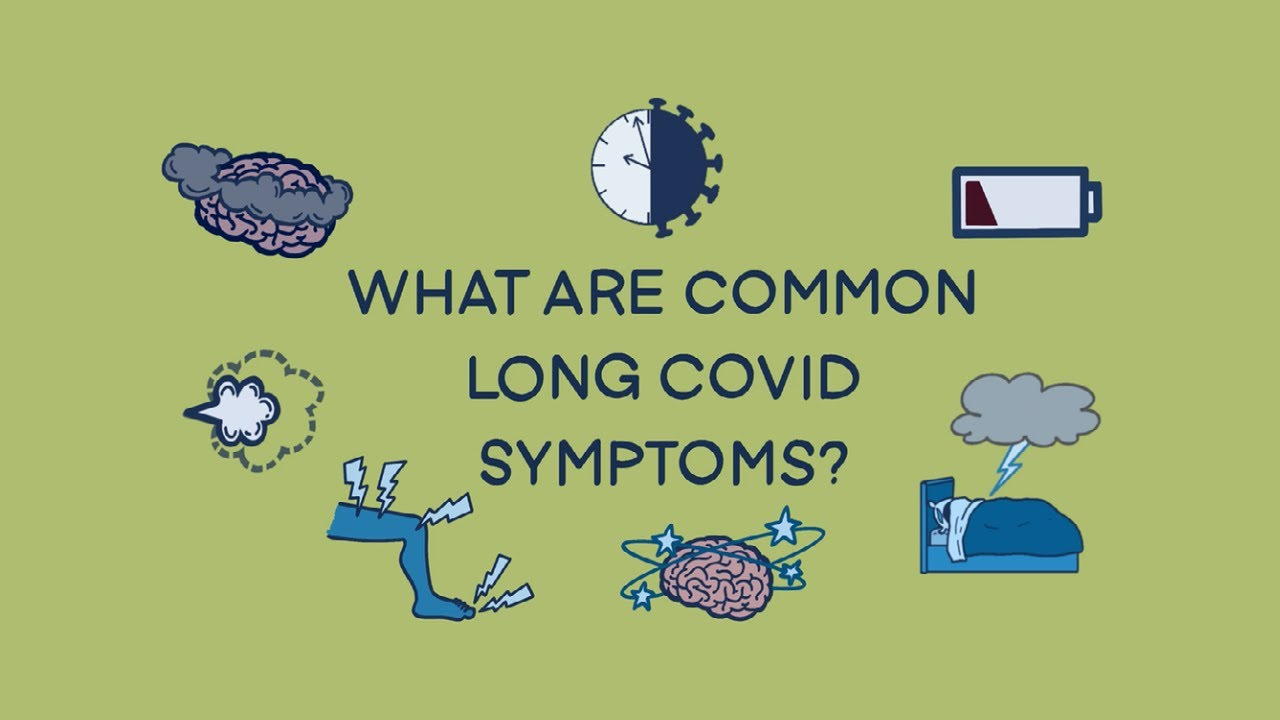
More than 200 symptoms have been associated with long Covid, an umbrella term applied to the often debilitating health problems estimated to afflict 10% or more of people who have had Covid-19. The new research suggests some hallmark symptoms “may converge on common pathways,” said co-author Christoph Thaiss, an assistant professor of microbiology at the Penn Institute for Immunology in Philadelphia.

Long Covid study links lingering virus with bowel-to-brain havoc

Further research may determine how many long Covid sufferers are affected by this cascade of reactions and uncover additional potential therapies, he said. The implications of the study may also extend to other post-viral syndromes.

While serotonin is most widely associated with mood and mental health, the researchers had a different focus as they sought to unravel drivers of long Covid. Thaiss and colleagues found that ongoing inflammation in the gut, which they link to a persistent reservoir of the virus, sabotages circulating levels of the neurotransmitter in multiple ways, including through blood clotting abnormalities.

‘Unifying Framework’

“This is as close as I have seen to a unifying framework for long Covid,” said Ziyad Al-Aly, director of the clinical epidemiology center at the Veterans Affairs St. Louis Health Care System in Missouri, whose research has led to important long Covid findings. “This is a very important advance in the field.”

Cohort studies and lab experiments were used to interpret the cause of serotonin depletion and its downstream effects. The researchers focused on the molecule’s activity on the vagus nerve, which innervates internal organs and is thought to stimulate neurons in the hippocampus, a brain region involved in learning, memory and cognition.

“The fact that we see serotonin being dysregulated in some individuals with long Covid can potentially explain why there’s such a broad spectrum of symptoms,” spanning brain fog and mood to problems sleeping and gastric upset, Thaiss said.

Low serotonin has been observed across several long-Covid studies, including patients with different but over-lapping symptoms, he said.

“The sicker the person is in terms of the number of symptoms they present with, the lower their serotonin,” Thaiss said.

No Silver Bullet

A single biological pathway isn’t likely to explain all long Covid cases, said Akiko Iwasaki, a professor of immunobiology at the Yale School of Medicine in New Haven, who also studies the condition. Other proposed drivers of neurologic symptoms include persistent neuroinflammation, possibly from a deficient immune response that allows the virus to linger in the brain.

“But still, it’s a very important mechanism that deserves a lot of attention,” Iwasaki said in an interview. Serotonin might help gauge the effects of treatments in studies, including a trial of Pfizer Inc.’s antiviral Paxlovid that she is working on.

“If serotonin is really the key marker, we definitely should be including that,” Iwasaki said.

Not all scientists are convinced that low serotonin is playing a key role or acting in isolation in long Covid. Also many sufferers have taken the medicines without benefit.

Avindra Nath, clinical director of the National Institute of Neurological Disorders and Stroke in Bethesda, Maryland, praised the study for its extensive body of research, but said that except in some rare disorders or micronutrient and vitamin deficiencies, it’s unlikely alterations in levels of a single molecule can be blamed for starting a disease process, especially one triggered by an infection.

Targeted Studies

Strategies aimed at increasing serotonin levels or targeting its signaling should be examined in randomized, controlled trials of patients most likely to benefit from the approach, said Liam O’Mahony, a professor of immunology at University College Cork, whose own research found serotonin depletion in long Covid patients.

Prozac, Luvox and other antidepressants that work by increasing serotonin in the brain have been studied during the pandemic to both prevent and treat Covid due to their potential to disrupt the biological processes of infection, but results have been mixed. People taking them when they caught Covid had about a 25% lower risk of developing long Covid, scientists at the National Institutes of Health found in a retrospective study released in November before peer-review and publication.

“It may be a combination of therapies that ends up being the most effective for patients and not one drug in isolation,” said study co-author Benjamin Abramoff, director of Penn Medicine’s Post-Covid Assessment and Recovery Clinic.

Read more at-https://shorturl.at/chmx3
Categories
COVID-19 Medical Updates Medicine & Health

Long Covid prevalence vastly overestimated?

A group of scientists claim that flawed studies lacking control groups has mislead and increased public anxiety.

Our understanding of COVID is constantly evolving, much as the virus is itself. For example, new evidence shows that anti viral drugs aiming to treat the disease may in fact be fueling the virus’ evolution. Scientists said antiviral use increases the genetic diversity of the virus in the wild and provided more options for future evolution.

Another area is long COVID. Some studies estimate the prevalence of post-COVID symptoms is 25-45%.

However, scientists have cast doubt on these studies.

An opinion piecein BMJ Evidence-Based Medicine claims these studies have been misleading and vastly overestimate the prevalence of long COVID.

“Overly broad definitions”, “methodological flaws”, “striking absence of control groups”: these are just some of the issues of long COVID research studies according to scientists writing in an influential medical journal.

The US authors believe poorly conducted studies and lack of clarity around how to diagnoselong COVID has led “undue concern and anxiety” in the public.

They claim that treatable conditions are commonly misdiagnosed as long COVID, which diverts attention and funds away from people who truly suffer from conditions not caused by COVID-19.

“I think this publication is important because it gives food for thought. The first thesis put forward by the authors is that the frequency of long COVID is overestimated. I partially agree with that,” said Andreas Stallmach, head of the long COVID Center, Jena University Hospital, Germany.

The researchers call for clearer definitions and diagnostic criteria for long COVID, and the use of longitudinal studies with appropriate controls to better monitor the illness.

Long COVID or post-COVID symptoms?

One of the major issues the piece highlights is the lack of consistent terminology around long COVID and related post-COVID syndromes and symptoms.

None of the definitions provided by health bodies like the World Health Organization (WHO) and the US Centers for Disease Control and Prevention (CD) requires a causal link between the COVID-19 virus and a long COVID diagnosis.

The piece highlights several studies which failed to confirm prior COVID-19 infection in patients included in long COVID studies.

Long Covid prevalence vastly overestimated?

“Many studies include a broad range of symptoms without any evidence of a causal link to SARS-CoV-2 infection,” the authors write.

“Over 200 symptoms are now associated with COVID-19. All are largely unspecific and without a causal connection to the disease,” Peter Berlit, Secretary General, German Society for Neurology (DGN), told media outlets.

According to Berlit, the only hallmark symptoms of COVID-19 are impaired sense of smell and taste.

“There are also quite specific patterns of neurocognitive disorders that can last longer. But very few long-lasting symptoms can be attributed solely to COVID-19,” he said.

Studies lack rigor

The authors also claim many studies lack control groups with people who didn’t test positive for COVID-19, highlight a recent systemic review which identified control groups were only included in 11% of long COVID studies.

“I agree with the shortcomings described in the BMJ analysis. For example, the initial lack of control groups, the lack of a clear definition of the disease. Such deficiencies can distort the risk of disease.” said Clara Leman, an infectious disease specialist at Cologne University Hospital.

Berlit added that inadequate control groups in many studies have certainly contributed to the disease risk being overestimated today.

“Even in the opinion of many doctors, the number of long COVID patients is far too high,” said Berlit.

Long Covid not as prevalent as thought?

The piece highlights several, rigorous, long COVID studies which the authors believe give an accurate, “more reassuring” picture of long COVID prevalence.

For example, the study would refute the WHO’s claims that 36 million people in Europe are suffering from long COVID.

For example, a UK study found that 12 common symptoms of long COVID were prevalent in 5% of people 12-16 weeks after a COVID-19 infection.

However, the same symptoms were found in 3.4% of people who did not have a COVID-19 infection, showing only a 1.4% difference.

These figures also show how relatively common symptoms are in the population at any given time, say the authors.

The study calls for a new definition of long COVID which should include continuous symptoms after confirmed COVID-19 infection, and take into considering physical and mental health, which may contribute to an individual’s post-COVID experience.

“The fundamental problem is that there are currently no clear biomarkers or radiological findings that allow a clear diagnosis of long COVID,” said Lehmann.

Long COVID still a major health issue for some

The fact remains that many people are still struggling with debilitating long COVID symptoms, with women less likely to recover from long COVID.

While the authors strongly criticized the state of long COVID research, they hope their recommendations for research of long COVID will improve standards of medicine for those who do have long COVID.

Berlit stated that he agrees, saying we need to know more about patients’ history and social situation, as many previous physical and mental illnesses lead to an increased risk of long COVID.

“I’m not talking about long COVID being an imaginary illness, but depending on your previous illness and your life situation, just dealing with the potentially serious infection can lead to long-lasting symptoms,” said Berlit.

Researchers have identified a number of risk factors, but are still trying to work out what exactly causes long COVID in some people, and not in others.

Read more at-https://shorturl.at/cHILV

Categories
COVID-19 Medical Equipments Medical Updates Medicine & Health

Back Brain fog after Covid-19 linked to blood clots: Researchers

A recent study in UK suggests how blood clots formed in brain or in the lungs can explain some common symptoms of “long Covid”, including brain fog and fatigue.

The study was carried out on 1,837 patients admitted in the hospital due to Covid-19. Researchers found that two blood proteins point to clots being one cause, reported BBC.

Researchers found that 16% of patients with the clots were having problem in thinking, concentrating or remembering the things for at least six months.

Prof Paul Harrison of Oxford University, the author of the study, said identifying predictors and possible mechanisms was “a key step” in understanding post-Covid brain fog.

However, Prof Chris Brightling of Leicester University said there may still be many different causes of long Covid.

Back Brain fog after Covid-19 linked to blood clots: Researchers

“It’s a combination of someone’s health before, the acute event itself and what happens afterwards that lead on to physical and mental health consequences, ” Prof Brightling said.

Another study in Nature Medicine, blamed higher levels of the protein fibrinogen and protein fragment D-dimer of a covid-19 patient for brain fog.

“Both fibrinogen and D-dimer are involved in blood clotting and so the results support the hypothesis that blood clots are a cause of post-Covid cognitive problems,” reported BBC quoting Dr Max Taquet, from Oxford University.

“Fibrinogen may be directly acting on the brain and its blood vessels, whereas D-dimer often reflects blood clots in the lungs and the problems in the brain might be due to lack of oxygen,” he added.

Read more at-https://shorturl.at/nzCI2