
Categories
Medical Updates

Most effective breathing exercises to cleanse & boost your lungs: Here’s how you exercise safely, as air pollution rises

It’s very unfortunate that, come winter, the smog and pollution levels in India skyrocket. Poor air quality and chilly temperatures can make exercising outdoors difficult or even dangerous. However, it’s important to keep in mind that you can maintain an active lifestyle and improve lung health indoors too.

Aerobic exercises like spot jogging or cycling using a stationary bike can improve the condition of your heart and lungs, increase muscular strength, endurance, and motor fitness. Jumping jacks, which involve softly bouncing over the ground and gently landing back down, are an excellent cardiovascular workout to strengthen your heart.

However, when your cities are experiencing such high pollution levels, two indoor exercises stand out: breathing exercises and yoga.

Breathing exercises

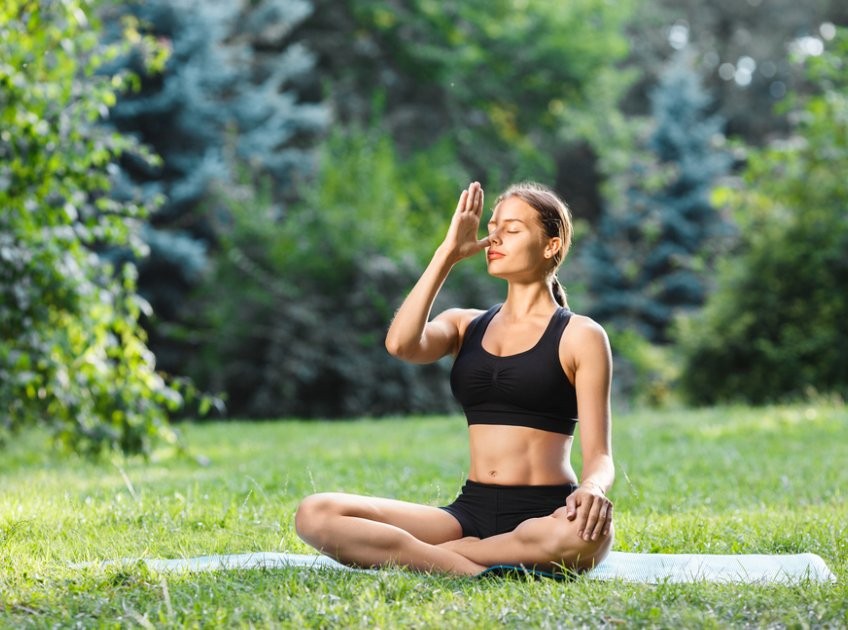
Breathing exercises are so powerful that they can help you eliminate physiological and psychological toxins from the body and mind. Taking a deep breath in and a deep breath out through the nose can help filter out dust and allergens, dilute your sinuses, and elevate your temperature, especially during exercise. Deep breathing, in one sense, is good, but heavy taxing exercises are ruled out. Especially in smog and pollution conditions, I would advise that alternate nostril breathing could be the best approach. While doing your exercises, breathe slowly and deeply, maintaining a smooth rhythm and flow. This will empower your lungs, save your lungs, and enhance your body’s filter mechanism.

I would also recommend “Double Breathing.” Double breathing oxygenates the blood and energizes the body, drawing cosmic energy into the body through the medulla oblongata, which is where the skull joins the spinal column.

For the Double Breathing exercise, stand comfortably with your feet apart. Inhale through the nose with a short, sharp inhalation followed by a long, strong inhalation. Exhale twice through the mouth with a short, then long exhalation. While breathing in, stand tall with your spine erect, and while exhaling, squat a little.

Yoga

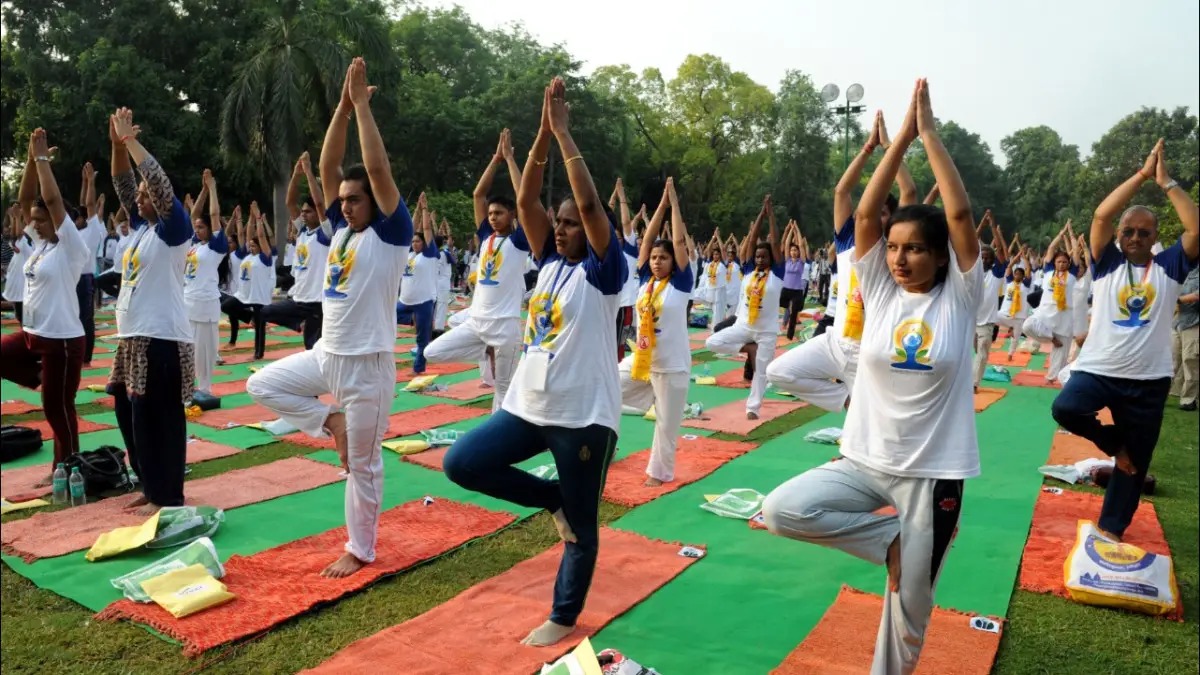
Yoga is excellent for strengthening and flexing the heart and lung muscles. Chest-opening asanas like Setu Bandhasana, Ustrasana, and upward stretching Tadasana are very effective. Surya Namaskar is also highly recommended for optimum utilization of the lungs and the respiratory system, expanding and contracting the air sacs or alveoli of the lungs and preventing the buildup of germs and respiratory diseases. You can do 15, 20, or 30 Surya Namaskars in a row, and in between every 8 to 10 Surya Namaskars, you can incorporate forward bending, backward bending, side bending, and gentle twisting to aid in recovery. During the winter season, we can also perform Surya Bhedi pranayama which activates the right nostril, thus increasing body heat.

visit – https://shorturl.at/yLW28
Categories
COVID-19 Medical Updates Medicine & Health

90% high-risk Covid patients recover within 10 days due to Yoga, Ayurveda

Yoga and ayurveda may be effective in the treatment of high-risk cases of Covid-19, according to a research by the IIT-Delhi and Dev Sanskriti Vishwavidyalaya, Haridwar.

NEW DELHI : In the latest of ways to fight Covid-19, Indian Institute of Delhi (IIT-D) has found that yoga and ayurveda has proven effective in the high risk cases of the fatal contagious disease. India lost millions to Covid-19 when the Delta variant was dominant. The research was conducted by the Indian Institute of Technology (IIT), Delhi and Dev Sanskriti Vishwavidyalaya, Haridwar.

90% high-risk Covid patients recover within 10 days due to Yoga, Ayurveda

The study has been published in the Indian Journal of Traditional Knowledge. The study has also stated that yoga and ayurveda has proven instrumental in relieving such patients from anxiety and aid in speedy post-treatment recovery from Covid-19.

The experiment

The study was conducted in 30 high-risk patients of Covid-19. Besides the standard care treatment according to guidelines, the patients were prescribed ayurvedic medicines through telemedicine, and administered a personalized therapeutic yoga programme using video conferencing.

“Almost all the patients were classified as high-risk owing to one or more of co- morbidities such as Diabetes Mellitus, Hypertension, Chronic Kidney Disease, Coronary Artery Disease (which are known to lead to severe outcomes in cases of COVID-19), and/or age above 60.

The treatment

The treatment included ayurvedic medicines, daily yoga-sessions including deep relaxation techniques, pranayama and basic asanas and some lifestyle modifications. Based on the administered treatment, the cases were categorized into YAS (Yoga-Ayurveda based treatment, with possibly allopathic supplements), YASP (Yoga-Ayurveda based treatment, with possibly allopathic Supplements and Paracetamol), YAM (Yoga-Ayurveda based treatment, and Modern Western Medicine (MWM).

The patients, most of whom presented with many symptoms prior to the Yoga and Ayurveda treatment, were followed-up telephonically regularly until recovery.

The treatment given to the patients was personalized (in accordance with the classical texts) and took account of each patient’s medical history and the symptoms presented, which made it more effective as compared to a fixed standardized treatment plan, a researcher stated.

Results

More than half of symptomatic patients started improving within five days (90 per cent within nine days) and more than 60% reported at least 90% recovery within 10 days.

“Six patients with oxygen saturation (SpO2) below 95 per cent, benefited through Makarasana and Shithilasana; none progressed to composite endpoints (consisting of admission to intensive care unit, invasive ventilation or death). Most patients reported that the therapy had a profound impact on their recovery process, with many experiencing improvements with respect to their comorbidities too.

“By the end of the treatment, several patients had decided to adopt yoga in their lifestyle, and several turned to the ayurveda doctors in the team for management and treatment of their comorbidities,” said Sonika Thakral, a scholar at IIT Delhi, who coordinated with the patients for routine follow-up.

Read More At:-https://bit.ly/3RWEhHY