
Categories
COVID-19 Government Guidelines Medical Updates Medicine & Health

The Indian healthcare system needs an overhaul

The Covid-19 pandemic has served a stark reminder that economies can be brought to a grinding halt if public healthcare systems are inadequate, clearly demonstrating the need for increased investment in the sector.

While economic growth may be an important indicator of development, the quality of a country’s public healthcare system better demonstrates the standard of living enjoyed by a wider spectrum of the population. The Covid-19 pandemic has served a stark reminder that economies can be brought to a grinding halt if public healthcare systems are inadequate, clearly demonstrating the need for increased investment in the sector.

Owing to rapid urbanization in recent decades, India faces a development paradox that is widely prevalent among the fast-growing global economies; basic necessities are either unavailable or unaffordable to the vast majority of urban dwellers and secondly, there is tremendous strain on public infrastructure as an increasing number of people chase a diminishing parcel of public goods. While India requires 15 doctors and 20 hospital beds per 10,000 people, we currently only have about half of that number. This translates to 700 million people underserved by the system. There’s also a huge disparity between urban and rural areas in terms of access to specialised care. We urgently need to address this shortfall. Public expenditure on health needs to increase manifold so we can build a well-equipped and self-sufficient network of medical facilities quickly across our Tier II cities, towns, and villages, which will help reduce the burgeoning load on metropolitan healthcare infrastructure.

However, there are significant challenges. Achieving the build quality and maintenance standards of private healthcare projects is still an uphill challenge for government-funded healthcare buildings. A few common issues that plague current hospitals are inadequate day-lighting, poor ventilation systems leading to cross-infection, greater building widths leading to doubly-loaded corridors with no connection to the outside, high energy costs and maintenance problems. One solution to address these issues could be to design interactive facilities that draw from the ideas of biophilia: an innate human tendency to seek connections with nature and other forms of life. Such interventions place patient experience and wellbeing at the core, leading to swifter healing, while also reducing construction and building lifecycle costs.

Cross-infection and contamination can be tackled through design changes such as naturally-ventilated spaces that increase the rate of natural air exchange, segregation of different functions by creating general, semi-sterile and sterile zones (for example, waiting areas to OPDs to ICUs) and creating buffer zones in between. Designing the building with an East-West orientation to improve daylight, providing centralized courtyard landscapes to provide passive evaporative cooling, and adding solar panels to reduce dependency on conventional forms of electricity, are some ways to optimise building energy consumption and improve efficiency. Also, designing decentralized micro-service zones that run parallel to various departments can help make regular servicing and maintenance easier and quicker.

Today, as our understanding of health and wellbeing evolves, new construction technologies provide limitless possibilities in this sector. Building Information Modeling (BIM), for example, which can help determine the optimal geometry of buildings in response to certain parameters, can aid in pre-empting problems and shortening the time of construction to save costs, while ‘temporary and transformable’ architecture has enabled emergency mitigation like never before. Imbibing such innovations within healthcare design holds the key to streamlining our systems for better performance –– from accessibility of essential public services and improved patient care to the wellbeing of our economy.

Source:

Categories
COVID-19 Government Guidelines Medical Equipments Medical Updates

India’s medical needs: Global collaboration matters now more than ever

While the self-reliant model seems promising, it is important to note the role of the global industry, which, so far, has catered to 70% of India’s medical equipment needs

To bring India on the path of rapid development, five things are very important to build a self-reliant India-intent, inclusion, investment, infrastructure and innovation”, said PM Modi in a recent speech as India entered its first phase of ‘unlock’. As the pandemic impacts close to four lakh lives in the country, the dire need for building capacity has set in motion India’s long-awaited dream of self-reliance. From zero, the country now manufactures 4.5 lakh PPE suits a day and has more than 600 companies certified to make them. Inching closer to developing a vaccine, one of India’s pharma giants has entered the second phase of the clinical trials of a drug, which is touted among the most promising treatments of coronavirus. Moreover, three Indian companies also made it to NASA’s list of international manufacturers who were selected to make a new ventilator tailored for coronavirus (Covid-19) patients. India is also leading the race to make affordable, low-cost ventilators. Self-reliance has taken a whole new meaning for the country as we wait for the pandemic to wane. But how self-reliant are we, especially with an abysmally low spend on healthcare?

While it is encouraging to see the domestic industry getting the much-needed impetus, the government must be careful about the quality assurances it is giving its people. For instance, even as the domestic players get the legal nod on making kits and ventilators, the quality of these products has been a cause of concern. One such incidence that questioned the quality of ventilators and focused on patient safety was the Gujarat model of 900 ventilators, where fake ventilators were installed across the state without any mandatory licence from Drug Controller General of India.

India has become the world’s second-largest manufacturer of PPEs, second only to China. This news fits perfectly into India’s self-reliant rhetoric. The demand for PPE kits has brought many players into the market, who are getting the government’s nod to manufacture and sell. However, with little to no information available about the identification of kits, the end consumer is bound to have a trust deficit. Some of them do not even carry a certification notice. We are being told that India is working in line with the global best practices. Recent reports revealed, many PPEs from India don’t carry any certification marks and are not using the GS1 global standards being used by all manufacturers of genuine products. We know that nurses at All India Institute of Medical Sciences (AIIMS) and many other healthcare centres in the country have been complaining about the lack of PPEs and proper guidelines to handle the Covid-19 situation. We also had Dr Srinivas Rajkumar T from the AIIMS raise the issue of the quality of N95 masks provided by the hospital for use.

This is exactly why we need to comply with global standards. Now, let us understand what GS1 means for the Indian market.

GS1 standards are required to enable identification of medical products unambiguously. These standards also help in identifying counterfeit products in the market, thereby, assuring patient safety and quality. In India, GS1 India operates with a ‘Smart Consumer’ app, which gives access to information about products by scanning their barcodes for complete identification. What happens when the products are sold without these identifications in the market? Healthcare workers and patients utilise products that could potentially have serious quality lapses.

So, when we hear the PM speak of the country producing over two lakh PPE kits in a day (with numbers doubling every day), it does little to assure protection and quality if these standards are not met. And, even with a shortage of PPE kits in the country, recent reports were emerging out of Punjab that their kits were unutilised, the state apparently has 35% underused stock. According to media reports, “the Industries Minister Sunder Sham Arora has written to Union minister of commerce and industry, Piyush Goyal, to allow export of PPE kits so that the industry may operate to the fullest”. This is where global partnerships come into play. Battling the disease front and centre, the only way to salvage the situation is for governments and the medical industry to work in tandem to contain the spread.

The push for self-reliance also comes at a time when India is collaborating with the world for everything from vaccines to drugs, medical equipment and more. Even as India speaks of making its ventilators, the industry is still heavily import-dependent. The disruptions in global supply chains have not undermined the potential of the global industry in meeting India’s demands. From ventilators to PPE kits, the country has reached out to the world for better access, and the world has responded to its call.

With India ranking fourth in the number of global Covid cases, we need to upend healthcare systems like never before. And, clearly, relying on the domestic market alone is only putting more lives at risk. While the self-reliant model seems promising, it is important to understand the role of the global industry, which, so far, has catered to 70% of India’s medical equipment needs.

The government must pull all stops to ensure that India has the diagnostics, ventilators, protective gears and equipment our people need to fight the disease. Even as PM Modi assured some $20 billion budget for healthcare professionals, it does not change the fact that the system is still reeling under an acute shortage of diagnostics, testing kits, only 48,000 ventilators and the need for more than 38 million masks to combat the virus.

Even as India tries to create its gear and equipment, it will not happen overnight; we would still need to work in tandem with the global players who are willing to offer help at this point. In a promising step, to evaluate the quality of coronavirus testing kits, the country has given test licenses to around fourteen private companies, which also includes Swiss firm Roche Diagnostics India and Abbott. Partnerships like these matter now, more than ever. The one thing to learn from the crisis is that we need to look at the situation from a global lens.

With the Covid-19 juggernaut rolling at a pace that could put millions of more lives at risk, maybe, what India needs to look at is creating an environment that fosters innovation and improves the quality of care for its people. India needs to create a conducive policy environment to ensure that global innovations come to its shores and reach its people. Moreover, at a time when the world is looking at India as the next big manufacturing hub, the government should look at global partnerships to bolster its stance.

Source: https://bit.ly/2ZrGr9Q

Categories
COVID-19 Medical Equipments Medical Updates

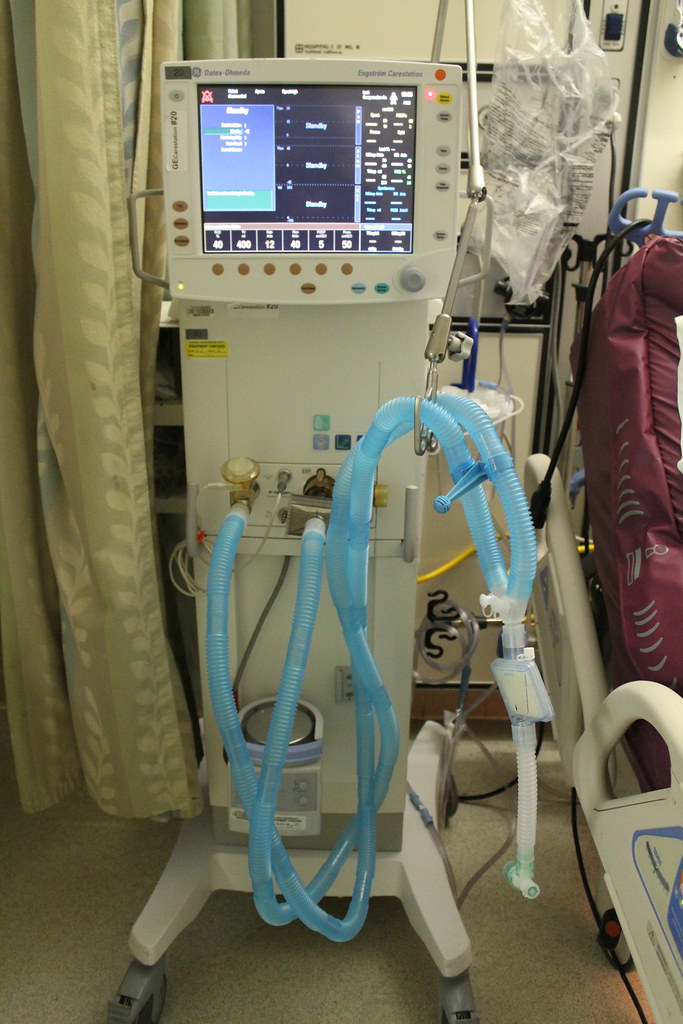
Govt COVID hospitals to receive 50,000 ‘Made in India’ ventilators through PM-CARES Fund

According to the Prime Minister’s Office (PMO), so far 2,923 ventilators have been manufactured, out of which 1,340 ventilators have already been delivered to the States/UTs.

New Delhi: A sum of Rs 2,000 crore has been allocated for supplying 50,000 ‘Made in India’ ventilators to government-run COVID hospitals across the country through the PM-CARES Fund.

Apart from this, Rs 1,000 crore has been allocated for the welfare of migrant labourers from the fund.

According to the Prime Minister’s Office (PMO), so far 2,923 ventilators have been manufactured, out of which 1,340 ventilators have already been delivered to the States/UTs.

The recipients of these include Maharashtra (275), Delhi (275), Gujarat (175), Bihar (100), Karnataka (90), Rajasthan (75), among other States and Union Territories. By the end of June, additional 14,000 ventilators will be delivered to all States and UTs.

While 30,000 ventilators are being manufactured by M/s Bharat Electronics Limited, the remaining 20,000 ventilators are being manufactured by AgVa Healthcare (10,000), AMTZ Basic (5,650), AMTZ High End (4,000) and Allied Medical (350), respectively.

Meanwhile, the sum of Rs 1,000 crore has been distributed on the formula of 50 per cent weightage for the population as per 2011 census, 40 per cent weightage for the number of positive COVID-19 cases and 10 per cent for equal distribution among all the States/UTs.

The sum provided under this measure will be used for arranging accommodation, food, medical treatment and transportation of the returnee workers.

While Maharashtra has received Rs 181 crore under this, Uttar Pradesh (Rs 103 cr), Tamil Nadu (Rs 83 cr), Gujarat (Rs 66 cr), Delhi (Rs 55 cr), West Bengal (Rs 53 cr), Bihar (Rs 51 cr), Madhya Pradesh (Rs 50 cr), Rajasthan (Rs 50 cr) and Karnataka (Rs 34 cr).

Following the COVID-19 pandemic in India, the Prime Minister’s Citizen Assistance and Relief in Emergency Situations Fund (PM-CARES Fund) was created on March 28 this year by the Prime Minister of India, Narendra Modi.

The contributions in the fund are being used for combating, containment and relief efforts against the coronavirus outbreak.

Source: https://bit.ly/3fuZ4iT

Categories
COVID-19 Government Guidelines Medical Updates

स्‍वास्‍थ्‍य देखभाल संबंधी सामग्री की आपूर्ति के लिए CSIR ने लॉन्च किया Portal Aarogya Path

स्‍वास्‍थ्‍य  देखभाल संबंधी सामग्री की आपूर्ति के लिए एक पोर्टल Aarogya Path बनाया गया है जो कोविड-19 महामारी से प्रभावी तरीके से निपटने में Manufacturers, Distributors और Consumers के लिए सहायक होगा। यह पोर्टल आपूर्ति श्रृंखला में आ रही बाधाओं को दूर करने में मदद करेगा।

इस पोर्टल का उद्देश्‍य राष्‍ट्रीय स्‍तर पर देखभाल संबंधी सामग्री के संबंध में सूचना प्रबंधन और भविष्‍य की जरूरतों का आकलन करना है। इस पर स्‍वास्‍थ्‍य देखभाल संबंधी वस्‍तुओं की मांग और आपूर्ति की जानकारी दर्ज होगी। इससे अस्‍पतालों, प्रयोगशालाओं, शोध संस्‍थानों, चिकित्‍सा कॉलेजों और रोगियों को मदद मिलेगी। यह पोर्टल Distributors, Manufacturers और Importers को Medical devices, Medicine, व्‍यक्तिगत सुरक्षा उपकरण और अन्‍य वस्‍तुओं की मांग का आकलन करने में मदद करेगा।

Council of Scientific and Industrial Research (CSIR) ने कहा है कि आने वाले वर्षों में आरोग्‍य पथ स्‍वास्‍थ्‍य देखभाल की सूचना देने वाला प्रमुख केंद्र होगा। इससे उपभोक्‍ताओं और आपूर्तिकताओं के बीच दूरी घटेगी तथा उचित दरों पर चिकित्‍सा उपकरण उपलब्‍ध हो सकेंगे।

स्रोत – https://www.yuvapress.com/news/csir-launches-aarogyapath-to-provide-real-time-availability-of-critical-healthcare-supplies
Categories
COVID-19 Government Guidelines Medical Equipments Medical Updates

सरकार ने वेब आधारित स्‍वास्‍थ्‍य देखभाल संबंधी सामग्री की आपूर्ति के लिए आरोग्‍य पथ की शुरूआत की

स्‍वास्‍थ्‍य देखभाल संबंधी सामग्री की आपूर्ति के लिए एक पोर्टल आरोग्‍य-पथ बनाया गया है जो कोविड-19 महामारी से प्रभावी तरीके से निपटने में विनिर्माताओं, वितरकों और उपभोक्‍ताओं के लिए सहायक होगा। यह पोर्टल आपूर्ति श्रृंखला में आ रही बाधाओं को दूर करने में मदद करेगा।

इस पोर्टल का उद्देश्‍य राष्‍ट्रीय स्‍तर पर देखभाल संबंधी सामग्री के संबंध में सूचना प्रबंधन और भविष्‍य की जरूरतों का आकलन करना है। इस पर स्‍वास्‍थ्‍य देखभाल संबंधी वस्‍तुओं की मांग और आपूर्ति की जानकारी दर्ज होगी। इससे अस्‍पतालों, प्रयोगशालाओं, शोध संस्‍थानों, चिकित्‍सा कॉलेजों और रोगियों को मदद मिलेगी।

यह पोर्टल वितरकों, विनिर्माताओं और आयातकों को चिकित्‍सा उपकरणों, दवा, व्‍यक्तिगत सुरक्षा उपकरण और अन्‍य वस्‍तुओं की मांग का आकलन करने में मदद करेगा।

वैज्ञानिक और औद्योगिक अनुसंधान परिषद ने कहा है कि आने वाले वर्षों में आरोग्‍य पथ स्‍वास्‍थ्‍य देखभाल की सूचना देने वाला प्रमुख केंद्र होगा। इससे उपभोक्‍ताओं और आपूर्तिकताओं के बीच दूरी घटेगी तथा उचित दरों पर चिकित्‍सा उपकरण उपलब्‍ध हो सकेंगे।

स्रोत- https://bit.ly/3fBRaEp

Categories
COVID-19 Government Guidelines Medical Equipments Medical Updates

CSIR Launches ‘AarogyaPath’ Portal To Strengthen Healthcare Supply Chain

Aarogya Path, a web-based solution for the healthcare supply chain, provides real-time availability of critical supplies.

The Council of Scientific and Industrial Research (CSIR) has launched Aarogya Path, a web-based solution for the healthcare supply chain, which provides real-time availability of critical supplies. Aarogya Path would serve manufacturers, suppliers, and customers through the web portal https://www.aarogyapath.in.

The COVID-19 pandemic has posed a situation of national health emergency,leading to severe disruption in the supply chain. In particular, the ability to produce and deliver the critical items was compromised due to a variety of reasons. This integrated public platform, named AarogyaPath, has been developed with the vision of “providing a path which leads one on a journey towards Aarogya (healthy life)” to address the challenges related to the supply of essential healthcare goods.

This platform provides a single-point source for key healthcare goods, which could help customers in tackling a number of routinely experienced issues. The issues include dependence on limited suppliers, time-consuming processes to identify good quality products, limited access to suppliers who can supply standardized products at reasonable prices within desired timelines, lack of awareness about the latest product launches, etc.

This portal was launched by Rajesh Bhushan, Officer on Special Duty, Ministry of Health and Family Welfare, in the presence of DG-CSIR, Dr Shekhar C. Mande. Sudhir Garg, Joint Secretary, Ministry of MSME, and Dr Vijay Chauthiawale, Pharma Sector Expert, were guests of honour at this event.

AarogyaPath also helps manufacturers and suppliersto reach a wide network of customers efficiently, overcoming gaps in connectivity between them and potential demand centres like nearby pathological laboratories, medical stores, and hospitals.

 It will also create opportunities for business expansion due to an expanded slate of buyers and visibility of new requirements for products. Over time, analytics from this platform is expected to generate early signals to manufacturers on over capacity as well as on looming shortages. This would help to reduce wastage of resources due to inefficient forecasting and excess manufacturing, and generate awareness about the demand for new technologies.

Dr Shekhar Mande complemented the CSIR team involved in development of the portal, which was led by Dr Anjan Ray, Director CSIR-IIP. The portal was developed in partnership with Sarvodaya Infotech. Institutional users and manufacturers/authorized suppliers of healthcare essentials are encouraged to register and participate actively.

CSIR expects AarogyaPath to become the national healthcare information platform of choice in the years to come, filling a critical gap in last-mile delivery of patient care within India through improved availability and affordability of healthcare supplies. (India Science Wire).

Source: https://bit.ly/32pRGBy

Categories
COVID-19 Government Guidelines Medical Equipments Medical Updates

Council of Scientific and Industrial Research (CSIR) launched Arogya Path which is a web-based solution for the healthcare supply chain, which provides real-time availability of critical supplies.

About the Portal:

AarogyaPath: “National Healthcare Supply Chain Information Platform” The vision of this initiative is to set up an information management and forecasting databases platform at national level to capture demand and supply scenarios for key items that are required to address the national healthcare needs in the current pandemic scenario as well as future normal and epidemic scenarios.


This public platform will help Healthcare users/ facilitators such as:

  •  Hospitals.
  •  Pathology laboratories.
  • Research institutes.
  • Medical colleges. and
  • Individual patients.
    Further, this platform, apart from providing information about existing demands for traditional Healthcare necessities, will also provide a seamless access to suppliers/ manufactures/importers regarding prevailing needs and demands for:
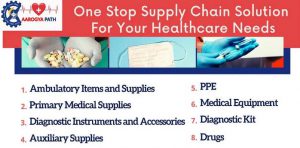
  • Medical Equipments.
  • Diagnostic instruments and accessories.
  • Drugs and pharmaceuticals.
  • Personal Protective Equipment (PPEs).
  • Respiratory Assistance Devices.
  • Prosthetics and Orthotics.
  • Apparel/Textiles.
  • Primary medical supplies and everything else needed for primary, secondary and tertiary Healthcare.

The intelligent back end of the platform will not only track demand and supply scenarios for items in Healthcare categories but also their first-level components, using unique capabilities of the Council of Scientific and Industrial Research (CSIR), India’s premiere autonomous publicly funded research organization. This holistic and comprehensivenal pandemic like the present COVID-19 situation: –

  • Anticipated shortages can be addressed and met at national level.
  • Any national pandemic situation can be effectively handled.
  • Opportunistic pricing, hoarding and over-forecasting can be checked. and
  • Over-production can be avoided.
  • It will set up an information management and forecasting database platform at the national level.
  • It will provide seamless access to suppliers, manufacturers and importers for prevailing needs and demand related to medical equipment, diagnostic instruments, drugs, personal protective equipment, respiratory assistance devices.
  • The portal has been developed in partnership with Sarvodaya Infotech and institutional users, manufacturers and authorized suppliers of healthcare essentials are encouraged to register and participate actively.

Significance: 

  • It will create opportunities for business expansion due to an expanded slate of buyers and visibility of new requirements for products.
  • It will help in reducing the wastage of resources due to inefficient forecast and excess manufacturing and will create awareness about the demand for new technologies.

Source: https://blog.nextias.com/arogya-path


Categories
Government Guidelines Medical Equipments Medical Updates

“Arogya Path”: Portal to provide health care supply updates launched

The Council of Scientific and Industrial Research National Health Supply Chain portal called “Arogya Path” was launched to provide real-time availability of health care supplies.

Highlights

The Arogya path will serve suppliers, manufacturers and customers. It will act as an integrated platform to provide information about key health care goods that help customers to tackle following issues

  • Dependence on limited suppliers
  • Time-consuming Processes to identify quality products
  • Limited access to suppliers that supply standardized products
  • Lack of awareness about the current and latest launches.

Background

The National Health Emergency that is currently arising due to COVID-19 is disrupting ability to produce, supply chain disruptions and compromises in delivery of critical items. These issues can be addressed with the help of the portal.

Benefits

The portal helps suppliers and manufacturers to reach wide network of customers filling in gaps of connectivity between them. Also, it will help to create opportunities of business expansion and identify requirements of new products. The portal will serve as a platform to generate awareness about the demand for new technologies. It will also help reduce wastage of resources.

Source: https://bit.ly/32qGvbD


Categories
COVID-19 Government Guidelines Medical Equipments Medical Updates

AarogyaPath Portal Launched to Provide Real-Time Availability of Critical Healthcare Supplies

CSIR is expecting the portal to fill a critical gap in last-mile delivery of patient care within India through improved availability and affordability of healthcare supplies.

In the wake of COVID-19 pandemic, the Centre “AarogyaPath” is India’s web-based solution for the healthcare supply chain portal , to provide real-time availability of critical healthcare supplies for manufacturers, suppliers, and customers. The Council of Scientific and Industrial Research (CSIR) launched the portal on June 12.


According to the Ministry of Information & Broadcasting, the integrated public platform can help customers in tackling a number of routinely experienced issues like dependence on limited suppliers, time-consuming processes to identify good quality products, limited access to suppliers etc.

It will also help the manufacturers and suppliers to reach customers efficiently like nearby pathological laboratories, medical stores, hospitals, etc.

CSIR is expecting the portal to fill a critical gap in last-mile delivery of patient care within India through improved availability and affordability of healthcare supplies.

It will also create opportunities for business expansion due to an expanded slate of buyers and visibility of new requirements for products.

As per the latest data by the Union Health Ministry, India has witnessed 11,502 new coronavirus cases, taking the tally to 3,32,424 in the country so far.

Source: https://bit.ly/3fy6eCY

TO READ MORE ABOUT AAROGYA PATH PORTAL VISIT https://aarogyapath.in/
Categories
COVID-19 Government Guidelines Medical Equipments Medical Updates

केंद्र ने स्वास्थ्य देखभाल संबंधी सामग्री की आपूर्ती के लिए लॉन्च किया ”आरोग्य पथ” सप्लाई चेन पोर्टल

साथ ही यह निर्माताओं और आपूर्तिकर्ताओं को ग्राहकों को कुशलतापूर्वक नजदीकी पैथोलॉजिकल प्रयोगशालाओं, मेडिकल स्टोर, अस्पतालों आदि तक पहुंचने में मदद करेगा.
केंद्र ने स्वास्थ्य देखभाल संबंधी सामग्री की आपूर्ती के लिए लॉन्च किया ''आरोग्य पथ'' सप्लाई चेन पोर्टल

केंद्र द्वारा 12 जून को यह पोर्टल लॉन्च किया गया है.

नई दिल्ली: 

कोविड-19 महामारी (COVID-19 Pandemic) के चलते केंद्र ने निर्माताओं, सप्लायर और ग्राहकों के लिए हेल्थकेयर सप्लाई चेन पोर्टल आरोग्य पथ (Arogyapath) लॉन्च किया है. इसके जरिए केंद्र द्वारा महत्वपूर्ण हेल्थकेयर सप्लाई समय के मुताबिक मरीजों तक पहुंचाई जाएगी. वैज्ञानिक और औद्योगिक अनुसंधान परिषद (सीएसआईआर) ने 12 जून को यह पोर्टल लॉन्च किया है.

सूचना और प्रसारण मंत्रालय के मुताबिक, इस एप के जरिए ग्राहकों को अच्छी गुणवत्ता वाले उत्पादों की पहचान करने की प्रक्रिया और सप्लायर्स तक इसकी सीमित पहुंच आदी की जानकारी मिल पाएगी.

साथ ही यह निर्माताओं और आपूर्तिकर्ताओं को ग्राहकों को कुशलतापूर्वक नजदीकी पैथोलॉजिकल प्रयोगशालाओं, मेडिकल स्टोर, अस्पतालों आदि तक पहुंचने में मदद करेगा. सीएसआईआर को उम्मीद है कि इस एप के जरिए हेल्थकेयर सप्लाई की उपलब्धता और वहन क्षमता में सुधार के जरिए भारत में मरीज की देखभाल में आने वाले अंतर को कम किया जा सकेगा.

यह खरीदारों के विस्तारित स्लेट और उत्पादों के लिए नई आवश्यकताओं की दृश्यता के कारण व्यवसाय विस्तार के अवसर भी पैदा करेगा. केंद्रीय स्वास्थ्य मंत्रालय के नवीनतम आंकड़ों के अनुसार, भारत ने अब तक 11,458 मामलों में अपना उच्चतम प्रदर्शन देखा है, जो देश में अब तक 3,08,993 है.

स्रोत – https://bit.ly/2WtkpS1