
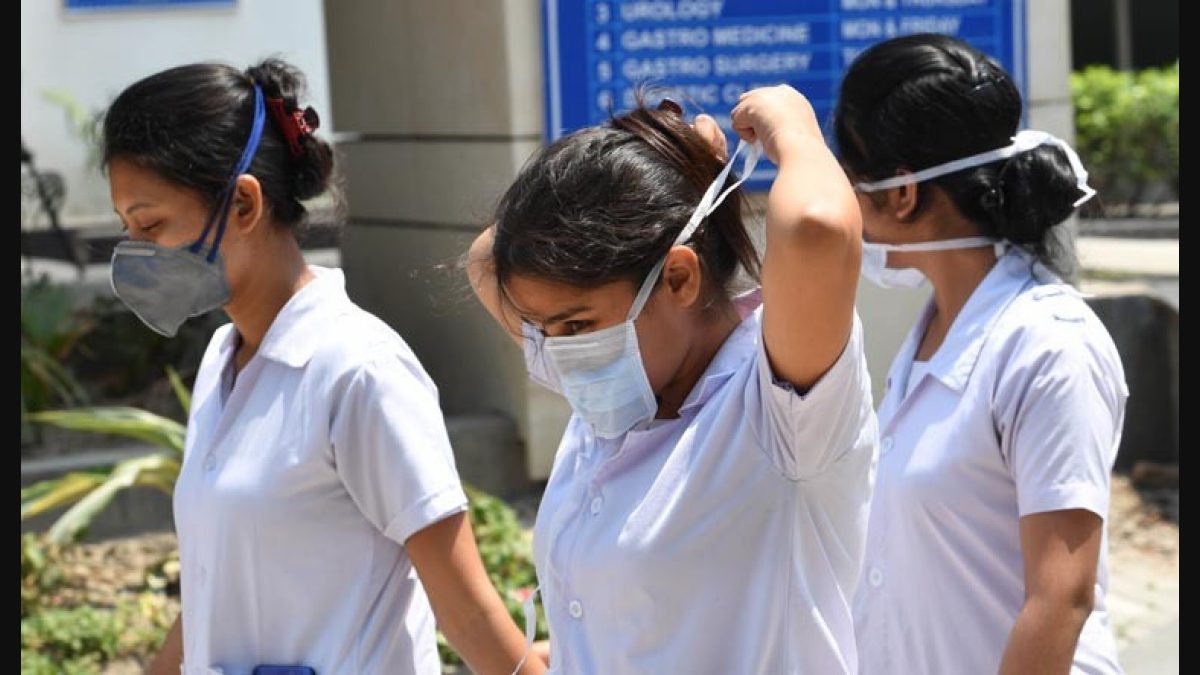
With Union Budget proposing to set up 157 new nursing colleges and boost medical education & research, the healthcare experts hailed the move noting that the measures would set the pathway for universal health coverage and strengthen the talent pool in the sector.
With Union Budget proposing to set up 157 new nursing colleges and boost medical education & research, the healthcare experts hailed theHea move noting that the measures would set the pathway for universal health coverage and strengthen the talent pool in the sector. The experts also welcomed Union govt’s initiative to eliminate sickle cell anaemia by 2047. Under the new scheme, 70 million people up to the age of 40 years in affected tribal areas will be screened for the disease. Finance Minister Nirmala Sitharaman presented the Union Budget 2023 on February 1.
“This year’s budget has set the pathway for India to achieve universal health coverage. We welcome various initiatives announced by the honourable Finance Minister to address the long-standing gaps of the Indian healthcare ecosystem. On the healthcare front, the budget focuses on the opening of 157 new nursing colleges and using existing facilities in select ICMR labs for research by public & private medical facilities. The announcement of dedicated multidisciplinary courses for medical devices in existing institutions to ensure the availability of skilled manpower for futuristic medical technologies and high-end manufacturing will play a pivotal role in strengthening the healthcare sector. We also welcome the Mission to eliminate sickle cell anaemia by 2047 which will immensely benefit a large population. The Government’s greater emphasis on R&D, innovation and results-based financing towards more effective PPP will prove to be beneficial in creating the much-needed shift towards quality and higher value. In view of the G20 presidency, overall, the announcements provide a strong impetus to strengthen the Indian healthcare ecosystem,” says Dr Ashutosh Raghuvanshi, MD & CEO, Fortis Healthcare Limited.
“With the opening of 157 new nursing colleges in co-locations with the existing 157 medical colleges, the budget has put a significant focus on the health front. Select ICMR labs will also be made available for research by public & pvt medical facilities, which is a welcome move. In addition, due attention has been paid to improving talent in healthcare by introducing multidisciplinary courses for medical devices and skilled manpower for futuristic medical technologies, which aims to strengthen public-private health offerings. With great emphasis on the AI ecosystem, we are happy to be stakeholders in the government’s initiative for Make AI in India and Make AI Work for India for relevant applications in the healthcare domain. We are excited about India’s economic growth this year and looking forward to start-ups playing a pivotal role. With Union Budget proposing to set up 157 new nursing colleges and boost medical education and research, the healthcare experts hailed the move noting that the measures would set the pathway for universal health coverage and strengthen the talent pool in the sector,” says Harsimarbir Singh, Co-founder at Pristyn Care.
Commander Navneet Bali, Regional Director Narayana Health-North said Union Budget 2023 looks progressive and inclusive for the healthcare sector.
“The government has taken a holistic approach by focusing on the ‘Sapt Rishi’ Model and our sector is aligned with all the seven pillars mentioned by the Finance Minister in her speech. For example, the healthcare sector plays a crucial role in inclusive development and reaching the last mile. We are glad to know that ICMR labs will be made available for research by public & private medical college faculty and private sector R&D teams. We were expecting some measures on capacity building in the sector and it is promising to note that the government has announced setting up 150 new nursing colleges. This would enhance our capacity and fill the gap in terms of human resources. The proposed Mission to eliminate sickle cell anaemia by 2047 is a very positive step. The programme for research & innovation in pharmaceuticals is a well appreciated need of the hour,” said Bali.
“The government has taken a positive step by focusing on screening and eliminating sickle cell anaemia in the nation by 2047 as it results in several complications in pregnancy such as stroke like symptoms in mother, hypertension and pre-term delivery. It will also aid in combating the endemic haematological illness like anaemia that plague the nations indigenous communities. With the proliferation of medical schools, India will have an adequate number of physicians as well as nursing staff and paramedics by next decade. Finally, the development of robotics, artificial intelligence, and machine learning will have a significant impact on the cost of high-quality healthcare in our country,” said Dr Sachin Shah, Director – Neonatology & Pediatrics Intensive Care Unit, Surya Hospitals, Pune.
“Setting up various nursing colleges across the country is a much-needed move. This will help prepare the nation against an outbreak like Covid-19 so that we have adequately trained medical professionals. Sickle cell anaemia is one of the genetic diseases that has been posing a major setback to the country’s health status, especially our tribal population. We appreciate the announcement of the mission to eliminate this disease by 2047. In addition, extending ICMR labs facilities for public and private medical colleges and private sector R&D teams for research purposes will lead to better research outcomes and give rise to innovative solutions. This will address the research gaps in noncommunicable diseases such as diabetes and cardiovascular disease. Quality research even in institutes that lack the necessary infrastructure and resources will now be possible,” says Dr B.M Makkar President RSSDI (Research Society for the Study of Diabetes in India).
Dr N.K. Pandey Chairman & MD – Asian Institute of Medical Sciences, Faridabad welcomed the Union Budget 2023 and said that overall, the budget seems to be balanced with a focus on every aspect of healthcare.
“We welcome the government’s initiative to eliminate sickle cell anaemia by 2047. The proposed focus to eliminate the disease in 17 crore people between the age of 0 – 40 years in tribal areas is a great step forward and we are with them on this mission,” he said.
Dr Pandey further added that, the budget looks futuristic with a focus on medical research, laboratory, research & development, collaborative research and innovation.
Read more at-https://bit.ly/3Rxrlco