Categories
Government Guidelines Medical Equipments Medical Updates Medicine & Health

Emerging Opportunity for Medical Equipment Manufacturing in India

The central governments’ initiatives on national health programs like Ayushman Bharat are propelling India to become a nation with advanced diagnostic facilities thus boosting the prospects of medical equipment manufacturing in several states

The COVID lockdown situation and the call by the Indian Prime Minister, Narendra Modi towards becoming more self-reliant or Aatma Nirbhar has brought in several opportunities to many sectors, prominent among them being the medical device manufacturing in India.

The cost of healthcare in India is almost 35 per cent more competitive as compared to developed countries such as the US and UK. That is the reason many foreign tourists visit India to get affordable treatment. There is also an exponential rise in the domestic demand in the preventive healthcare segment. This segment has been growing at 18 per cent CAGR and expected to be worth US$100 billion in the next 2-3 years. The current demand and supply-side dynamics do provide a huge opportunity for local manufacturers for producing medical devices in India.

At the moment, India imports almost 85-90 per cent of the sophisticated medical devices from other countries, prominent among them being China. In the year, 2019-2020, medical equipment worth almost Rs 4560 crores was imported from China. India as a market for medical devices is among the top 20 countries in the world, worth almost US$11 billion. With several initiatives launched by the Central Government such as the Ayushman Bharat scheme – to provide access to affordable health care services to all, this market is expected to grow to US$50 billion in the next five years. Presently, local medical equipment manufacturers are mostly involved in the production of low-end products for domestic and as well as international consumption. After Japan, China and South Korea, India is the fourth largest market in Asia with the potential to grow at 28 per cent.

Niti Aayog, the think tank body of the Government of India, has started working out a roadmap for the promotion of medical equipment manufacturers in the country. The Government has also allowed 100 per cent foreign direct investments (FDI) in companies manufacturing medical devices through the automatic route. The Indian Government has already chalked out plans intending to remove all roadblocks and offer tailor-made solutions to attract investment to make India a manufacturing hub for medical devices.

Medical device manufacturing comprises of five broad segments, including patient aids like pacemakers and hearing devices, dental products like braces and dentures, MRI and other diagnostic machines, prosthetics like knee implants and artificial joints, and disposal & consumables like needles and syringes.

Under initiatives like Make in India, several state governments have taken up the onus of setting up medical device manufacturing parks in their respective states and have got the approval from the Government of India to do so. There would be six medical devices manufacturing clusters in the country in states like Andhra Pradesh, Kerala, Telangana, Tamil Nadu, Maharashtra, and Sikkim. These clusters would provide a huge boost to domestic manufacturing of high-end medical devices at a lower cost and significantly enhance job creation.

The unfolding crisis has displayed the potential of Indian manufacturers to scale up the manufacturing to meet the higher demand for PPE kits, ventilators, and other lifesaving equipment. However, there are a lot of challenges that the Government needs to address to make the country a hub of manufacturing medical equipment. Firstly, there is a need to set necessary infrastructures like supply chain and logistics channels. There is an irregular power supply in several parts of the country which impairs the manufacturing process. The Government also needs to take steps to reduce the high cost of finance for local manufacturers.

The medical equipment manufacturers have been long demanding to reduce the effective rate of Goods and Service Tax (GST) on medical devices to 5 per cent from the present 18 per cent. Due to the high GST rate, it becomes more advantageous to import the equipment than manufacturers the same in the country. There is also a need to rationalize custom duty for necessary components and transitional inputs going into the production of medical equipment in India. It will further help if the government begins to incentivize high-end medical equipment manufacturers in order to promote the production of these devices in the country.

There is also a need for the Government to set up import restrictions and duty protection on the import of medical devices in India. This would restrict imports and at the same time, provide a boost to local manufacturers. There is a need to increase the skilling and training programs to tackle the shortage of talented and trained people in the sector. The Government also needs to put in place a robust regulatory framework to maintain high-quality standards and create a healthcare ecosystem in India.

India has some of the best doctors in the world and state-of-the-art healthcare facilities, the strong foothold in the medical devices manufacturing sector will only further reduce the cost of treatment and at the same time enhance the country’s image as a global healthcare destination.

Source: https://bit.ly/3i2bzDe
 

Categories
COVID-19 Government Guidelines Medical Equipments Medical Updates

स्वास्थ्य देखभाल की आपूर्ति के लिए लॉन्च किया गया ‘आरोग्यपथ’, ये है खासियत

दिल्ली/पटना: सीएसआईआर राष्ट्रीय स्वास्थ्य देखभाल आपूर्ति श्रृंखला पोर्टल https://www.aarogyapath.in  को 12 जून को लॉन्च किया गया. इसका उद्देश्य वास्तविक समय पर महत्वपूर्ण स्वास्थ्य आपूर्ति की उपलब्धता प्रदान करना है. यह आरोग्यपथ निर्माताओं, आपूर्तिकर्ताओं और ग्राहकों की मदद करेगा.

कोविड-19 महामारी से उत्पन्न मौजूदा राष्ट्रीय स्वास्थ्य आपातकाल के दौरान आपूर्ति श्रृंखला में गंभीर समस्या आ रही है. ऐसे में महत्वपूर्ण वस्तुओं के उत्पादन और वितरण की क्षमता विभिन्न कारणों से संकट में पड़ सकती है. इन चुनौतियों से निपटने के लिए “किसी को अरोग्य (स्वस्थ जीवन) की ओर ले जाने वाला मार्ग उपलब्ध कराने”की दृष्टि से आरोग्यपथ नामक यह सूचना मंच विकसित किया गया है.

स्वास्थ्य देखभाल संबंधी सामानों की एक ही जगह उपलब्धता प्रदान कराने वाला यह एकीकृत सार्वजनिक मंच ग्राहकों को रोज महसूस किए जाने वाले कई मुद्दों से निपटने में मददगार साबित हो सकता है.

इन मुद्दों में सीमित आपूर्तिकर्ताओं पर निर्भरता,अच्छी गुणवत्ता वाले उत्पादों की पहचान करने में लगने वाला अधिक समय,वांछित समयसीमा के भीतर उचित मूल्य पर मानकीकृत उत्पादों की आपूर्ति करने वाले आपूर्तिकर्ताओं तक सीमित पहुंच,नवीनतम उत्पादों के बारे में जानकारी का अभाव इत्यादि शामिल हैं.

आरोग्यपथ नाम का यह वेब आधारित सूचना मंच निर्माताओं और आपूर्तिकर्ताओं को पूरी कुशलता से ग्राहकों के एक विस्तृत नेटवर्क तक पहुंचाने, उनके और आस-पास के चिकित्सा जांच केंद्रों, मेडिकल दुकानों, अस्पतालों इत्यादि जैसे मांग केंदों के बीच संपर्क की कमियों को दूर करने मदद करेगा.

यह ग्राहकों की विस्तृत सूची और उत्पादों के लिए दिखने वाली नई जरूरतों की वजह से व्यवसाय का विस्तार करने के अवसर भी उपलब्ध कराएगा. समय के साथ इस मंच से एनालिटिक्स निर्माताओं को उनके अधिक उत्पादन के साथ-साथ जरूरी सामानों की होने वाली कमियों को लेकर भी शुरुआती संकेत दे सकते हैं. यह अपर्याप्त पूर्वानुमान और अधिक विनिर्माण के कारण संसाधनों की बर्बादी को कम करने में मदद करेगा और नई प्रौद्योगिकियों की मांग के बारे में जागरूकता भी पैदा करेगा.

सीएसआईआर को उम्मीद है कि आने वाले वर्षों में आरोग्यपथ राष्ट्रीय पसंद का सूचनात्मक स्वास्थ्य देखभाल मंच बन जाएगा जो भारत में स्वास्थ्य देखभाल सामानों की आपूर्ति की उपलब्धता और उन्हें किफायती बनाते हुए रोगियों के लिए अंतिम समय में जरूरी सामानों की आपूर्ति की खाई को पाटने का अहम काम पूरा करेगा.

आरोग्यपथ सूचना मंच को सीएसआईआरस के महानिदेशक डॉ. शेखर सी. मांडे की उपस्थिति में स्वास्थ्य और परिवार कल्याण मंत्रालय के ऑफिसर ऑन स्पेशल ड्यूटी राजेश भूषण ने लॉन्च किया. इस समारोह में एमएसएमई मंत्रालय के संयुक्त सचिव सुधीर गर्ग और फार्मा सेक्टर के विशेषज्ञ डॉ. विजय चौथियावाले सम्मानित अतिथि थे.

इस पोर्टल को सर्वोदय इन्फोटेक और संस्थागत उपयोगकर्ताओं की साझेदारी में विकसित किया गया। स्वास्थ्य सेवा के लिए जरूरी सामानों के निर्माताओं / अधिकृत आपूर्तिकर्ताओं को पंजीकरण कराने और सक्रिय रुप से अपने काम में भाग लेने के लिए प्रोत्साहित किया गया.

स्रोत – https://bit.ly/2OyRo38
Categories
COVID-19 Government Guidelines Medical Equipments Medicine & Health

As Pune faces shortage of beds, ventilators for Covid patients, hospitals asked to step up

District Collector Naval Kishore Ram told The Indian Express that at least two to three incidents of patients being rejected by hospitals due to lack of beds painted a bad picture.

Anticipating a shortfall of over 200 ICU beds, 100 ventilators and more than 1,000 beds with oxygen supply by July 20, as the number of Covid-19 cases surge in the city, the administration on Wednesday asked hospitals to enhance their bed capacity.

District Collector Naval Kishore Ram told The Indian Express that at least two to three incidents of patients being rejected by hospitals due to lack of beds painted a bad picture.

“There is an urgent need for increasing the number of hospital beds for Covid-19 patients,” the Collector said at a meeting, attended by representatives of several hospitals, which went on for more than three hours. The meeting was chaired by Saurabh Rao, Officer on Special Duty at the Divisional Commissioner’s office, who also warned hospitals to update their dasboards about the availability of beds.

Pune is expected to face a shortage of 216 ICU beds and 109 ventilators by July 20, according to projections made by the civic administration. By July 20, Pune will see at least 12,799 active cases and in another 10 days, the figure is set to jump up to 19,599.

“The number of non-Covid patients are few, with only 30 to 40 per cent occupancy in the non-Covid wards,” said Ram, adding that it was the need of the hour to re-allocate these beds for Covid-19 patients.

Of Covid-19 patients in the city, at least 30 to 35 per cent were asymptomatic, and doctors must appeal and convince them to stay in home quarantine, he said. “The patients at home can be counselled by the doctors and there is no need for panic,” said the collector.

“While hospitals are raising the difficulties faced by them, such as manpower crisis, at the administration we strongly believe we can overcome this situation with an encouraging and motivated medical community,” he added.

Pune Municipal Commissioner Vikram Kumar told The Indian Express that hospitals have been urged to update details about their bed strength on a real time basis on the dashboard. On their part, authorities of most private hospitals said that they had already stepped up their bed strength.

At Sahyadri Hospital, group medical director Dr Sunil Rao said the hospital had a total of 315 beds for Covid-19 patients and will again check if more beds could be realigned.

Vinod Sawantwadkar, CEO of Jehangir Hospital, said the hospital already allocated 104 beds for Covid-19 patients. “There has been a request for more beds and we are working out how the arrangements can be made at our hospital,” he said.

Dr Sanjay Pathare, medical director at Ruby Hall Clinic, said the hospital had 160 beds for Covid-19 patients and as per the administration’s request, hospital authorities were checking if they could meet the requirements at their centres at Wanowrie and Hinjewadi.

“All of us are under immense strain and we have been supporting the administration by stepping up bed strength. There are also genuine concerns related to staff’s salary payments and ensuring adequate manpower to treat Covid-19 patients,” said Dr H K Sale, executive director of Noble Hospital.

“In a family, if a couple is infected and the husband may require hospitalisation, how do we tell the wife who has mild symptoms and the child who tests negative to stay at home,” asked Dr Sale, adding, “They insist on staying at the hospital as food and other arrangements are taken care of here”.

Source: https://bit.ly/2D9VtYU

Categories
COVID-19 Medical Equipments Medical Updates

Govt COVID hospitals to receive 50,000 ‘Made in India’ ventilators through PM-CARES Fund

According to the Prime Minister’s Office (PMO), so far 2,923 ventilators have been manufactured, out of which 1,340 ventilators have already been delivered to the States/UTs.

New Delhi: A sum of Rs 2,000 crore has been allocated for supplying 50,000 ‘Made in India’ ventilators to government-run COVID hospitals across the country through the PM-CARES Fund.

Apart from this, Rs 1,000 crore has been allocated for the welfare of migrant labourers from the fund.

According to the Prime Minister’s Office (PMO), so far 2,923 ventilators have been manufactured, out of which 1,340 ventilators have already been delivered to the States/UTs.

The recipients of these include Maharashtra (275), Delhi (275), Gujarat (175), Bihar (100), Karnataka (90), Rajasthan (75), among other States and Union Territories. By the end of June, additional 14,000 ventilators will be delivered to all States and UTs.

While 30,000 ventilators are being manufactured by M/s Bharat Electronics Limited, the remaining 20,000 ventilators are being manufactured by AgVa Healthcare (10,000), AMTZ Basic (5,650), AMTZ High End (4,000) and Allied Medical (350), respectively.

Meanwhile, the sum of Rs 1,000 crore has been distributed on the formula of 50 per cent weightage for the population as per 2011 census, 40 per cent weightage for the number of positive COVID-19 cases and 10 per cent for equal distribution among all the States/UTs.

The sum provided under this measure will be used for arranging accommodation, food, medical treatment and transportation of the returnee workers.

While Maharashtra has received Rs 181 crore under this, Uttar Pradesh (Rs 103 cr), Tamil Nadu (Rs 83 cr), Gujarat (Rs 66 cr), Delhi (Rs 55 cr), West Bengal (Rs 53 cr), Bihar (Rs 51 cr), Madhya Pradesh (Rs 50 cr), Rajasthan (Rs 50 cr) and Karnataka (Rs 34 cr).

Following the COVID-19 pandemic in India, the Prime Minister’s Citizen Assistance and Relief in Emergency Situations Fund (PM-CARES Fund) was created on March 28 this year by the Prime Minister of India, Narendra Modi.

The contributions in the fund are being used for combating, containment and relief efforts against the coronavirus outbreak.

Source: https://bit.ly/3fuZ4iT

Categories
COVID-19 Government Guidelines Medical Equipments Medical Updates

सरकार ने वेब आधारित स्‍वास्‍थ्‍य देखभाल संबंधी सामग्री की आपूर्ति के लिए आरोग्‍य पथ की शुरूआत की

स्‍वास्‍थ्‍य देखभाल संबंधी सामग्री की आपूर्ति के लिए एक पोर्टल आरोग्‍य-पथ बनाया गया है जो कोविड-19 महामारी से प्रभावी तरीके से निपटने में विनिर्माताओं, वितरकों और उपभोक्‍ताओं के लिए सहायक होगा। यह पोर्टल आपूर्ति श्रृंखला में आ रही बाधाओं को दूर करने में मदद करेगा।

इस पोर्टल का उद्देश्‍य राष्‍ट्रीय स्‍तर पर देखभाल संबंधी सामग्री के संबंध में सूचना प्रबंधन और भविष्‍य की जरूरतों का आकलन करना है। इस पर स्‍वास्‍थ्‍य देखभाल संबंधी वस्‍तुओं की मांग और आपूर्ति की जानकारी दर्ज होगी। इससे अस्‍पतालों, प्रयोगशालाओं, शोध संस्‍थानों, चिकित्‍सा कॉलेजों और रोगियों को मदद मिलेगी।

यह पोर्टल वितरकों, विनिर्माताओं और आयातकों को चिकित्‍सा उपकरणों, दवा, व्‍यक्तिगत सुरक्षा उपकरण और अन्‍य वस्‍तुओं की मांग का आकलन करने में मदद करेगा।

वैज्ञानिक और औद्योगिक अनुसंधान परिषद ने कहा है कि आने वाले वर्षों में आरोग्‍य पथ स्‍वास्‍थ्‍य देखभाल की सूचना देने वाला प्रमुख केंद्र होगा। इससे उपभोक्‍ताओं और आपूर्तिकताओं के बीच दूरी घटेगी तथा उचित दरों पर चिकित्‍सा उपकरण उपलब्‍ध हो सकेंगे।

स्रोत- https://bit.ly/3fBRaEp

Categories
COVID-19 Government Guidelines Medical Equipments Medical Updates

CSIR Launches ‘AarogyaPath’ Portal To Strengthen Healthcare Supply Chain

Aarogya Path, a web-based solution for the healthcare supply chain, provides real-time availability of critical supplies.

The Council of Scientific and Industrial Research (CSIR) has launched Aarogya Path, a web-based solution for the healthcare supply chain, which provides real-time availability of critical supplies. Aarogya Path would serve manufacturers, suppliers, and customers through the web portal https://www.aarogyapath.in.

The COVID-19 pandemic has posed a situation of national health emergency,leading to severe disruption in the supply chain. In particular, the ability to produce and deliver the critical items was compromised due to a variety of reasons. This integrated public platform, named AarogyaPath, has been developed with the vision of “providing a path which leads one on a journey towards Aarogya (healthy life)” to address the challenges related to the supply of essential healthcare goods.

This platform provides a single-point source for key healthcare goods, which could help customers in tackling a number of routinely experienced issues. The issues include dependence on limited suppliers, time-consuming processes to identify good quality products, limited access to suppliers who can supply standardized products at reasonable prices within desired timelines, lack of awareness about the latest product launches, etc.

This portal was launched by Rajesh Bhushan, Officer on Special Duty, Ministry of Health and Family Welfare, in the presence of DG-CSIR, Dr Shekhar C. Mande. Sudhir Garg, Joint Secretary, Ministry of MSME, and Dr Vijay Chauthiawale, Pharma Sector Expert, were guests of honour at this event.

AarogyaPath also helps manufacturers and suppliersto reach a wide network of customers efficiently, overcoming gaps in connectivity between them and potential demand centres like nearby pathological laboratories, medical stores, and hospitals.

 It will also create opportunities for business expansion due to an expanded slate of buyers and visibility of new requirements for products. Over time, analytics from this platform is expected to generate early signals to manufacturers on over capacity as well as on looming shortages. This would help to reduce wastage of resources due to inefficient forecasting and excess manufacturing, and generate awareness about the demand for new technologies.

Dr Shekhar Mande complemented the CSIR team involved in development of the portal, which was led by Dr Anjan Ray, Director CSIR-IIP. The portal was developed in partnership with Sarvodaya Infotech. Institutional users and manufacturers/authorized suppliers of healthcare essentials are encouraged to register and participate actively.

CSIR expects AarogyaPath to become the national healthcare information platform of choice in the years to come, filling a critical gap in last-mile delivery of patient care within India through improved availability and affordability of healthcare supplies. (India Science Wire).

Source: https://bit.ly/32pRGBy

Categories
COVID-19 Government Guidelines Medical Equipments Medical Updates

Council of Scientific and Industrial Research (CSIR) launched Arogya Path which is a web-based solution for the healthcare supply chain, which provides real-time availability of critical supplies.

About the Portal:

AarogyaPath: “National Healthcare Supply Chain Information Platform” The vision of this initiative is to set up an information management and forecasting databases platform at national level to capture demand and supply scenarios for key items that are required to address the national healthcare needs in the current pandemic scenario as well as future normal and epidemic scenarios.


This public platform will help Healthcare users/ facilitators such as:

  •  Hospitals.
  •  Pathology laboratories.
  • Research institutes.
  • Medical colleges. and
  • Individual patients.
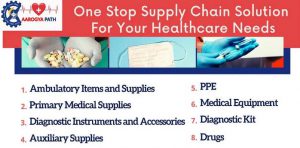
    Further, this platform, apart from providing information about existing demands for traditional Healthcare necessities, will also provide a seamless access to suppliers/ manufactures/importers regarding prevailing needs and demands for:
  • Medical Equipments.
  • Diagnostic instruments and accessories.
  • Drugs and pharmaceuticals.
  • Personal Protective Equipment (PPEs).
  • Respiratory Assistance Devices.
  • Prosthetics and Orthotics.
  • Apparel/Textiles.
  • Primary medical supplies and everything else needed for primary, secondary and tertiary Healthcare.

The intelligent back end of the platform will not only track demand and supply scenarios for items in Healthcare categories but also their first-level components, using unique capabilities of the Council of Scientific and Industrial Research (CSIR), India’s premiere autonomous publicly funded research organization. This holistic and comprehensivenal pandemic like the present COVID-19 situation: –

  • Anticipated shortages can be addressed and met at national level.
  • Any national pandemic situation can be effectively handled.
  • Opportunistic pricing, hoarding and over-forecasting can be checked. and
  • Over-production can be avoided.
  • It will set up an information management and forecasting database platform at the national level.
  • It will provide seamless access to suppliers, manufacturers and importers for prevailing needs and demand related to medical equipment, diagnostic instruments, drugs, personal protective equipment, respiratory assistance devices.
  • The portal has been developed in partnership with Sarvodaya Infotech and institutional users, manufacturers and authorized suppliers of healthcare essentials are encouraged to register and participate actively.

Significance: 

  • It will create opportunities for business expansion due to an expanded slate of buyers and visibility of new requirements for products.
  • It will help in reducing the wastage of resources due to inefficient forecast and excess manufacturing and will create awareness about the demand for new technologies.

Source: https://blog.nextias.com/arogya-path


Categories
COVID-19 Government Guidelines Medical Updates

CSIR launches ‘AarogyaPath’, a portal to strengthen healthcare supply chain

The Council of Scientific and Industrial Research (CSIR) has launched AarogyaPath, a web-based solution for the healthcare supply chain, which provides real-time availability of critical supplies. AarogyaPath would serve manufacturers, suppliers, and customers through the web portal ‘AarogyaPath’.

The COVID-19 pandemic has posed a situation of national health emergency, leading to severe disruption in the supply chain. In particular, the ability to produce and deliver the critical items was compromised due to a variety of reasons. This integrated public platform, named AarogyaPath, has been developed with the vision of “providing a path which leads one on a journey towards Aarogya (healthy life)” to address the challenges related to the supply of essential healthcare goods.

This platform provides a single-point source for key healthcare goods, which could help customers in tackling a number of routinely experienced issues. The issues include dependence on limited suppliers, time-consuming processes to identify good quality products, limited access to suppliers who can supply standardized products at reasonable prices within desired timelines, lack of awareness about the latest product launches, etc.

This portal was launched by Rajesh Bhushan, Officer on Special Duty, Ministry of Health and Family Welfare, in the presence of DG-CSIR, Dr Shekhar C. Mande. Sudhir Garg, Joint Secretary, Ministry of MSME, and Dr Vijay Chauthiawale, Pharma Sector Expert, were guests of honour at this event.

AarogyaPath also helps manufacturers and suppliers to reach a wide network of customers efficiently, overcoming gaps in connectivity between them and potential demand centres like nearby pathological laboratories, medical stores, and hospitals.

It will also create opportunities for business expansion due to an expanded slate of buyers and visibility of new requirements for products. Over time, analytics from this platform is expected to generate early signals to manufacturers on over capacity as well as on looming shortages. This would help to reduce wastage of resources due to inefficient forecasting and excess manufacturing, and generate awareness about the demand for new technologies.

Dr Shekhar Mande complemented the CSIR team involved in development of the portal, which was led by Dr Anjan Ray, Director CSIR-IIP. The portal was developed in partnership with Sarvodaya Infotech.

Institutional users and manufacturers/authorized suppliers of healthcare essentials are encouraged to register and participate actively.

CSIR expects AarogyaPath to become the national healthcare information platform of choice in the years to come, filling a critical gap in last-mile delivery of patient care within India through improved availability and affordability of healthcare supplies. (India Science Wire)

Source: https://www.hastakshepnews.com/csir-launches-aarogyapath-a-portal-to-strengthen-healthcare-supply-chain/