Categories
COVID-19 Medical Updates Medicine & Health

FELUDA, cheaper COVID-19 test launched by TataMD

TataMD has announced the launch of CHECK

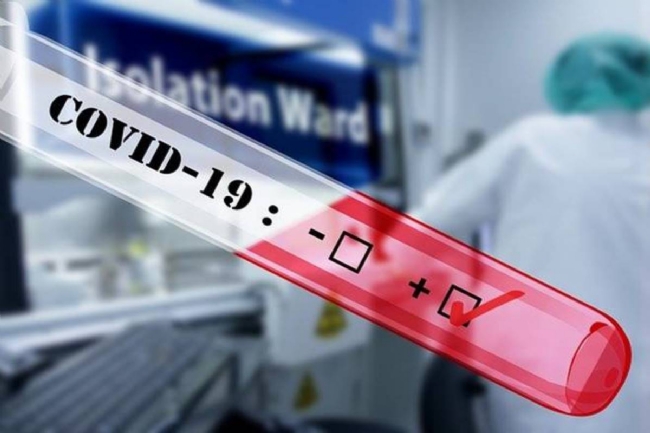
Tata Medical and Diagnostics Ltd (TataMD), the healthcare venture from Tata Group, has announced the commercial launch of TataMD CHECK, novel diagnostic testing for COVID-19. TataMD CHECK is powered by FELUDA, a CRISPR Cas-9 technology that was developed in India by CSIR- IGIB for COVID testing. It is the world’s first CRISPR Cas-9 based diagnostic tool to be launched globally.

Commenting on the launch, Girish Krishnamurthy, CEO, Tata Medical and Diagnostics said, “With TataMD CHECK, we are committed to significantly enhance the testing experience of the consumers as well as work with laboratories and hospitals to ensure wider availability and easier access to testing.” The test kits will be manufactured at a Chennai production facility, which presently has a capacity of producing one million kits in a month.

Outlining the advantages of TataMD Check testing, the company said that it was a paper strip-based test with an image-based visual result read out. It requires standard laboratory equipment and small batches of tests can be conducted, which simplifies the diagnostics process.

The test reaction time in a laboratory is 45-50 minutes and the total testing time from RNA-extracted sample in the lab to result is 75 minutes only. Additionally, it can provide high quality, quick results using standard equipment and minimally trained staff. This allows for rapid adoption and scale with potential to reach remote locations of the country.

TataMD does continuous quality control using sensors and AI-based result reporting tool. This helps patients and authorities with the traceability of the sample and to access the results anywhere, since the findings are stored on cloud storage.

source:https://www.healthcareradius.in/clinical/27030-tatamd-launches-check-a-diagnostic-testing-technology-for-covid-19
Categories
COVID-19 Medical Updates

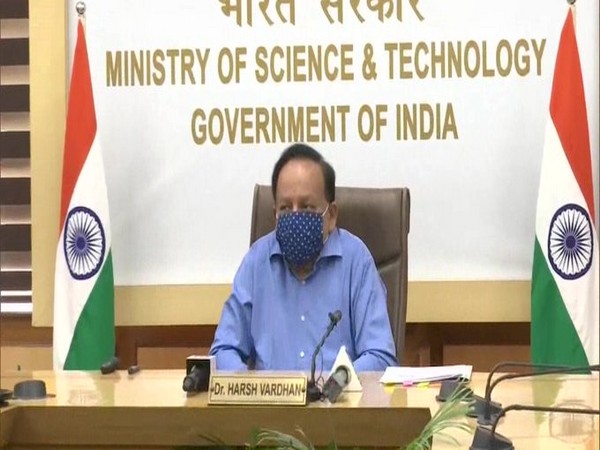
Dr. Harsh Vardhan launches CuRED, COVID-19 clinical trials portal

The Union Health Minister Dr. Harsh Vardhan on October 20, 2020, launched CuRED (CSIR Ushered Repurposed Drugs). A website that will provide comprehensive information about the COVID-19 trials that CSIR- Council of Scientific and Industrial Research is engaged in a partnership with ministries, government departments, and industries.

The Minister lauded the efforts of CSIR for being at the forefront of the ongoing fight against COVID-19 and prioritizing clinical trials, generating data for their regulatory approval, and helping launch drugs and diagnostics in the market. He commended the approach of using repurposed drugs and also, synthesizing COVID-19 drugs through new processes and transferring to Industry.

CSIR is also working with the Ministry of AYUSH for clinical trials of AYUSH drugs and has undertaken safety & efficacy trials of AYUSH prophylactics and therapeutics based on individual plant-based compounds and in combination. Five clinical trials involving Withaniasomnifera, Tinosporacordifolia + Piper longum(in combination), Glycyrrhizaglabra, Tinosporacordifolia & Adhatodavasica (individually and in combination) and AYUSH-64 formulation are undergoing safety and efficacy trials.

A key clinical trial of CSIR is the Sepsivac (Mw) against COVID -19 in partnership with Cadila. The phase 2 clinical trial has been completed successfully on critically ill COVID-19 patients, and more extensive Phase 3 trial is on the anvil. Further, the Phase 2 trial of phytopharmaceutical AQCH on Covid-19 patients with Sun Pharma and DBT is underway.

In addition to clinical trials of repurposed drugs and vaccines, CSIR has been involved in clinical trials of diagnostics and devices.

Dr. Harsh Vardhan emphasized that while the scientists are working on developing drugs and vaccines, as of now, social distancing, wearing masks and other precautions are essential and must be duly followed if we have to win the fight against COVID-19.

Dr. Shekhar C Mande, Secretary, DSIR and DG-CSIR, Dr.Ranjana Aggarwal, Dir, NISTADS, and Dr. Geetha Vani Rayasam, Senior Principal Scientist & Head, Science Communication and Dissemination Directorate CSIR HQ, were present on the occasion. CSIR Directors, Heads of Departments, and Scientists involved in Clinical Trials joined the event virtually.

Categories
COVID-19 Government Guidelines Medicine & Health Techniques

‘India to become healthcare provider to the world’


‘India to become a healthcare provider to the world’

The Medical device sector has a crucial role to play in improving accessibility and affordability of healthcare especially with regard to the availability of precision devices stated D V Sadananda Gowda , Union Minister for Chemicals & Fertilizers during his inaugural address at the 12th MedTech Global Summit .
We now must turn our attention to correct our high import dependence. Our pharmaceutical sector will become Atmanirbhar in a short period of 2-3 years, not only domestically but globally providing low cost and high-quality equipment and drugs.

Our Product Linked Investment schemes will attract cumulative investment of INR 78,000 crore and generate 250,000 in employment, with Med tech attracting at least 40,000 crore and employing 140,000 new employees.

The government is committed to providing low cost, affordable health care to every citizen through PMJAY and Ayushman Bharat with both schemes significantly reducing out of pocket expenditure for our citizens.

The medical device industry has labored and helped prepare indigenous products in our fight against COVID, with our production of ventilators proof of the success of Indian indignity stated Piyush Goyal.

It showed to the world that India can be a trusted partner when it comes to global engagement and global trade. This is the time to leverage the tools of technology to recharge our health systems with the power of: Access, Awareness and Availability, he added.

Chandrajit Banerjee , Director General, Confederation of Indian Industry expressed his gratitude towards the Department of Pharmaceuticals and the phenomenal work undertaken through the recent PLI schemes launched for bulk drug parks and med tech parks. These are the progressive steps required for us to become Aatma Nirbhar.

The Industry and Government need to work together to steer India to become global suppliers of medical Technology. There should be a greater streamlining of the regulatory process, a single national Med-Tech policy and a signal nodal body to govern and support the sector is imperative, he added.

In this pandemic, all the healthcare ecosystem has come together, and have eliminated the need for importing stated Dr Naresh Trehan , Chairman, CII National Committee on Healthcare & Chairman & Managing Director, Medanta – The Medicity. In order to further move up the value chain, Med-Tech, the entire healthcare spectrum, Scientific Intuitions and Government need to be brought on to the same platform to allow for convergence. We need to make a plan to take to the government so that all stakeholders across can help collaborate and innovate.

Source:  http://Source: http://www.smetimes.in/smetimes/news/top-stories/2020/Aug/24/india-healthcare53157.html


Categories
Government Guidelines Medical Equipments Medical Updates Medicine & Health

Emerging Opportunity for Medical Equipment Manufacturing in India

The central governments’ initiatives on national health programs like Ayushman Bharat are propelling India to become a nation with advanced diagnostic facilities thus boosting the prospects of medical equipment manufacturing in several states

The COVID lockdown situation and the call by the Indian Prime Minister, Narendra Modi towards becoming more self-reliant or Aatma Nirbhar has brought in several opportunities to many sectors, prominent among them being the medical device manufacturing in India.

The cost of healthcare in India is almost 35 per cent more competitive as compared to developed countries such as the US and UK. That is the reason many foreign tourists visit India to get affordable treatment. There is also an exponential rise in the domestic demand in the preventive healthcare segment. This segment has been growing at 18 per cent CAGR and expected to be worth US$100 billion in the next 2-3 years. The current demand and supply-side dynamics do provide a huge opportunity for local manufacturers for producing medical devices in India.

At the moment, India imports almost 85-90 per cent of the sophisticated medical devices from other countries, prominent among them being China. In the year, 2019-2020, medical equipment worth almost Rs 4560 crores was imported from China. India as a market for medical devices is among the top 20 countries in the world, worth almost US$11 billion. With several initiatives launched by the Central Government such as the Ayushman Bharat scheme – to provide access to affordable health care services to all, this market is expected to grow to US$50 billion in the next five years. Presently, local medical equipment manufacturers are mostly involved in the production of low-end products for domestic and as well as international consumption. After Japan, China and South Korea, India is the fourth largest market in Asia with the potential to grow at 28 per cent.

Niti Aayog, the think tank body of the Government of India, has started working out a roadmap for the promotion of medical equipment manufacturers in the country. The Government has also allowed 100 per cent foreign direct investments (FDI) in companies manufacturing medical devices through the automatic route. The Indian Government has already chalked out plans intending to remove all roadblocks and offer tailor-made solutions to attract investment to make India a manufacturing hub for medical devices.

Medical device manufacturing comprises of five broad segments, including patient aids like pacemakers and hearing devices, dental products like braces and dentures, MRI and other diagnostic machines, prosthetics like knee implants and artificial joints, and disposal & consumables like needles and syringes.

Under initiatives like Make in India, several state governments have taken up the onus of setting up medical device manufacturing parks in their respective states and have got the approval from the Government of India to do so. There would be six medical devices manufacturing clusters in the country in states like Andhra Pradesh, Kerala, Telangana, Tamil Nadu, Maharashtra, and Sikkim. These clusters would provide a huge boost to domestic manufacturing of high-end medical devices at a lower cost and significantly enhance job creation.

The unfolding crisis has displayed the potential of Indian manufacturers to scale up the manufacturing to meet the higher demand for PPE kits, ventilators, and other lifesaving equipment. However, there are a lot of challenges that the Government needs to address to make the country a hub of manufacturing medical equipment. Firstly, there is a need to set necessary infrastructures like supply chain and logistics channels. There is an irregular power supply in several parts of the country which impairs the manufacturing process. The Government also needs to take steps to reduce the high cost of finance for local manufacturers.

The medical equipment manufacturers have been long demanding to reduce the effective rate of Goods and Service Tax (GST) on medical devices to 5 per cent from the present 18 per cent. Due to the high GST rate, it becomes more advantageous to import the equipment than manufacturers the same in the country. There is also a need to rationalize custom duty for necessary components and transitional inputs going into the production of medical equipment in India. It will further help if the government begins to incentivize high-end medical equipment manufacturers in order to promote the production of these devices in the country.

There is also a need for the Government to set up import restrictions and duty protection on the import of medical devices in India. This would restrict imports and at the same time, provide a boost to local manufacturers. There is a need to increase the skilling and training programs to tackle the shortage of talented and trained people in the sector. The Government also needs to put in place a robust regulatory framework to maintain high-quality standards and create a healthcare ecosystem in India.

India has some of the best doctors in the world and state-of-the-art healthcare facilities, the strong foothold in the medical devices manufacturing sector will only further reduce the cost of treatment and at the same time enhance the country’s image as a global healthcare destination.

Source: https://bit.ly/3i2bzDe


Categories
COVID-19 Medical Updates Medicine & Health

5 people to be vaccinated today as India’s first COVID-19 vaccine COVAXIN trial starts at AIIMS Delhi

Five volunteers will be vaccinated on Friday as the first phase of human clinical trials of COVAXIN, India’s first indigenous vaccine begins at AIMS, New Delhi.

New Delhi: Five volunteers will be vaccinated on Friday as the first phase of human clinical trials of COVAXIN, India’s first indigenous vaccine begins at the All India Institute of Medical Sciences, New Delhi, according to a report. About 3,500 people have registered to take part in the trial of the vaccine being developed by Bharat Biotech in collaboration with the Indian Council of Medical Research (ICMR).

The phase 1 trial in AIIMS will involve 100 healthy people. A report in the Jagran, citing AIIMS doctor Dr Sanjay Roy, professor of Community Medicine, stated that screening of study subjects is going on. Dr Roy, who is leading the trial at AIIMS, said that they have received investigation reports of many people, adding that vaccination will start if all goes well. Initially, 10 participants will receive the vaccine and their report will be reviewed by the institute’s Ethics Committee for safety, after which the rest of the subjects will be vaccinated.

The report added that all 3,500 people who have volunteered for the vaccine trial are being screened for various parameters at AIIMS. About 50 types of tests, including diabetes, hypertension, heart disease, kidney and liver diseases are being conducted on study participants to ensure that they are healthy and fit for the trial.

It may be noted that Bharat Biotech has partnered with Delhi-based Dr Dangs Lab for the clinical trial of its COVID-19 vaccine. The lab has already started processing samples from study participants from various trial sites to assess the safety of the vaccine.

The ICMR has picked 12 medical institutions to conduct the clinical trials of COVAXIN, which is derived from a strain of SARS-CoV-2 virus isolated in NIV, Pune. The virus strain was then transferred to Bharat Biotech to develop into a vaccine.

Source: https://bit.ly/3jQpmP8

Categories
COVID-19 Government Guidelines Medical Updates

India Extends Medical Assistance Worth About $1 Million To North Korea

India is sensitive to the shortage of medical supply situation in the Democratic People’s Republic of Korea and decided to grant assistance of $1 million in the form of anti-tuberculosis medicines, the MEA said
India Extends Medical Assistance Worth About $1 Million To North Korea

The medical assistance is under the aegis of a WHO anti-tuberculosis programme(Representational)

New Delhi: 

India has extended medical assistance worth about USD 1 million to North Korea in response to a request received from the World Health Organisation (WHO), the Ministry of External Affairs (MEA) said on Friday.

“India is sensitive to the shortage of medical supply situation in the Democratic People’s Republic of Korea (DPRK) and decided to grant humanitarian assistance of USD 1 million in the form of anti-tuberculosis medicines,” the MEA said.

The medical assistance is under the aegis of an ongoing WHO anti-tuberculosis programme in DPRK, the ministry added.

Source: https://bit.ly/2D6YTvE

Categories
COVID-19 Government Guidelines Medical Equipments Medical Updates

स्वास्थ्य देखभाल की आपूर्ति के लिए लॉन्च किया गया ‘आरोग्यपथ’, ये है खासियत

दिल्ली/पटना: सीएसआईआर राष्ट्रीय स्वास्थ्य देखभाल आपूर्ति श्रृंखला पोर्टल https://www.aarogyapath.in  को 12 जून को लॉन्च किया गया. इसका उद्देश्य वास्तविक समय पर महत्वपूर्ण स्वास्थ्य आपूर्ति की उपलब्धता प्रदान करना है. यह आरोग्यपथ निर्माताओं, आपूर्तिकर्ताओं और ग्राहकों की मदद करेगा.

कोविड-19 महामारी से उत्पन्न मौजूदा राष्ट्रीय स्वास्थ्य आपातकाल के दौरान आपूर्ति श्रृंखला में गंभीर समस्या आ रही है. ऐसे में महत्वपूर्ण वस्तुओं के उत्पादन और वितरण की क्षमता विभिन्न कारणों से संकट में पड़ सकती है. इन चुनौतियों से निपटने के लिए “किसी को अरोग्य (स्वस्थ जीवन) की ओर ले जाने वाला मार्ग उपलब्ध कराने”की दृष्टि से आरोग्यपथ नामक यह सूचना मंच विकसित किया गया है.

स्वास्थ्य देखभाल संबंधी सामानों की एक ही जगह उपलब्धता प्रदान कराने वाला यह एकीकृत सार्वजनिक मंच ग्राहकों को रोज महसूस किए जाने वाले कई मुद्दों से निपटने में मददगार साबित हो सकता है.

इन मुद्दों में सीमित आपूर्तिकर्ताओं पर निर्भरता,अच्छी गुणवत्ता वाले उत्पादों की पहचान करने में लगने वाला अधिक समय,वांछित समयसीमा के भीतर उचित मूल्य पर मानकीकृत उत्पादों की आपूर्ति करने वाले आपूर्तिकर्ताओं तक सीमित पहुंच,नवीनतम उत्पादों के बारे में जानकारी का अभाव इत्यादि शामिल हैं.

आरोग्यपथ नाम का यह वेब आधारित सूचना मंच निर्माताओं और आपूर्तिकर्ताओं को पूरी कुशलता से ग्राहकों के एक विस्तृत नेटवर्क तक पहुंचाने, उनके और आस-पास के चिकित्सा जांच केंद्रों, मेडिकल दुकानों, अस्पतालों इत्यादि जैसे मांग केंदों के बीच संपर्क की कमियों को दूर करने मदद करेगा.

यह ग्राहकों की विस्तृत सूची और उत्पादों के लिए दिखने वाली नई जरूरतों की वजह से व्यवसाय का विस्तार करने के अवसर भी उपलब्ध कराएगा. समय के साथ इस मंच से एनालिटिक्स निर्माताओं को उनके अधिक उत्पादन के साथ-साथ जरूरी सामानों की होने वाली कमियों को लेकर भी शुरुआती संकेत दे सकते हैं. यह अपर्याप्त पूर्वानुमान और अधिक विनिर्माण के कारण संसाधनों की बर्बादी को कम करने में मदद करेगा और नई प्रौद्योगिकियों की मांग के बारे में जागरूकता भी पैदा करेगा.

सीएसआईआर को उम्मीद है कि आने वाले वर्षों में आरोग्यपथ राष्ट्रीय पसंद का सूचनात्मक स्वास्थ्य देखभाल मंच बन जाएगा जो भारत में स्वास्थ्य देखभाल सामानों की आपूर्ति की उपलब्धता और उन्हें किफायती बनाते हुए रोगियों के लिए अंतिम समय में जरूरी सामानों की आपूर्ति की खाई को पाटने का अहम काम पूरा करेगा.

आरोग्यपथ सूचना मंच को सीएसआईआरस के महानिदेशक डॉ. शेखर सी. मांडे की उपस्थिति में स्वास्थ्य और परिवार कल्याण मंत्रालय के ऑफिसर ऑन स्पेशल ड्यूटी राजेश भूषण ने लॉन्च किया. इस समारोह में एमएसएमई मंत्रालय के संयुक्त सचिव सुधीर गर्ग और फार्मा सेक्टर के विशेषज्ञ डॉ. विजय चौथियावाले सम्मानित अतिथि थे.

इस पोर्टल को सर्वोदय इन्फोटेक और संस्थागत उपयोगकर्ताओं की साझेदारी में विकसित किया गया। स्वास्थ्य सेवा के लिए जरूरी सामानों के निर्माताओं / अधिकृत आपूर्तिकर्ताओं को पंजीकरण कराने और सक्रिय रुप से अपने काम में भाग लेने के लिए प्रोत्साहित किया गया.

स्रोत – https://bit.ly/2OyRo38
Categories
COVID-19 Government Guidelines Medical Equipments Medical Updates

Beds to spare at Covid-19 centres as cases decline in Delhi

NEW DELHI: The falling number of Covid-positive cases in the city has resulted in the major makeshift care facilities witnessing a decline in occupancy.

Billed as the world’s largest Covid care facility with 10,000 beds, Sardar Patel Covid Care Centre and Hospital at Radha Soami Satsang Beas in Chhatarpur currently has only 180 patients. Only 16 patients have been admitted in the DRDO-run 1,000 bedded facility near Dwarka, 72 in the 480-bedded Commonwealth Games Village unit and 20 in the 100-bedded facility at Shehnai banquet hall.

Patients who are not critical and don’t have home isolation facilities are admitted in such makeshift centres. While 15 doctors have been deployed at CWG Village, Shehnai banquet hall has 12.

The Centre and Delhi government rushed to create makeshift Covid-19 facilities when the pandemic was on the verge of explosion in the capital. There was widespread anticipation among the authorities that cases would cross 5 lakh by July-end and the city may need 80,000 beds to treat the patients.

Later, it was found that the number of cases was far below what was anticipated. Delhi government had explained that its anticipation was based on details obtained from central government sources.

Though unused, officials at the makeshift facilities have been reassuring people in that enough healthcare facilities are available for them. This boosts the confidence of people testing positive for Covid-19.

Three patients were discharged from Sardar Patel Covid Care Centre and Hospital on Tuesday. The facility is being managed by Indo-Tibetan Border Police. “A team of 100 medical personnel has been deployed at the facility, including 40 doctors who work in shifts. All those currently admitted are showing signs of recovering. Only five people who turned critical were shifted to Safdarjung Hospital since July 5, when the facility became operational,” said an ITBP official.

Yoga sessions are organised daily for patients, who practice it on their beds to destress and aid their healing process. The centre ahas facilities for recreation, newspapers and books.

Most of the beds at the CWG Village facility, which was created in record six days, are vacant. “We currently have 72 patients and all are in a stable condition. Around 50 beds are oxygen supported, but till now only one patient has required the facility. Patients are discharged after nine days when they don’t have fever for three days. No test is required before the discharge. By July 17, many patients might be discharged,” said Dr Rajat Jain of Doctors For You, an NGO.

Even at the Covid-designated government hospitals, 10,900 of 15,000 beds are vacant. Since the threat of the virus and the possibility of cases peaking has not yet passed, these facilities continue to be important in Delhi’s Covid-19 fight.

Source: https://bit.ly/3iZlD1f

Categories
Medical Updates Medicine & Health Techniques

Researchers reveal simpler way to generate sensory hearing cells called ‘hair cells’

A team of researchers is revealing the secrets of a simpler way to generate the sensory cells of the inner ear. Their approach uses direct reprogramming to produce sensory cells known as “hair cells,” due to their hair-like protrusions that sense sound waves.

A team of researchers is revealing the secrets of a simpler way to generate the sensory cells of the inner ear. Their approach uses direct reprogramming to produce sensory cells known as “hair cells,” due to their hair-like protrusions that sense sound waves.

Led by scientists from the USC Stem Cell laboratories of Neil Segil and Justin Ichida, the results of study were published in the journal eLife.

“We’ve succeeded in directly reprogramming a variety of mouse cell types into what we’re calling ‘induced hair cell-like cells, or iHCs. This allows us to efficiently generate large numbers of iHCs to identify causes and treatments for hearing loss,” said PhD student Louise Menendez, the study’s lead author.

The scientists successfully reprogrammed three different types of mouse cells to become iHCs. The first two types were embryonic and adult versions of connective tissue cells, known as fibroblasts. The third was a different type of inner ear cell, known as a supporting cell.

A team of researchers is revealing the secrets of a simpler way to generate the sensory cells of the inner ear. Their approach uses direct reprogramming to produce sensory cells known as “hair cells,” due to their hair-like protrusions that sense sound waves.

Led by scientists from the USC Stem Cell laboratories of Neil Segil and Justin Ichida, the results of study were published in the journal eLife.

“We’ve succeeded in directly reprogramming a variety of mouse cell types into what we’re calling ‘induced hair cell-like cells, or iHCs. This allows us to efficiently generate large numbers of iHCs to identify causes and treatments for hearing loss,” said PhD student Louise Menendez, the study’s lead author.

The scientists successfully reprogrammed three different types of mouse cells to become iHCs. The first two types were embryonic and adult versions of connective tissue cells, known as fibroblasts. The third was a different type of inner ear cell, known as a supporting cell.

“Hair cells are easy to damage, and currently impossible to repair in humans,” said Segil, a professor in the Department of Stem Cell Biology and Regenerative Medicine, and the USC Tina and Rick Caruso Department of Otolaryngology – Head and Neck Surgery, and one of the corresponding authors of the study.

“Aging, loud noises, and certain chemotherapy drugs and antibiotics can all lead to the permanent loss of hair cells, which is the leading contributor to hearing loss worldwide,” Segil added.

iHCs have the potential to accelerate hearing loss research in at least two important ways, according to Ichida, who is the John Douglas French Alzheimer’s Foundation Associate Professor of Stem Cell Biology and Regenerative Medicine at USC, and the other corresponding author of the study.

“In the near term, researchers can use iHCs to screen large numbers of drug candidates that might prevent or treat hearing loss,” said Ichida, who is also a New York Stem Cell Foundation-Robertson Investigator.

“And further in the future, it could become possible to directly reprogram supporting cells in the inner ear of a deafened individual, as a way to restore hearing,” added Ichida.

Source: https://bit.ly/32tA3AZ

Categories
COVID-19 Government Guidelines Medical Updates Medicine & Health

The Indian healthcare system needs an overhaul

The Covid-19 pandemic has served a stark reminder that economies can be brought to a grinding halt if public healthcare systems are inadequate, clearly demonstrating the need for increased investment in the sector.

While economic growth may be an important indicator of development, the quality of a country’s public healthcare system better demonstrates the standard of living enjoyed by a wider spectrum of the population. The Covid-19 pandemic has served a stark reminder that economies can be brought to a grinding halt if public healthcare systems are inadequate, clearly demonstrating the need for increased investment in the sector.

Owing to rapid urbanization in recent decades, India faces a development paradox that is widely prevalent among the fast-growing global economies; basic necessities are either unavailable or unaffordable to the vast majority of urban dwellers and secondly, there is tremendous strain on public infrastructure as an increasing number of people chase a diminishing parcel of public goods. While India requires 15 doctors and 20 hospital beds per 10,000 people, we currently only have about half of that number. This translates to 700 million people underserved by the system. There’s also a huge disparity between urban and rural areas in terms of access to specialised care. We urgently need to address this shortfall. Public expenditure on health needs to increase manifold so we can build a well-equipped and self-sufficient network of medical facilities quickly across our Tier II cities, towns, and villages, which will help reduce the burgeoning load on metropolitan healthcare infrastructure.

However, there are significant challenges. Achieving the build quality and maintenance standards of private healthcare projects is still an uphill challenge for government-funded healthcare buildings. A few common issues that plague current hospitals are inadequate day-lighting, poor ventilation systems leading to cross-infection, greater building widths leading to doubly-loaded corridors with no connection to the outside, high energy costs and maintenance problems. One solution to address these issues could be to design interactive facilities that draw from the ideas of biophilia: an innate human tendency to seek connections with nature and other forms of life. Such interventions place patient experience and wellbeing at the core, leading to swifter healing, while also reducing construction and building lifecycle costs.

Cross-infection and contamination can be tackled through design changes such as naturally-ventilated spaces that increase the rate of natural air exchange, segregation of different functions by creating general, semi-sterile and sterile zones (for example, waiting areas to OPDs to ICUs) and creating buffer zones in between. Designing the building with an East-West orientation to improve daylight, providing centralized courtyard landscapes to provide passive evaporative cooling, and adding solar panels to reduce dependency on conventional forms of electricity, are some ways to optimise building energy consumption and improve efficiency. Also, designing decentralized micro-service zones that run parallel to various departments can help make regular servicing and maintenance easier and quicker.

Today, as our understanding of health and wellbeing evolves, new construction technologies provide limitless possibilities in this sector. Building Information Modeling (BIM), for example, which can help determine the optimal geometry of buildings in response to certain parameters, can aid in pre-empting problems and shortening the time of construction to save costs, while ‘temporary and transformable’ architecture has enabled emergency mitigation like never before. Imbibing such innovations within healthcare design holds the key to streamlining our systems for better performance –– from accessibility of essential public services and improved patient care to the wellbeing of our economy.

Source: