

Categories
Medical Updates

Vision for all: The essential role of eye care in primary healthcare

Dr Rishi Raj Borah, Country Director-India, Orbis stresses that primary healthcare, often a person’s first point of contact with the healthcare system, should ideally provide preventive eye care services as well. Preventive eye care revolves around a range of interventions aimed at identifying and addressing vision-related issues before they escalate into more severe conditions

One of the most important senses, vision allows us to completely participate in daily activities, learn, work, and navigate the world around us. Yet, for millions across the globe, access to adequate eye care remains elusive. This calls for integration of comprehensive eye care services into primary healthcare systems.

Primary healthcare, often a person’s first point of contact with the healthcare system, should ideally provide preventive eye care services as well. Preventive eye care revolves around a range of interventions aimed at identifying and addressing vision-related issues before they escalate into more severe conditions. Such interventions include regular eye examinations, health education and the provision of affordable eyeglasses. By incorporating these measures into primary healthcare, we can detect and treat visual impairments in their early stages, preventing avoidable blindness and reducing the burden on tertiary care facilities.

Early detection is indispensable

Many eye conditions, such as cataracts, glaucoma and diabetic retinopathy, progress asymptomatically in their initial stages. By the time symptoms become noticeable, irreversible damage may have already occurred. Integrating eye screenings into routine primary healthcare visits ensures that potential issues are identified promptly. Early detection allows for timely intervention, preserving vision and thus enhancing the quality of life.

Awareness: The catalyst for effective preventive measures

To work on preventive eye care, one needs to be educated about it. Communities often lack knowledge about the importance of regular eye examinations and protecting their eyes from environmental hazards. The need of the hour is to integrate eye care into primary healthcare systems. This way healthcare professionals can serve as a valuable channel for disseminating information on eye health thereby emphasising the significance of adequate eye protection. A balanced diet and refraining from habits like smoking can act as a preventive measure against eye ailments. Therefore, awareness is important because an informed person is better equipped to take proactive steps in maintaining their eye health.

Timely intervention in the form of eyeglasses can save eyesight

Affordable eyeglasses are another vital aspect of preventive eye care. It is an effective tool to correct refractive errors. However, affordable eyeglasses are not accessible to all. By integrating optometry services into primary healthcare, those in need of eyeglasses can receive them. This can address refractive errors and reduce the negative outcomes of poor vision such as productivity loss.

Incorporating eye care into primary healthcare also fosters equity and inclusivity. Vision impairment disproportionately affects vulnerable populations, including children, the elderly and those with low socioeconomic status. By making eye care services available at the primary healthcare level, we can remove barriers to access and ensure that everyone, regardless of their background or circumstances, can receive the care they need.

Integrating comprehensive eye care services into primary healthcare is not merely an option; it is a necessity. Preventive eye care plays a crucial role in preserving vision, enhancing well-being and promoting equity. By bridging the visual gap through primary healthcare, we can prevent avoidable suffering, reduce healthcare costs and empower people to lead fuller and more productive lives.

visit – https://shorturl.at/bfAH0
Categories
Medical Updates Medicine & Health

Skin problems that may be happening due to poor gut health

When we experience any problems with our skin health, such as sudden appearance of acne, we may start applying creams or wash our face repeatedly during the day. However, not every skin issue may be caused due to unclean skin or polluted environment. Sometimes, the cause may be deeper than you think — coming from your gut. Our gut health is connected with our skin health, and so, poor gut health can show through various problems with your skin. Here are some of the skin problems caused by bad gut:

Skin problems that may be happening due to poor gut health

Eczema is a condition that causes your skin to become dry, itchy and bumpy. Symptoms of eczema can show up anywhere on your skin. Your intestinal flora influences the microbes that live on the skin. An imbalanced microbiome may play a role in the inflammation and immune response that causes eczema. This also means that healthy dietary changes can help alleviate your eczema symptoms.


Poor  gut health can promote growth of acne on your skin. Leaky gut occurs when the intestinal walls and microbiome aren’t able to keep up with the build-up of toxins in the body. If toxins aren’t well processed in your gut, you may start to see them exiting your skin via acne. Make sure you’re eating healthy foods to get probiotics, polyphenols, and minerals that heal your skin from the inside out.

Psoriasis is a skin disease in which skin cells build up and form itchy and dry, scaly patches. The cause of psoriasis isn’t fully understood. As per research, one possible connection is that between psoriasis and inflammatory bowel disease. Since the skin is made up of tissue that absorbs things more easily, it is sensitive and reacts to the inflammation signals that travel throughout the body.

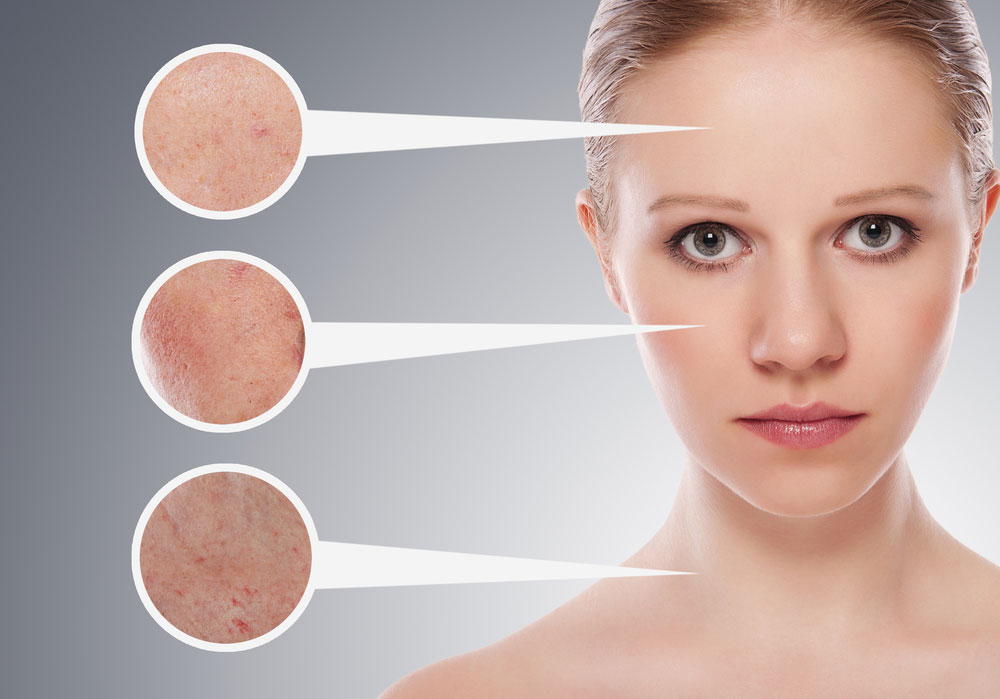
Rosacea can lead to larger pores on the face as well as dry skin. The development of this condition is related to inflammatory bowel disease, celiac disease, irritable bowel syndrome, and gastroesophageal reflux disease. Treating rosacea with antibiotics or microbiome modulation has been shown to help with disease management. For healthy, refreshed and disease-free skin, here are some tips to improve gut health. Stress can mess with your gut, so manage stress with yoga and meditation. Regularly consume probiotics and fermented foods to lower inflammation of the gut. Stay hydrated by drinking enough water. Avoid excess consumption of sugar and eat fibre-rich vegetables and fruits, sprouts, whole grains, and legumes. Cut down on smoking, alcohol, junk, and processed food.

visit – http://surl.li/mpjdm


Categories
Medicine & Health

Anti-pollution diet: Top foods to include in your diet for fighting air pollution

  • What are you doing today to safeguard your heart and lungs from ill effects of pollution? Eat these foods to protect yourself from toxic air and stay healthy .
  • Air pollution is on rise in Delhi NCR and surrounding regions as the air quality deteriorates with each passing day. While one can avoid exposure by limiting outdoor time during peak pollution hours, it is not always possible to avoid ill effects of air pollution all the time. The toxic air can wreak havoc on your lungs, brain, heart and overall health and it’s important to adopt measures that can combat harmful effects of pollutants and particulate matter than can damage health. Air pollution has been identified by WHO as one of the largest environmental health risks, responsible for millions of deaths from lung cancer, heart disease, and respiratory infections. With the right dietary choices and balanced diet with antioxidants, vitamins, and omega-3 fatty acids, it’s possible to reverse pollution-induced damage to some extent.
  • “Oxidative stress is known to contribute to the development of age-related diseases. Increasing evidence indicates that a poor diet, including clinical malnutrition, may increase the risk of oxidative stress and chronic diseases. Oxidative stress occurs due to an imbalance between reactive oxygen species and antioxidants, which can lead to tissue damage, inflammation, worsened disease severity, and abnormal immune responses,” says Dr Charu  Dua, Chief Clinical Nutritionist, Amrita Hospital, Faridabad in an interview with HT Digital.
  • FOODS TO FIGHT POLLUTION

    Dr Dua shares food groups that must be included to combat harmful effects of air pollution:

    1. Vitamin A: Milk, eggs, carrots, pumpkins

    To counteract pollution’s effects, it is recommended to include dietary sources of retinol (vitamin A), primarily found in animal sources like milk, liver, eggs, and fortified foods, as well as orange and yellow fruits such as carrots, mangoes, and pumpkins to introduce carotenoids into your diet.

  • Top foods to include in your diet for fighting air pollution
  • 2 Vitamins C and E: Oranges, guavas, soybean, nuts Observational and preclinical studies have shown that low Vitamin C and Vitamin E intake is associated with a higher prevalence of asthma. Therefore, it’s important to include foods rich in these vitamins in your diet. Citrus fruits like oranges and guavas are excellent sources of vitamin C, while oils, such as soybean and mustard oils, along with green leafy vegetables and nuts, provide vitamin E and omega-3 fatty acids.
  • 3. Vitamin D: Sunlight, eggs, fatty fish

    Vitamin D plays a key role in calcium and phosphorus metabolism, and maintaining normal vitamin D levels is correlated with improved asthma control in adults with asthma. However, many people have low indoor vitamin D levels nowadays, so supplementation is necessary to keep vitamin D levels within the normal range to control asthma effectively.

  • 4. Turmeric

    Curcumin, a phytochemical found in turmeric, has potent anti-inflammatory, anti-tumour, antifungal, and antioxidant properties. Including curcumin in your diet may help protect against pulmonary fibrosis and cancer. However, it’s important not to overdose; a teaspoon of turmeric is sufficient.

    5. Black pepper

    Also, ensure you consume it with black pepper to enhance its bioavailability, as curcumin is not effectively absorbed by the body without black pepper.

    6. Omega-3 fatty acids

    Incorporating omega-3 rich oils into your diet is not only heart-protective but also helps protect your body against pollution. Finally, it’s worth noting that the Mediterranean diet is considered one of the healthiest diets. It emphasizes whole grains, a variety of fruits and vegetables, balanced meals, and limits processed and instant foods.

  • Maintaining a healthy weight is crucial in managing asthma and reducing your susceptibility to pollution-related health issues.
  • visit on -http://surl.li/moinr
Categories
Medical Updates Medicine & Health

World Polio Day highlights global efforts to end poliomyelitis worldwide

Polio, a life-threatening disease, is caused by the poliovirus, which the World Health Assembly committed to eradicate in 1988.

The poliovirus spreads from person to person and can infect a person’s spinal cord, causing paralysis.

The World Polio Day highlights the global efforts to end poliomyelitis (polio) worldwide.

The day is observed to raise awareness of the importance of polio vaccination to protect every child from this devastating disease and to honor those people whose efforts led to eradication of polio in many parts of the world.

World Polio Day highlights global efforts to end poliomyelitis worldwide

To ensure a polio-free world, efforts must continue to maintain high immunization coverage, implement high-quality surveillance to detect any presence of the virus, and prepare to respond in the event of an outbreak.

In 1988, poliovirus was present in 125 countries, paralyzing an estimated 1,000 children per day. That year, the Global Polio Eradication Initiative (GPEI) was launched with a goal to eradicate polio worldwide.

In last 35 years, due to GPEI cases of wild poliovirus have fallen by more than 99% – from 350,000 cases per year to fewer than 10 annual cases of wild polio.

Polio remains consistently present in just two countries – Afghanistan and Pakistan. As long as wild poliovirus continues to circulate in these 2 nations, all other countries are at risk of wild poliovirus being imported.

Polio vaccine is one of the most important vaccines to be administered to all children.

Polio, being a highly infectious viral disease mostly affects kids under the age of five.

According to the World Health Organization, the virus gets transmitted by person-to-person spread. It majorly happens through the faecal-oral route or contaminated water or food and then the virus multiplies in the intestine. From there, it can reach the nervous system and lead to paralysis.

  • visit on-http://surl.li/mnrji


Categories
Medical Updates Medicine & Health

Trying to lose weight? These mini meals can help in portion control

When trying to lose weight, many people tend to skip meal(s) thinking that will help them in their journey. However, this is not what helps in weight loss. As per Anjali Mukerjee, a nutritionist, eating frequent and small meals throughout the day help achieve the goal.

While people follow different diets and hacks like intermittent fasting and calorie counting, experts believe that portion control is one of the most popular and effective ways to keep your weight in check.Trying to lose weight? These mini meals can help in portion control

Defined as “the process of making sure that the amount of food you eat for each meal is not too large, especially when you are trying to lose weight,” portion control can help you with your weight loss journey.

As per Anjali, studies have shown that eating frequent mini-meals spread throughout the day prevents the metabolism from slowing down, reduces hunger pangs, optimally fuels your body, and has a positive impact on cholesterol and insulin levels.

Stressing the importance of portion control, Anjali wrote, “In the world of nutrition, it is a known fact that you should burn more calories than you consume to lose weight and fat. And how can one achieve this? By portion control and optimal meal frequency.”

Portion size is a key driver of energy intake and also impacts the weight of a person. Therefore, measuring and controlling the portion size has become very crucial to control (and not gain) weight,” Dr Garima Goyal, a nutritionist, told indianexpress.com previously.

visit on – https://shorturl.at/fhjZ5