
Categories
Medical Equipments Medical Updates Medicine & Health

Reduced-nicotine cigarettes make anxious smokers smoke less

Prior studies suggest that lowering nicotine levels could aid smokers in quitting, but there is little proof that these regulations would be harmful to those who already suffer from affective disorders like depression and anxiety disorders.

According to Penn State College of Medicine and Harvard Medical School researchers, reducing the quantity of nicotine in cigarettes to non-addictive levels may help smokers with mood or anxiety issues quit without harming their mental health.

The findings were released in the journal PLOS ONE.

They claimed that lowering the amount of nicotine in cigarettes could minimise addiction, reduce exposure to toxins, and improve smokers’ chances of quitting.

In the United States, tobacco use continues to be the biggest preventable cause of early death and disease. The U.S. Food and Drug Administration and the government of New Zealand recently made plans to reduce the quantity of nicotine in cigarettes to levels that are not highly addictive.
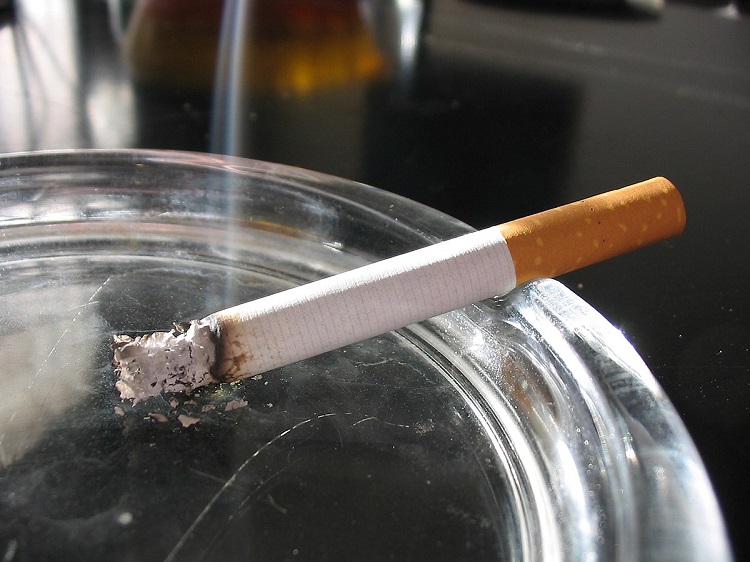
Reduced-nicotine cigarettes make anxious smokers smoke less

Prior studies suggest that lowering nicotine levels could aid smokers in quitting, but there is little proof that these regulations would be harmful to those who already suffer from affective disorders like depression and anxiety disorders, which affect an estimated 38 per cent of smokers in the United States.

Professor of psychiatry and behavioural health Jonathan Foulds asserts that smokers with mental health issues are more likely to have severe nicotine withdrawal symptoms and have less success quitting. He added that there is concern that reducing the amount of nicotine to extremely low levels can exacerbate the psychiatric symptoms of smokers who have mental health disorders, encourage greater smoking, and expose them to more toxicants (hazardous substances).

The study included 188 smokers who had no intentions of quitting smoking and had a history of, or were currently experiencing a mood or anxiety condition. Volunteers were divided into two groups at random and given either study cigarettes with the standard nicotine content (11.6 mg/cigarette) or cigarettes with nicotine that was gradually reduced over an additional 18 weeks until it was just 0.2 mg/cigarette.

Researchers assessed levels of cotinine, a nicotine metabolite, hazardous chemical concentrations, cigarette dependence indices, and various mental health indicators at the start and end of the trial.

At the end of the study, the researchers found no statistically significant differences in the mental health parameters between the two groups. The Kessler Psychological Distress Scale was employed by the researchers; it consisted of six self-report items where participants graded how much they felt “nervous,” “hopeless,” or “so miserable that nothing could cheer them up.” Points for each of the six experiences are added together to get scores.

In contrast to participants in the standard nicotine content group, who scored an average of 6.1 at the start of the trial and finished around 4.9, individuals in the reduced nicotine content group scored an average of 5.3 at the beginning of the study and finished at an average score of 4.6.

“These findings are important because we want to understand the effect these policies would have on smokers with anxiety or depressive disorders,” said Foulds, a Penn State Cancer Institute researcher. “Our data showed that there wasn’t a significant difference in mental health measures between the groups, suggesting reduced nicotine cigarettes might not have adverse psychological effects on this population.”

Foulds and team discovered that groups in the lowered nicotine content group were absorbing less nicotine and eating less dangerous carcinogens such as the biomarker 4-(methylnitrosamino)-1-(3-pyridyl)-1-butanol), also known as NNAL. This finding is consistent with earlier studies. By the time the trial’s randomised phase was up, members of that group had likewise cut back on their cigarette smoking and reported having less nicotine addiction.

Unique to this study, participants in both groups were also given the choice to “choose their treatment,” after the 18-week period. They could go back to using their own cigarettes, continue smoking the research cigarettes or attempt to quit. Of the 188 participants in the study, those randomized to reduced nicotine content cigarettes were more likely to have quit smoking 12 weeks later (18.1 per cent), compared to those in the control (usual nicotine content) group (4.3 per cent).

“We believe this is the first randomized trial to find that smokers who used very low nicotine cigarettes were significantly more likely to have quit smoking (with biochemical verification), three months after the end of the trial,” Foulds said.

“Our results suggest that these policies will likely result in reduced nicotine absorption from cigarettes without worsening the mental health of smokers with mood or anxiety disorders,” said Dr Eden Evins, Cox Family Professor of Psychiatry at Harvard Medical School. “They also suggest that with proper support and resources, smokers with mood and anxiety disorders could quit successfully as a result of these policies.”

Read More At-https://bit.ly/3Vbjmm5

Categories
Medical Updates Medicine & Health Techniques

France and India join forces for better healthcare in future

The Indo-French Healthcare Symposium 2022: together for tomorrow’s health is taking place on 28th November 2022, in New Delhi at the Leela Palace. This healthcare event is organised by Business France, in collaboration with the Indo-French Chamber of Commerce and Industry, the French Institute in India, French and Indian institutional partners and companies. Senior Government officials of France and India, H.E. Mme Anne-Claire Amprou – French Ambassador for Global Health and Dr. V.K.Paul – Hon’ble Member of NITI Aayog, Government of India (Chief Guest) will be participating in the event.

The bilateral partnership in the healthcare sector has been spectacular during the pandemic with the exchange of medical support equipment. France aims to strengthening this cooperation furthermore. This symposium aims to strengthen the bilateral healthcare ecosystem, jointly innovate for the hospital of the future and better healthcare post-Covid. The objective is to develop new synergies in research, training, and trade in the medical and pharmaceutical fields between both countries or third ones. Moreover, it is a platform to discuss the common challenges and opportunities in the healthcare sector.

H.E Emmanuel Lenain, Ambassador of France to India, said, “Through this symposium, I encourage both countries to extend this cooperation and jointly innovate for the hospital of the future and find effective and affordable solutions to healthcare challenges. France is a strong partner for the development of healthcare in India. We also invite Indian stakeholders to invest in France, as well as top-level talents, researchers, and medical students to come to France. There is strong potential for development in sub-sectors like pediatrics, geriatrics, diagnostics, medical tourism, innovative and portable medical devices, education, and training the new generation of doctors.”

Highlights of the event:

  • Panel discussions on the following topics:
    • Strategic Indo-French Alliances in Healthcare Sector
    • Pharmaceuticals & Biotechnologies
    • Hospital Care & Medical Devices
    • Intensifying Academic & Scientific Bilateral Cooperation in Healthcare
  • B2B meetings
  • The Indo French OneHealth network – a scientific workshop on state-of-the-art and roadmap for future organized by the French Institute in India.

The event will witness the presence of members of the Indian and French authorities along with eminent medical experts and opinion leaders, to boost this dialogue on tomorrow’s healthcare systems. This would bring together all the public and private stakeholders of both countries, as well as innovative companies already present or interested in the growing Indian market.

A special delegation of French companies

Speakers from renowned institutions will be present at the event including Académie Nationale de Médicine, Proparco, CEFIPRA, AP-HP Sorbonne Université, ICMR, INSERM.

Moreover, a large delegation of French companies will be accompanied by Business France and IFCCI such as: Biosynex, Careprod Technologies, Life Medical Control, 2PS Projection Plasma Styteme, Vygon, Sanofi, Essilor, Genestore, Peters Surgical, Virbac.

Turnkey individual B2B will be arranged for the following French companies that are not yet established in India and looking for synergies:

France and India join forces for better healthcare in future

BIOSYNEX – the European leader in rapid diagnostic tests (RDT). Located in Strasbourg (FranceBiosynex develops, manufactures, and markets (in France and some 90+ countries) medical devices for screening, diagnosis and prevention.

CAREPROD Technologies – innovative automated solutions, tailored to operating rooms and videoconferencing. Careprod Technologies is dedicated to the integration of innovative video solutions in constrained environments for operating theaters and videoconferencing (Integration, recording, broadcasting, production).

Life Medical Control – specialized in medical engineering and innovation of their flagship ambulatory EKG recorder – NEUROCOACH. It is a primary screening solution for the stroke risks. Positioned in e-health, it provides expertise and know-how through an innovative, remote & easy to use HD ECG recorder and a method of physiological signal analysis, which makes it possible to identify the three different risk factors from one personalized and detailed report.

2PS Projection Plasma Systeme S.A.- is a specialist in plasma projection on orthopedic implants (hip, knee, ankle, shoulder, etc) since 30 years and it has been ISO 9001 and ISO 13485 certified since 2003.

French Healthcare:

France is a leading player in healthcare worldwide and boasts considerable advantages.

A healthcare system that is recognized among OECD nations for access to healthcare, known for its excellent training for healthcare professionals and recognized for their high level of expertise. France offers cutting-edge research and innovation in numerous healthcare fields, including medical devices, oncology, chronic and infectious diseases, digital health, the silver economy and more. The French healthcare ecosystem is not only innovative but dynamic with the inclusion of startups, SMEs and large corporations. It is one of the highest-performing pharmaceutical industries in the world.

About Business France

Business France is the national agency supporting the international development of the French economy. Responsible for fostering export growth by French businesses, as well as promoting and facilitating international investment in France. It promotes France’s companies, business image and nationwide attractiveness as an investment location, and runs the VIE international internship program. Business France has 1,500 personnel, both in France and in 55 countries throughout the world, who work with a network of partners.

Read more at-https://prn.to/3gElnbA

Categories
Medical Equipments Medical Updates Medicine & Health Techniques

Exercise can reduce side effects of breast cancer: Study

Researchers found out the types of disease affecting women is breast cancer and suggested a diagnosis received by the women.

The most prevalent type of disease affecting women is breast cancer; one in eight Australian women will receive a diagnosis by the time they are 85 years old. The findings of the study were published in Breast Cancer. Radiotherapy has emerged as an important component of breast cancer treatment but can lead to cancer-related fatigue and negatively impact patients’ health-related quality of life including their emotional, physical and social wellbeing.

However, latest research by Edith Cowan University (ECU) has revealed exercise may make radiotherapy more tolerable for patients.

Exercise can reduce side effects of breast cancer: Study

ECU’s Exercise Medicine Research Institute included 89 women in the study, with 43 completing a home-based 12-week program, consisting of a weekly exercise regime of one to two resistance training sessions and an accumulated 30-40 minutes of aerobic exercise.

The remaining patients were a control group who did not participate in the exercise program.

Researchers found patients who exercised recovered from cancer-related fatigue quicker during and after radiotherapy compared to the control group and saw a significant increase in health-related quality of life post radiotherapy.

No adverse effects from the exercise were reported.

Study supervisor Professor Rob Newton said this showed home-based resistance and aerobic exercise during radiotherapy is safe, feasible and effective in accelerating recovery from cancer-related fatigue and improving health-related quality of life.

“A home-based protocol might be preferable for patients, as it is low-cost, does not require travel or in-person supervision and can be performed at a time and location of the patient’s choosing,” he said.

“These benefits may provide substantial comfort to patients.”

Important changes

Australia’s current national guidelines for cancer patients recommend moderately intense aerobic exercise for 30 minutes per day, five days a week, or vigorously intense aerobic exercise for 20 minutes a day for three days a week.

They also call for 8-10 strength-training exercises with 8-12 repetitions per exercise, for two-to-three days per week.

However, study lead Dr Georgios Mavropalias said benefits were still observed with less exercise.

“The amount of exercise was aimed to increase progressively, with the ultimate target of participants meeting the national guideline for recommended exercise levels,” he said.

“However, the exercise programs were relative to the participants’ fitness capacity, and we found even much smaller dosages of exercise than those recommended in the national guidelines can have significant effects on cancer-related fatigue and health-related quality of living during and after radiotherapy.”

The study also found once participants began an exercise program, most stuck with it.

The exercise group reported significant improvements in mild, moderate and vigorous physical activity up to 12 months after the supervised exercise program finished.

“The exercise program in this study seems to have induced changes in the participants’ behaviour around physical activity,” Dr Mavropalias said.

“Thus, apart from the direct beneficial effects on reduction in cancer-related fatigue and improving health-related quality of life during radiotherapy, home-based exercise protocols might result in changes in the physical activity of participants that persist well after the end of the program.”

Read More at-https://bit.ly/3VmJYjK