Categories
COVID-19 Medical Updates

PM to launch ₹64k-cr health infra scheme from Varanasi today

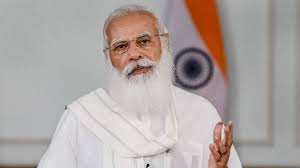
Prime Minister Narendra Modi on Monday will launch the Pradhan Mantri Atmanirbhar Swasth Bharat Yojana (PMASBY), worth 64,180 crores, to strengthen the health care infrastructure across the country.

According to a statement by the press information bureau, the Prime Minister will inaugurate the project from his parliamentary constituency Varanasi, during a visit to poll-bound Uttar Pradesh. Besides this, he will also inaugurate nine new medical colleges at Siddharth Nagar, the bureau added.

“Prime Minister Narendra Modi will visit Uttar Pradesh on 25th October, 2021… at around 1.15 in Varanasi, the Prime Minister will launch PMASBY. It will be one of the largest pan-India schemes for strengthening healthcare infrastructure across the country. It will be in addition to the National Health Mission,” a note by the press information bureau said on Sunday.

“Modi will also inaugurate various development projects worth more than 5,200 crore for Varanasi,” it added.

The PMASBY scheme with an outlay of around 64,180 crore over six years (till financial year 2025-26) was announced by the Centre during the Budget session in February this year. This scheme will be in addition to the National Health Mission, the statement said.

The scheme focuses on developing capacities of health systems and institutions across the continuum of care at all levels — primary, secondary and tertiary — and on preparing health care systems for responding effectively to the current and future pandemics, and disasters, it added.

Under the scheme, government support will be provided to 17,788 rural health and wellness centres in 10 high-focus states. At least 11,024 urban health and wellness centres will be set up.

Besides these, critical care services will be available in districts having more than 500,000 population, through exclusive critical care hospital blocks, while the remaining districts will be covered through referral services.

“Under PMASBY, a National Institution for One Health, 4 New National Institutes for Virology, a Regional Research Platform for WHO South East Asia Region, 9 Biosafety Level III laboratories, 5 New Regional National Centre for Disease Control will be set up. PMASBY targets to build an IT enabled disease surveillance system by developing a network of surveillance laboratories at block, district, regional and national levels, in Metropolitan areas. Integrated Health Information Portal will be expanded to all States/UTs to connect all public health labs,” the statement said.

Experts believe it is time to strengthen the medical infrastructure at the ground level.

“In a country like India whatever efforts we make to improve the health care system, it will still be less because of the population; and inaccessibility and affordability is also an issue… This underutilised infrastructure in the pvt sector can be utilised either through Ayushman Bharat or any other schemes…,” said Dr. MC Misra, former director, AIIMS, Delhi.

source: https://www.hindustantimes.com/
Categories
Medical Updates Uncategorized

‘Israel seeks greater engagement with India on big data, tech, healthcare’

Israel wants India to play a greater role in the emerging strategic landscape in the Middle East, with its own transformed relationship with the Arab world.

On the eve of foreign minister S Jaishankar’s visit to Israel, Alon Ushpiz, foreign secretary of Israel, sat down for an exclusive chat with TOI.“We want very much to look into, how can the new situation in the Middle East have an Indian angle to it? How can we incorporate India into the opportunities that are emerging? Normally this region is flooded with threats and challenges. But in the last year, I have seen the dramatically changed landscape in the Middle East because of the Abraham Accords. This is really a strategic earthquake.”

This is India’s first high-level engagement with the Naftali Bennett government in Jerusalem, therefore a visit that will be closely watched in Israel. India, particularly Modi, enjoyed an unprecedented relationship with former PM Benjamin Netanyahu’s government, and the signals from the visit will be a pointer to the future of one of the closest relationships in the world. Therefore the Jaishankar-Yair Lapid discussions would be significant.

Interestingly, Ushpij said, while no one in the Quad had contacted Israel, they would like to engage “with anyone” on the Quad focus areas of vaccines, emerging technology, climate change, and security. “We would be happy to engage in any dialogue in these areas. I would be very happy to deepen our cooperation with India on all these issues. But… none of the Quad has knocked on our door. ”

Ushpij said that the next frontier of the bilateral relationship lies in Big Data, technology, health care, and communication.

“We don’t have the luxury of missing out when it comes to technology—AI, quantum computing, big data, cyber—all things that can be part of our security collaboration and economic prosperity, but also provide security. And stability for our people.”

“We have to be very strict, keep our eyes on the ball when it comes to new areas of technology. There is no doubt in my mind that technology can easily decide the economic fortunes of nations,” Ushpij said.

Iran will remain a challenging destination for both countries. Ushpiz said that Iran is “very determined to have a nuclear capability, which I think they have not given up, which I believe they want to take forward as quickly as possible, which we believe they will make every promise.” in violation of what they have done and every paper that they have signed.

Unfortunately, in their mind, in the mind of the Iranians, they do not see a strong and strong reaction from the international community. ”

India, on the other hand, is doubling down on Iran, especially in the context of the latest security challenges emerging from Afghanistan.

source: https://timesofindia.indiatimes.com/


Categories
COVID-19 Medical Equipments Medical Updates

Days Away From 1 Billion Vaccine Milestone, India Plans Big Celebration

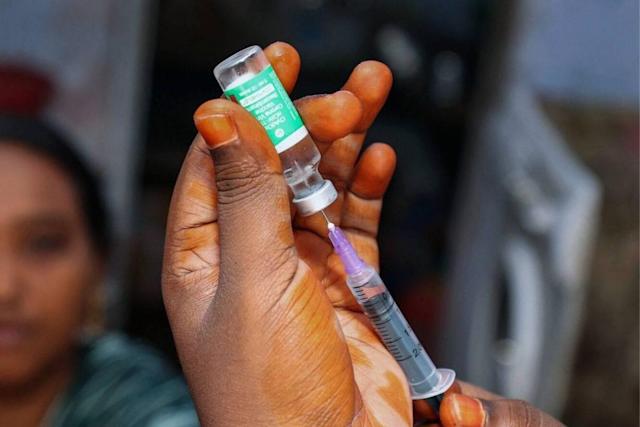
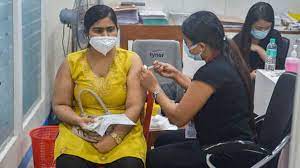
The Health Ministry is preparing to celebrate administering 100 crore, or a billion vaccine doses with a variety of events across the country, sources.

The Health Ministry expects that India should be able to reach the milestone next week by Monday or Tuesday, the sources said, adding that Prime Minister Narendra Modi may also address the nation to thank healthcare workers for their immense contribution to India’s vaccine drive.

The Union Health Ministry is planning to celebrate the day with events across India, sources told News18, adding that it plans to involve Covid-19 warriors and ground-level healthcare staff, who are key to the vaccination drive.

Health Minister Mansukh Mandaviya has also sought ideas from the Ministry’s officials on how to honor Covid-19 warriors during the celebrations of 100 crore doses, including those who lost their lives in the line of duty.

Special recognition will also likely be announced to motivate the healthcare workers and professionals, and ASHA and Anganwadi workers who have been working tirelessly in the fight against Covid.

The BJP also plans to hold various activities across the country which may include a thank-you drive for doctors and professionals.

On October 10, Mandaviya had hailed India’s vaccine drive after the country crossed the 95 crore-landmark on Sunday, adding that the country is “marching rapidly towards administering 100 crore vaccine doses”.

According to the Cowin dashboard, 96,74,52,484 vaccine doses have been administered as of yet in the country. Thirty-two lakh vaccine doses have been administered on Wednesday till 7 PM.

Meanwhile, more than 97.79 crore COVID-19 vaccine doses have been provided to states and UTs so far, the Union Health Ministry said on Wednesday. Over 8.43 crore balance and unutilized vaccine doses are still available with the states and UTs to be administered, it said.

The vaccination drive has been ramped up through availability of more vaccines, advance visibility of vaccine availability to states and UTs for enabling better planning by them, and streamlining the vaccine supply chain, the ministry said.

More than 97.79 crore vaccine doses have been provided to States/UTs so far through Govt of India (free of cost channel) and through direct state procurement category, the ministry said.

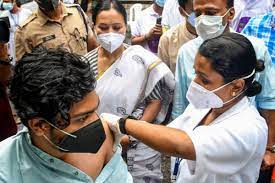
The countrywide vaccination drive was rolled out on January 16 with healthcare workers (HCWs) getting inoculated in the first phase. The vaccination of frontline workers (FLWs) started from February 2.

The next phase of COVID-19 vaccination commenced from March 1 for people over 60 years of age and those aged 45 and above with specified co-morbid conditions. The country launched vaccination for all people aged more than 45 years from April 1.

The government then decided to expand its vaccination drive by allowing everyone above 18 to be vaccinated from May 1. Meanwhile, the Union Health Ministry said that more than 95.96 crore Covid vaccine doses have been provided to states and Union Territories so far.

source: https://www.news18.com/

Categories
COVID-19 Medical Updates

Covid vaccine: Over 92 cr doses administered in India so far, says Health Ministry

The cumulative coronavirus vaccine doses administered in India crossed 92 crores on Tuesday, the Union Ministry of Health and Family Welfare said.

More than 54 lakh vaccine doses have been administered in the country till 7 pm today and the tally is expected to increase with the compilation of the final reports by late in the night, the ministry said.

The Covid-19 vaccination campaign as a tool to protect the most vulnerable population groups in the country from the deadly virus continues to be regularly reviewed and monitored at the highest level, the ministry underlined.

The nationwide vaccination program was rolled out on January 16 with healthcare workers getting inoculated in the first phase. Vaccination of frontline workers started on February 2.

The next phase of Covid-19 vaccination commenced from March 1 for people over 60 years and those aged 45 and above with specified co-morbid conditions. The country launched vaccination for all people aged more than 45 years from April 1.

The Centre then decided to expand its vaccination drive by allowing everyone above 18 to be vaccinated from May 1.

Meanwhile, India logged 18,346 new Covid-19 infections, the lowest in 209 days, taking the total tally of Covid-19 cases to 3,38,53,048, while the active cases declined to 2,52,902, the lowest in 201 days, according to the government data.

The death toll climbed to 4,49,260 with 263 fresh fatalities, according to the data updated at 8 am.

The daily rise in new coronavirus infections has remained below 30,000 for 11 straight days.

The active Covid-19 cases comprise 0.75 percent of the total infections, the lowest since March 2020, while the national Covid-19 recovery rate was recorded at 97.93 percent, the highest since March 2020, the ministry said.

A decrease of 11,556 cases has been recorded in the active coronavirus caseload in a span of 24 hours.

source: https://www.livemint.com/

Categories
Medical Updates Medicine & Health

‘Third Wave of Corona Likely to Hit India in October-December’

The third wave of Corona is likely to hit the country in October-December, predicted Dr. Mahesh Sharma, Chairman, and Managing Director, Kailash Group of Hospitals yesterday and claimed that it would be less dangerous. Sharma made the remarks while speaking at Healthgiri Awards.

He also admitted that India was not prepared for the deadly second wave which devastated the country. “It is a fact that we were not prepared for the second wave. Our healthcare workers and doctors were not mentally prepared; else there wouldn’t have been a shortage of oxygen or Remdesivir”,  Sharma as saying.

Besides,  Professor Gyaneshwer Chaubey, a senior geneticist of the zoology department in the Banaras Hindu University (BHU), had also stated that the third wave of coronavirus would be less severe and deadly, especially for the vaccinated group of people, those who have been cured of the virus and the children. He said that people who have been vaccinated and cured of Covid-19 would fall under the protected group during the third wave.

Echoing similar remarks virologist Dr. Gagandeep Kang had claimed that if there are no new variants, the chances of the third wave of corona as strong as the second are extremely unlikely and that really is because the bulk of the population is either being infected or vaccinated.

Meanwhile, All India Institute of Medical Sciences (AIIMS) director Randeep Guleria, ahead of festivals, has warned of the possible rise in daily corona cases and asked people to remain alert and vigilant.

“During the festive season, we have to remain alert and vigilant. If we remain careful for the next 6-8 weeks, then we will be able to see a decline in the overall number of COVID-19 cases”, news agency ANI quoted the AIIMS chief as saying.

source: https://www.india.com/

Categories
Medical Equipments Medical Updates Medicine & Health

Digital Health ID card for every Indian. 5 key points explained

Prime Minister Narendra Modi on Monday launched the Ayushman Bharat Digital Mission to provide a digital Health ID to people which will contain their health records. The nationwide rollout of the digital Health ID coincides with the National Health Authority (NHA) celebrating the third anniversary of Ayushman Bharat Pradhan Mantri Jan Arogya Yojana (AB PM-JAY).

Currently, over one lakh unique Health IDs have been created under the National Digital Health Mission (NDHM), which was initially launched across six states and Union territories on a pilot basis on 15th August.

Digital health ID: Key things you should know

-Based on the foundations laid down in the form of Jan Dhan, Aadhaar and Mobile (JAM) trinity and other digital initiatives of the government, PM-DHM will create a seamless online platform through the provision of a wide-range of data, information and infrastructure services, duly leveraging open, interoperable, standards-based digital systems while ensuring the security, confidentiality and privacy of health-related personal information.

This mission will create interoperability within the digital health ecosystem, similar to the role played by the Unified Payments Interface in revolutionising payments.

– The key components of PM-DHM include a Health ID – unique 14-digit health identification number- for every citizen that will also work as their health account. The national Health ID will be a repository of all health-related information of a person. The health ID will enable access and exchange of longitudinal health records of citizens with their consent.

-This health account will contain details of every test, every disease, the doctors visited, the medicines taken and the diagnosis. This information will be very useful as it is portable and easily accessible even if the patient shifts to new place and visits a new doctor.

-The Health ID is created by using a person’s basic details and mobile number or Aadhaar number. Personal health records can be linked and viewed with the help of a mobile application, a Healthcare Professionals Registry (HPR), and Healthcare Facilities Registries (HFR).

-Health ID under NDHM is free of cost and voluntary. According to govt, analysis of health data will lead to better planning, budgeting and implementation for states and health programs, which should be a big cost optimizer.

Citizens will only be a click away from accessing healthcare facilities.

source: https://www.livemint.com/

Categories
COVID-19 Medical Equipments Medical Updates

India sets a record with 20 mn covid jabs in a single day

India administered more than 20 million covid-19 vaccine doses on Friday, creating a record and furthering the aim of the Union ministry of health and family welfare’s Vaccine Seva campaign.

The country aims to achieve 1 billion cumulative vaccinations by 10 October, said, senior government officials.

“I acknowledge our doctors, innovators, administrators, nurses, healthcare, and all frontline workers who have toiled to make the vaccination drive a success. Let us keep boosting vaccination to defeat covid-19,” Prime Minister Narendra Modi tweeted.

Mansukh Mandaviya, Union minister for health and family welfare, who visited Safdarjung Hospital, New Delhi, congratulated health workers who have played a significant role in administering more than 20 million doses in a single day.

“Due to your efforts, the country was able to achieve this milestone,” he said.

The minister celebrated the achievement with all the health workers engaged in the vaccination campaign at Safdarjung Hospital.

The World Health Organization South-East Asia Regional Office (WHO SEARO) congratulated India for reaching the milestone.

States and Union territories have got more than 777.7 million vaccine doses so far from the central government and through the direct state procurement channel, according to a separate statement by the health ministry. States and Union territories have more than 61.7 million unutilized vaccine doses, the Centre said.

Modi will interact with healthcare workers and beneficiaries of the covid vaccination program, through video conferencing at 10.30 am on Saturday on the completion of 100% first dose coverage for the adult population in Goa.

The efforts of the state government that resulted in successful vaccination coverage include the organization of successive Tika Utasvs for community mobilization and grassroots outreach, targeted vaccination for priority groups such as vaccination at workplaces, old-age homes, and for differently-abled people, as well as continuous community engagement to remove doubts and apprehensions.

The state also overcame challenges such as Cyclone Tauktae to ensure rapid vaccination coverage. The chief minister of Goa, Pramod Sawant, will also be present during the event.

source: https://www.livemint.com/
Categories
COVID-19 Medical Updates Medicine & Health

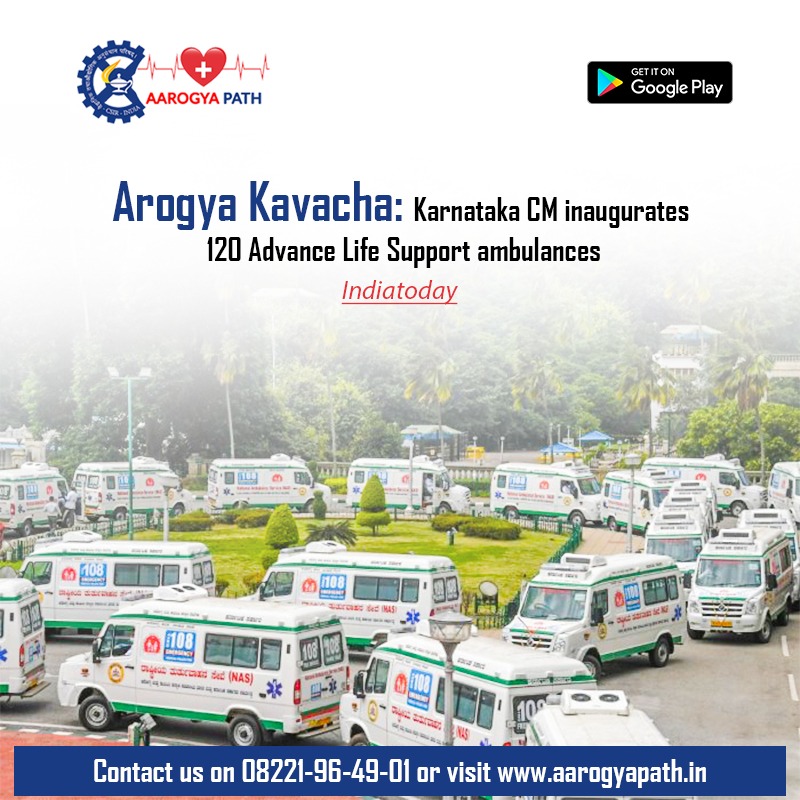
Arogya Kavacha: Karnataka CM inaugurates 120 Advance Life Support ambulances

Karnataka Chief Minister Basavaraj Bommai on Sunday inaugurated 120 Advance Life Support (ALS) ambulances which have been added under the Arogya Kavacha-108 (Emergency Medical Services) in Bengaluru.

State Health Minister K Sudhakar and other cabinet ministers were also present at the inauguration event.

Speaking on the occasion, Health Minister Dr K Sudhakar said, “There are about 710 ambulances operating under the Arogya Kavacha-108 scheme and 155 of them are ALS ambulances. All the 120 ambulances flagged off by CM today are ALS ambulances.”

“Ambulance service is an integral part of our healthcare delivery system and plays a vital role in saving lives during emergencies. Our government is committed to expanding its network and enhancing the quality of services,” he said.

The Arogya Kavacha, first introduced in 2008 by then-CM BS Yediyurappa and then-health minister B Sriramulu, will be upgraded.

“We can ensure that an ambulance reaches the patient within 10-15 minutes if technology like GPS and smartphone apps is used. The mapping of hospitals aids in the identification of nearby hospitals while also increasing transparency,” said the health minister.

“Ambulances take nearly 30-45 minutes to reach the patient in metropolitan regions, but much longer in rural ones. We are striving to lower the turnaround time to 10-15 minutes by using technology and boosting the number of ambulances,” he added.

“At the moment, there is one ambulance for every lakh people, and we aim to expand that to one ambulance for every 45,000 to 50,000 people. We also train drivers and paramedics to make the service more user-friendly,” K Sudhakar said.

“We are administering around 3.8 lakh vaccine doses every day. This is more than Russia’s total number of doses administered. We are just a few lakhs away from completing 5 crore doses, and this significant milestone will be achieved soon,” K Sudhakar added.

source: https://www.indiatoday.in/

Categories
COVID-19 Medical Equipments Medical Updates Medicine & Health

‘Made in India’ testing kit for black fungus developed in West Bengal

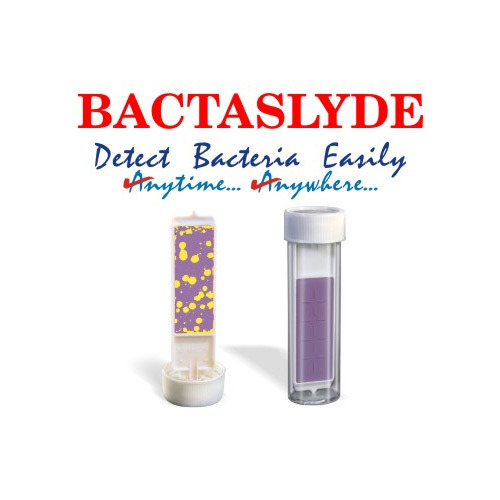
A group of scientists in West Bengal has created the first indigenously developed testing kit to detect mucormycosis or black fungus in patients. These kits will bring down the price of mucormycosis diagnosis from Rs 7,000-8,000 to Rs Rs 1,000.

A group of scientists in West Bengal’s South 24 Parganas district has developed the first indigenous testing kit to detect mucormycosis or black fungus, a fungal infection that is observed among patients who recovered from Covid-19.

The DiAGSure Mucormycosis Detection Kit has been prepared by the scientists at a laboratory in the South 24 Parganas’ Bakrahat area.

Diagnosis of a black fungus with the available kits costs around Rs 7,000-8000 because they are imported and the new technology will bring down this cost to Rs 1,000, claimed Raja Majumdar, the managing director of GCC Biotech Pvt Ltd, the company that developed the kit.

“The goal is to provide the best quality testing kit at an extremely affordable price. So, that RT-PCR testing of mucormycosis can be done at a faster rate. We are the first and only Indian organization to produce this kit, all other tests are done through foreign kits,” Majumdar told India Today.

As per the company, DiAGSure Mucormycosis Detection Kit was approved by the Central Drugs Standard Control Organisation (CDSCO) under the Directorate General of Health Services (DGHS), Union Ministry of Health, and Family Welfare in 2021.

source: https://www.indiatoday.in/

Categories
COVID-19 Medical Updates Medicine & Health

DCGI approves Hetero’s version of Tocilizumab for treatment of adults hospitalised due to Covid-19

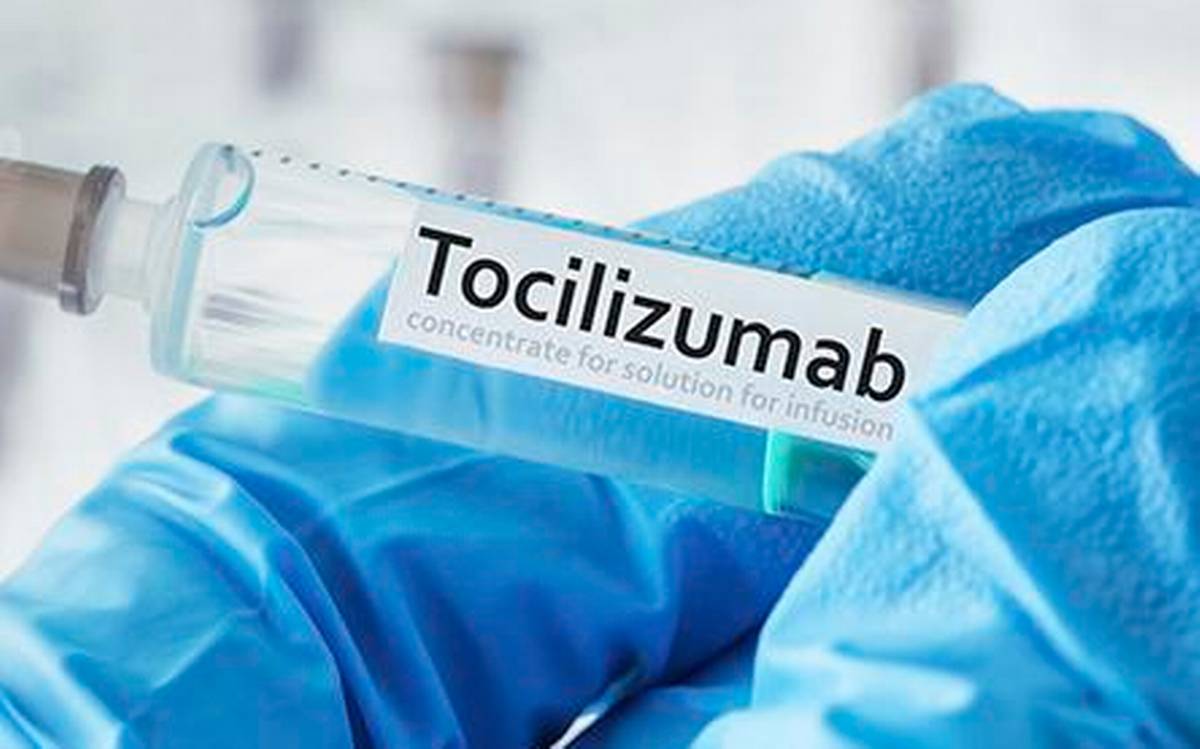
Hyderabad-based Hetero announced on Monday it has received Emergency Use Authorisation (EUA) from the Drugs Controller General of India (DCGI) to use its generic version of the anti-arthritis drug, Tocilizumab, for treatment of adults hospitalized due to the coronavirus disease (Covid-19), according to news agency ANI. The World Health Organization (WHO), in July, recommended that the drug can be used for critically ill Covid-19 patients.

In a statement, Dr. P Sarathi Reddy, chairman, Hetero Group, said that the approval was “extremely crucial” to ensure supply security in India due to a global shortage of Tocilizumab. “We are pleased with the approval of Hetero’s Tocilizumab. This demonstrates our technical capabilities and commitment towards bringing important therapeutics relevant to Covid-19 care. We will work closely with the government to ensure equitable distribution,” Dr. Reddy noted.

The emergency use approval for TOCIRA, the pharmaceutical firm’s version of Tocilizumab, will ensure that medical practitioners can use it to treat adult Covid-19 patients, who are hospitalized, and require supplemental oxygen, mechanical ventilation, or extracorporeal membrane oxygenation (EMO), the company said.

source: https://www.hindustantimes.com/