
Categories
COVID-19 Medicine & Health

Delta variant continues to be dominant lineage in new COVID-19 cases across India: INSACOG

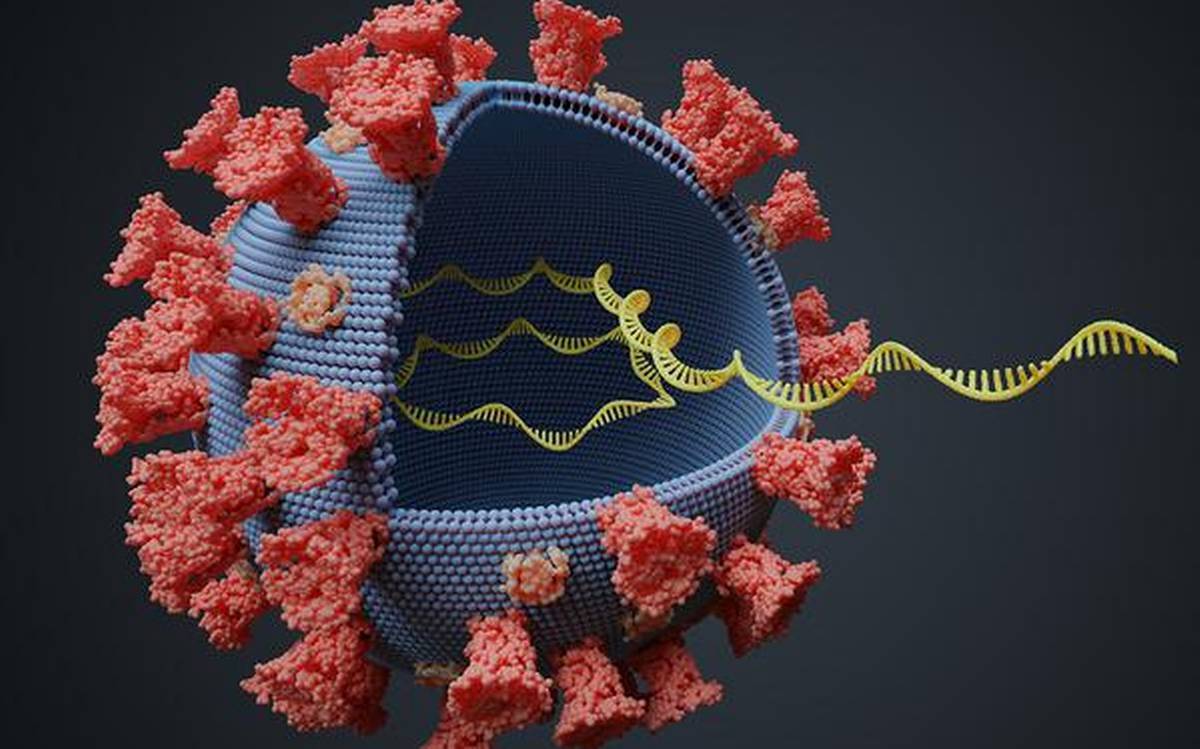
The Delta variant of SARS-CoV2 continues to be the dominant lineage for new cases across the country, while the other Variants of Concern (VoC) are at a lower rate and declining, Indian SARS-CoV-2 Genomics Consortium (INSACOG), a consortium of government panels involved in the genome-sequencing of the coronavirus, has said.

There is currently no evidence of any new Delta sub-lineage that is of greater concern than Delta, it has said.

“Delta continues to be the dominant lineage for new cases across all parts of India in recent samples and remains the most rapidly rising lineage globally that is responsible for multiple outbreaks, including across Southeast Asia, which shows the fastest growth in new cases globally,” the INSACOG said.

Regions with high vaccination and strong public health measures, such as Singapore, continue to do well, it noted.

The Delta variant was behind the deadly second wave of the coronavirus in India that killed thousands and infected lakhs during March to May.

The INSACOG said a study by the Indian Council of Medical Research (ICMR) has confirmed that most of the clinical cases in vaccine breakthrough were infected with the Delta variant but only 9.8% cases required hospitalisation, while fatality was found to be restricted to 0.4%.

It added that the data for higher infectivity of Delta continues to grow with the secondary attack rate in household contacts being almost double for Delta, when compared to Alpha (Public Health England, July 9 update). The other VoC continue to be very low in India and are declining relative to Delta globally.

“Public health measures to reduce transmission and vaccination remain critical,” the INSACOG stressed.

No cases of the Lambda variant have so far been reported in the country, it added.

In data from the U.K., Lambda is still seen primarily in travellers or their contacts and is not growing relative to Delta.

A growing spectrum of mutations is seen in the Delta background in the U.K., the U.S. and India.

The most frequent spike protein mutations, other than K417N (AY.1/AY.2), seen in the U.K. are G446V and P251L. In India, A222V and K77T have been reported as possible markers of sub-lineages.

Previous research into the A222V mutation for either transmissibility or immune escape was negative. In the case of the K77T mutation, it has previously been reported in a cluster of Delta that spread to Asiatic lions in a zoo, and seen in sequences from Tamil Nadu, but has no known impact on transmission or immune escape in humans, the INSACOG said.

The INSACOG jointly initiated by the Union Ministry of Health and the Department of Biotechnology (DBT) with the Council for Scientific and Industrial Research (CSIR) and the ICMR, is a consortium of 28 national laboratories to monitor the genomic variations in SARS-CoV-2.

source:https://www.thehindu.com/
Categories
Uncategorized

Covid vaccines 8 times less effective against Delta variant: Sir Ganga Ram hospital study

Delta variant of coronavirus is eight times less sensitive to antibodies generated by vaccines, a new study claims. This could mean that Covid-19 vaccines are eight times less effective against the Delta variant compared to the original strain of SARS-CoV-2 first detected in China’s Wuhan.

Findings of the study assert that the Delta Variant is both more transmissible and better able to evade natural immunity mounted by the immune system of recovered Covid-19 patients.

Titled “Sars-Cov-2 B.1.617.2 Delta Variant Emergence and Vaccine Breakthrough: Collaborative Study”, the study was conducted on more than 100 healthcare workers (HCWs) at three centers in India, including Delhi’s Sir Ganga Ram Hospital. Scientists from the Cambridge Institute of Therapeutic Immunology and Infectious Disease were also part of the study.

Researchers found that Delta was the dominant strain among fully vaccinated healthcare workers infected with Covid-19. The respiratory viral loads were also higher in the cases of these healthcare workers compared to those diagnosed with non-Delta variants.

The Delta variant generated greater transmission among the fully vaccinated healthcare workers, the study found.

“Increased replication could be responsible for generating greater numbers of virus particles, or the particles themselves could be more likely to lead to a productive infection,” says the study.

While severe infection was rare among infected healthcare workers, scientists say breakthrough transmission clusters in hospitals associated with the Delta variant is a matter of concern. Breakthrough transmission, in this case, refers to instances of fully vaccinated healthcare workers testing positive for the Delta variant of Covid-19.

The study, which is yet to be submitted for peer review, goes on to say that the Delta variant of the virus has enhanced spike proteins. This enables the virus to attach itself to the epithelial cells found in the lungs and infect more people compared to the Wuhan strain.

“In the absence of published data on the transmissibility of Delta Variant, we predict that this variant will have a transmission advantage relative to Wuhan-1 with D614G in individuals with pre-existing immunity from vaccine/natural infection as well as in settings where there is low vaccine coverage and low prior exposure,” findings of the study read.

Delta variant in India

The Delta variant of SARS-CoV-2 was first identified in Maharashtra in late 2020 and has since spread throughout India. It has now displaced the B.1.1.7 or Alpha variant to become the dominant strain in the country.

The B.1.617.2 or Delta Variant of Coronavirus has already been labeled as a ‘variant of concern’ by the World Health Organisation (WHO). The WHO has confirmed the presence of the Delta variant in as many as 100 countries.

In India, the Delta variant was identified as one of the key drivers of the second wave of Covid infections that devastated parts of the country earlier this year.

This latest study now suggests that re-infection and increased transmissibility played a significant role in the spread of the Delta variant of Covid-19.

“Dominance of the Delta variant in India has been most likely driven by a combination of evasion of neutralizing antibodies in previously infected individuals and increased virus infectivity,” the collaborative study claims.

Chairperson of the Institute of Clinical Microbiology and Immunology at Delhi’s Sir Ganga Ram Hospital, Dr. Chand Wattal told news agency PTI, “From this study, it appears that we have miles to go before we sleep in case of Covid-19 pandemics. These mutations are bound to happen if we lower our guard and allow ourselves to fall prey to this virus, giving it an opportunity to multiply.”

source: https://www.indiatoday.in/